Google Home Update Expands Gemini Smart Home Capabilities and Brings Critical Fixes to Legacy Nest Cameras

Google has officially rolled out a comprehensive software update for the Google Home ecosystem, bringing long-awaited performance improvements to older legacy hardware while significantly expanding the operational scope of its artificial intelligence assistant, Gemini. The latest deployment addresses some of the most persistent user complaints regarding smart home device management, connectivity dropouts on vintage security cameras, and voice assistant ambiguity.
As the smart home market matures, manufacturers face mounting pressure to support legacy ecosystems while pushing cutting-edge AI integrations. Google’s latest patch attempts to bridge this gap, offering a nuanced approach that enhances modern convenience without alienating long-time users who have invested heavily in older Nest-branded hardware.
Gemini for Home: Smarter Context and Conversational Continuity
At the forefront of this update is the continued integration of Gemini into the Google Home ecosystem (currently available via Early Access). Historically, voice assistants like Google Assistant have struggled with contextual ambiguity, often executing the wrong command or failing entirely when multiple smart home devices shared similar names.
With the new update, Gemini introduces a refined contextual disambiguation feature. When a user issues a broad command—such as turning off "the bedroom light"—and multiple devices match that description, Gemini no longer guesses or rejects the prompt. Instead, it initiates a brief, conversational follow-up question to clarify user intent. Industry analysts have noted that this reduces friction in multi-room smart home setups, shifting the user experience away from rigid syntax toward a more natural, human-like dialogue.
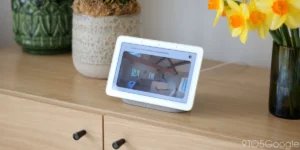
Furthermore, Google Nest Hub owners will experience visual enhancements when interacting with Gemini. Smart displays can now render relevant images alongside verbal responses, providing visual context for complex queries. Voice controls have also been optimized for speed, particularly when managing timers and alarms. Media sleep timers exhibit greater reliability, and conversational feedback mechanisms now allow users to append details or alter dictations dynamically before a transmission is sent or broadcasted to other connected household speakers.

Revitalizing Legacy Nest Cameras: Addressing Long-Standing Connectivity Hurdles
While AI enhancements capture headlines, the most impactful element for a vast segment of the Google user base is the remediation of persistent technical bugs affecting older security hardware. Transitioning legacy Nest cameras into the modern Google Home app has historically presented challenges, resulting in intermittent live-streaming dropouts and network instability.
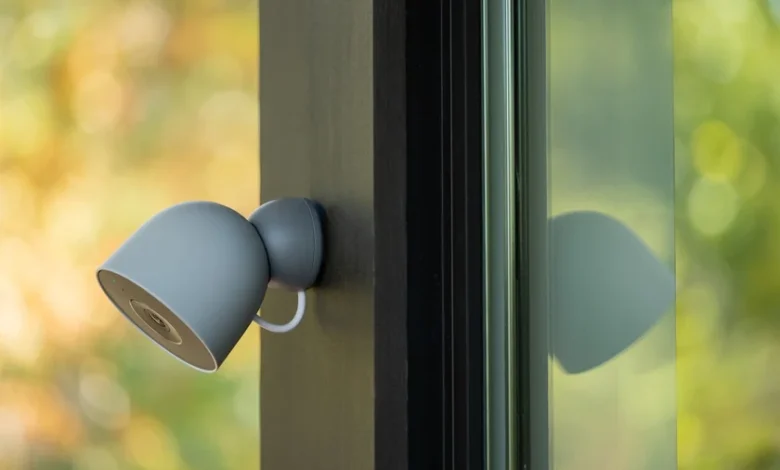
The new update specifically targets connectivity issues on first-generation hardware, including the original Nest Cam Indoor, Nest Cam Outdoor, the wired Nest Doorbell (originally marketed as Nest Hello), and both generations of the Nest Cam IQ. Network compatibility has been heavily fortified, addressing specific routing anomalies associated with PPPoE configurations, high-speed fiber-optic internet lines, and mobile hotspot tethering.
For owners of the Nest Cam IQ, the patch restores missing event thumbnails and improves clock synchronization accuracy, ensuring that video footage bears reliable, synchronized timestamps. In addition, Google has updated underlying security certificates and patched memory management flaws that previously triggered unexpected, automated camera reboots. Android users also benefit from a streamlined interface experience, which features improved camera history controls, reduced frequency of unwanted account-linking prompts, and clearer troubleshooting pathways for third-party camera integrations.
Broader Ecosystem Upgrades: Thermostats, Locks, and Automation
Beyond cameras and AI displays, Google has introduced several systemic upgrades designed to streamline whole-home automation. Multi-thermometer households can now leverage a centralized "Eco Mode Everywhere" toggle, allowing users to activate energy-saving parameters across all connected Nest thermostats simultaneously with a single command.
In the realm of physical security, Google has expanded its digital key infrastructure. Compatible Aliro-enabled smart locks now allow users to provision digital home keys directly into Google Wallet on supported Android devices. This integration supports hands-free unlocking, enabling doors to unlatch automatically as an authorized smartphone approaches the sensor—a feature mirroring modern automotive proximity entry systems.
Simultaneously, the Google Home Model Context Protocol (MCP) has received a functional expansion. Advanced AI agents can now establish and administer complex home automations directly, granting granular control over peripheral smart home appliances, robotic vacuums, electric vehicle (EV) chargers, and environmental control systems.

Background and Industry Context
This software release arrives at a critical juncture for the consumer Internet of Things (IoT) market. Over the past decade, early adopters amassed vast inventories of smart home hardware, only to experience fragmentation as companies transitioned from legacy applications (such as the original Nest app) to unified platforms like Google Home.
Competitors such as Amazon (Alexa) and Apple (HomeKit) have similarly navigated the delicate balance between supporting older proprietary protocols and integrating generative AI architectures. Google’s strategy relies heavily on positioning Gemini as the central nervous system of the modern smart home, moving beyond simple automation to predictive, context-aware management. By simultaneously solving legacy hardware bugs—such as the restoration of unmigrated 1st-generation Nest Doorbell deletion tools—Google aims to rebuild consumer trust and mitigate the electronic waste cycle by extending the operational lifespan of existing devices.
Implications and Future Outlook
The integration of advanced AI reasoning into everyday household management signals a permanent shift in how consumers interact with their living spaces. While voice-activated timers and basic lighting controls were once considered cutting-edge, the expectation has shifted toward proactive, conversational ecosystems that require minimal manual configuration.
However, the success of these rollouts depends heavily on firmware stability and network reliability. Historical precedent indicates that sweeping updates encompassing both legacy hardware and next-generation AI models occasionally introduce unforeseen edge-case bugs. As Google pushes these updates out to global users over the coming days—either automatically via background firmware installations or manually through the Google Home application interface—telemetry data will reveal whether these patches successfully resolve long-standing hardware grievances while scaling Gemini’s smart home footprint efficiently.
Industry observers suggest that as standards like Matter and Aliro mature, interoperability will become less of a hurdle, placing the competitive burden squarely on software intelligence and user interface design. Google’s latest maneuvers indicate a clear intent to lead this next phase, provided it can maintain hardware stability across its sprawling, heterogeneous device ecosystem.