EpiPad Technology from North Carolina State University Turns Forearms into Smartwatch Trackpads

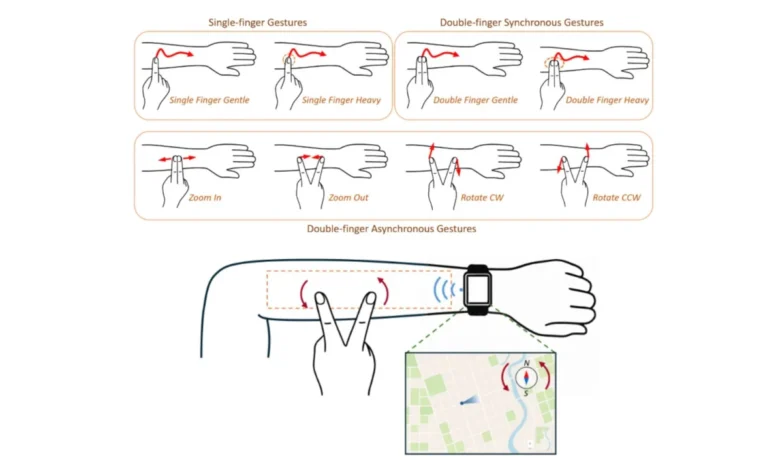
The quest to overcome the physical limitations of the smartwatch—namely, the tiny display—has led researchers to explore unconventional input methods that extend beyond the screen itself. For years, manufacturers and developers have experimented with wrist-based gestures, such as the Apple Watch’s "Double Tap" or third-party solutions like Doublepoint. These innovations, while promising, have largely remained rudimentary or limited to simple binary inputs. However, a significant leap in wearable human-computer interaction has emerged from the laboratories of North Carolina State University (NCSU). Researchers there have unveiled "EpiPad," a radar-based system capable of transforming the user’s own forearm into a high-precision, force-sensitive trackpad.
The Evolution of Wearable Input Systems
The history of wearable input is a timeline marked by incremental steps toward miniaturization and intent recognition. In the early 2010s, wearable technology was primarily focused on passive data collection, such as step counting and heart rate monitoring. As devices grew more powerful, the need for active interaction became apparent.
By the late 2010s, companies began implementing basic accelerometer-based gesture recognition, allowing users to wake a screen by lifting their wrist. In the 2020s, the focus shifted toward more complex interactions. Apple’s introduction of "Double Tap" for the Apple Watch Series 9 and Ultra 2 utilized the device’s internal sensors to detect the subtle movement of tendons and blood flow during a thumb-and-index finger pinch. While functional, these systems are often constrained by "noise" and the limited resolution of motion sensors, which struggle to distinguish between complex, varied movements or varying levels of pressure.
The EpiPad project represents a departure from purely motion-based detection. Instead, it utilizes millimeter-wave (mmWave) radar technology, a sensor suite typically found in high-end automotive safety systems and advanced robotics. By repurposing this technology for the human body, the NCSU team has created an interface that tracks physical interaction on the skin itself, rather than just movement in the air.
Technical Mechanics: How EpiPad Operates
At the core of the EpiPad system is a compact mmWave radar array, measuring roughly 5 x 4 millimeters. This sensor is designed to be integrated into the bezel or housing of a standard smartwatch. The system operates by emitting radar signals toward the user’s forearm, capturing reflections that map the topography of the skin in real-time.
When a user touches, swipes, or presses their finger against the skin of their forearm, the radar detects the minute indentations created by the pressure. This allows the system to distinguish between a light tap, a firm press, and a sliding motion. The technical sophistication of the system lies in its signal processing capabilities, which can filter out ambient noise—such as the movement of the arm during walking or the oscillation of clothing—to isolate the intentional input from the user.

Lead author Yuliang Fu and the research team have focused on three primary performance metrics:
- Gesture Recognition: Identifying the specific pattern of finger movement, such as a scroll or a pinch.
- Force Detection: Measuring the pressure intensity, enabling "force touch" capabilities that can trigger different application functions based on how hard the user presses.
- Finger Tracking: Mapping the X-Y coordinates of a finger as it slides across the skin, effectively turning the forearm into a surface analogous to a laptop trackpad.
Data and Performance Metrics
The effectiveness of any new input method is defined by its accuracy and latency. According to the research published in the Proceedings of the ACM on Interactive, Mobile, Wearable and Ubiquitous Technologies, the EpiPad system demonstrates high levels of reliability, provided the environmental conditions are optimized.
In controlled testing with 20 participants, the researchers observed that when users wore skin-tight apparel, the system achieved an 88.4% accuracy rate for gesture recognition and an 89.9% success rate for force detection. The impact of clothing is a critical factor; because the radar must "see" through layers, loose-fitting garments introduce interference. When subjects wore loose clothing, such as a jacket, accuracy dipped to 72.3% for gestures and 63.2% for force detection.
Calibration remains the most significant hurdle for commercial adoption. Initial tests without user-specific calibration yielded a modest 56.7% accuracy rate. However, once a four-minute calibration session was completed, accuracy surged to 92.8%. This suggests that while the system is highly capable, it requires a brief "learning period" to map the specific anatomy and skin elasticity of the individual wearer.
Latency, a key metric for user experience, is remarkably low. Gesture recognition occurs within 90 milliseconds, placing it well within the range of modern consumer electronics. Force detection, being a more computationally expensive process, registers at approximately 470 milliseconds. While this is half a second, the team notes that it is acceptable for non-real-time interface interactions.
Economic and Engineering Feasibility
One of the most compelling arguments for the widespread adoption of EpiPad is its projected cost. The components required for the radar array are estimated to cost less than $10, making it an economically viable addition for manufacturers looking to differentiate their hardware without drastically increasing the bill-of-materials (BOM).
From an engineering perspective, the system’s power consumption is significantly lower than that of the smartwatch’s primary OLED or Micro-LED display. This ensures that the integration of EpiPad would not meaningfully reduce the battery life of the host device. However, the current prototype poses a physical challenge: the sensor requires a height of 14 millimeters to function accurately. While this aligns perfectly with the dimensions of the Apple Watch Ultra 2, it is incompatible with thinner, more streamlined smartwatches. The researchers suggest that future iterations could overcome this by using custom antenna designs or multi-transmitter arrays to reduce the required "depth" of the sensor package.

Implications for the Future of Wearables
The implications of the EpiPad technology extend far beyond the smartwatch. By turning the body into an input surface, the system addresses the "fat finger" problem—the difficulty of interacting with tiny, high-resolution screens. This technology could theoretically be applied to other form factors, including smartglasses. In an augmented reality (AR) context, where there is no physical screen to touch, the ability to control an interface by tapping one’s own arm provides a discreet, haptic-rich, and socially acceptable method of interaction.
Furthermore, this development signals a shift in the philosophy of wearable computing. Instead of trying to force users to adapt to the limitations of a watch-sized screen, researchers are increasingly looking to leverage the entire human body as an extension of the device’s control interface.
Industry analysts suggest that if this technology can be successfully integrated into the bezel of a mass-market wearable, it could fundamentally change the mobile computing landscape. By allowing for complex inputs like pressure-sensitive scrolling and multi-finger gestures, the watch could cease to be merely a notification peripheral and instead evolve into a primary computing device.
Conclusion and Looking Ahead
The research from North Carolina State University serves as a proof-of-concept for the next generation of human-computer interfaces. While the jump from a research laboratory to a commercial product is notoriously difficult—requiring robust testing for durability, sweat resistance, and varied skin tones—the data suggests that the foundation is solid.
The next steps for the team likely involve refining the radar hardware to accommodate thinner chassis designs and developing a more intuitive, "out-of-the-box" calibration process that does not require four minutes of user training. If these engineering hurdles are cleared, the forearm may soon become the most accessible trackpad in the world, marking a transition toward a more seamless, integrated, and powerful era of wearable technology. As the industry looks for the "next big thing" beyond standard voice commands and basic taps, technologies like EpiPad offer a glimpse into a future where the boundary between our digital devices and our physical selves becomes increasingly blurred.