ViewX Liber Review: Glasses-Free 4K Spatial AI 3D Portable Monitor Brings Next-Gen Tech to the Masses

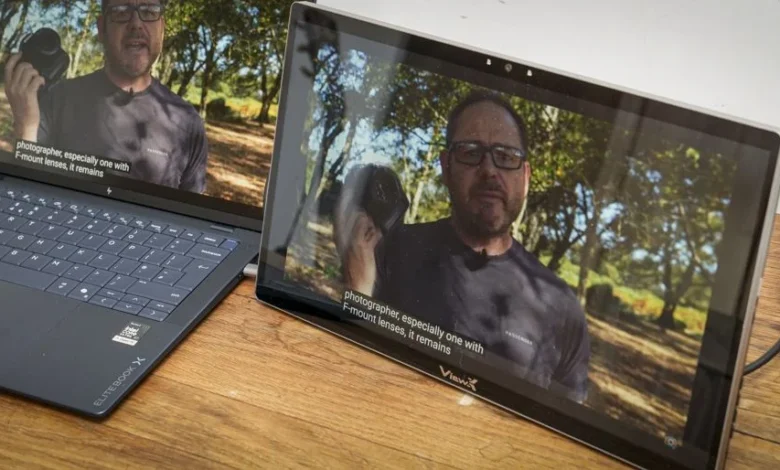
The portable monitor market has long been saturated with standard 1080p and 4K panels designed strictly for traditional productivity, extended desktop real estate, and basic media consumption. However, the introduction of specialized display hardware is beginning to bridge the gap between conventional computing and immersive spatial visualization. Enter the ViewX Liber, a 15.6-inch portable monitor featuring a 4K resolution and an integrated liquid crystal gradient refractive lens system that promises glass-free 3D viewing. Priced starting at $1,099 via crowdfunding campaigns and direct retail channels, this hyper-niche peripheral targets early adopters, mobile professionals, and gaming enthusiasts willing to invest heavily in cutting-edge display technology.
Design, Build Quality, and Connectivity
Out of the box, the ViewX Liber presents a sturdy and professional aesthetic, heavily mirroring the build quality expected of high-end portable monitors. Measuring 356.7 x 216.8 x 16.3mm and tipping the scales at 1,274 grams, it is slightly wider and heavier than a standard 15-inch laptop display, a trade-off necessary to accommodate the complex internal optics and sensor suite required for spatial tracking.
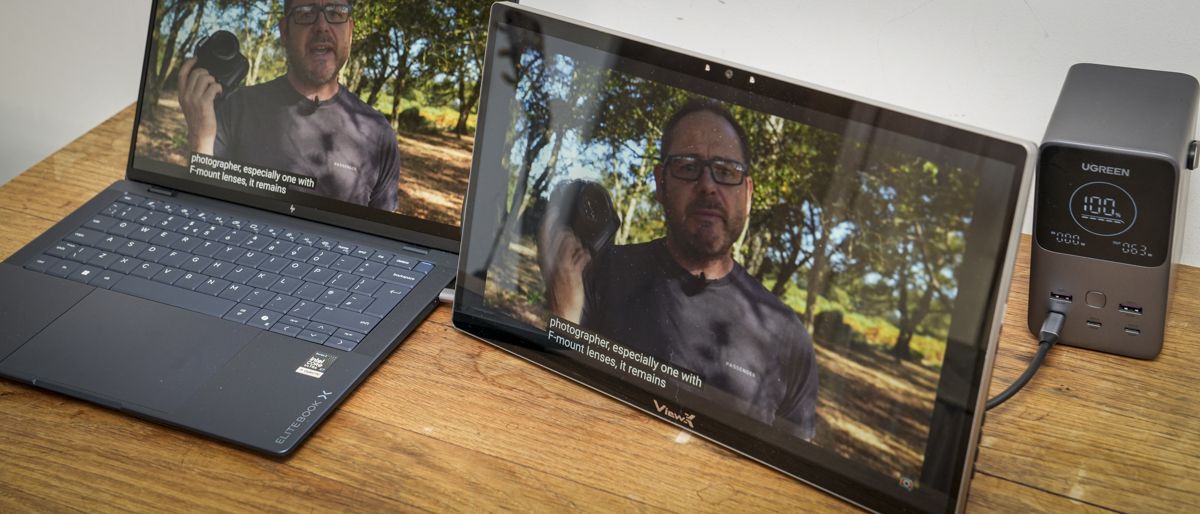
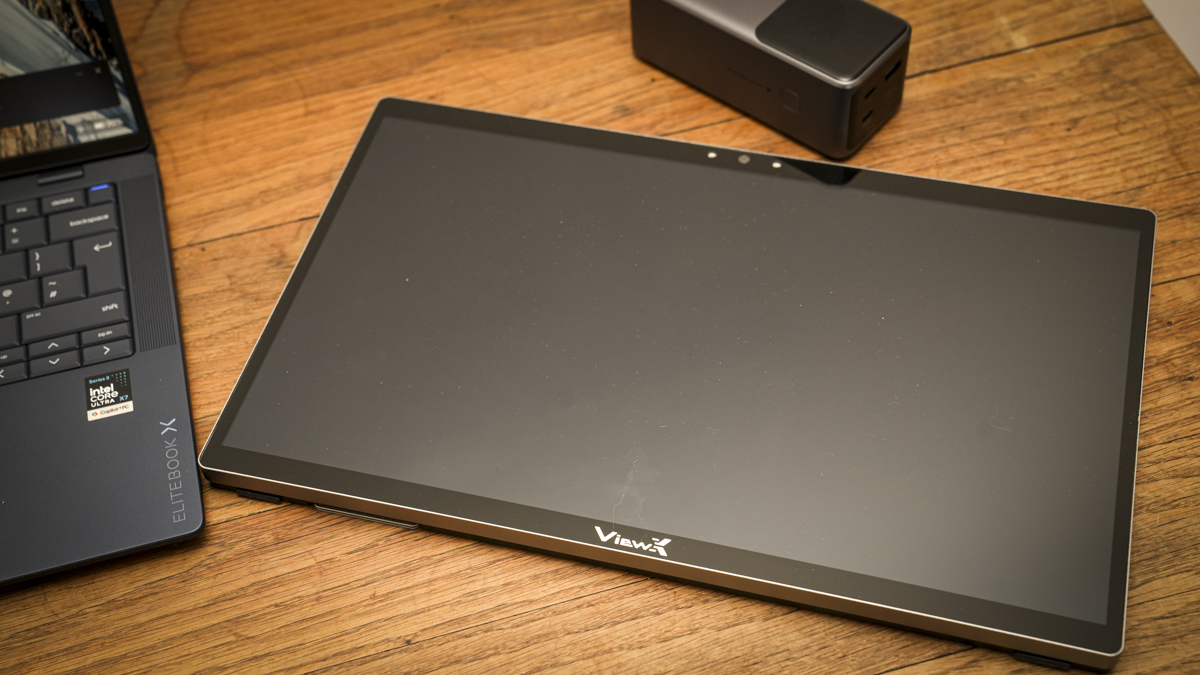
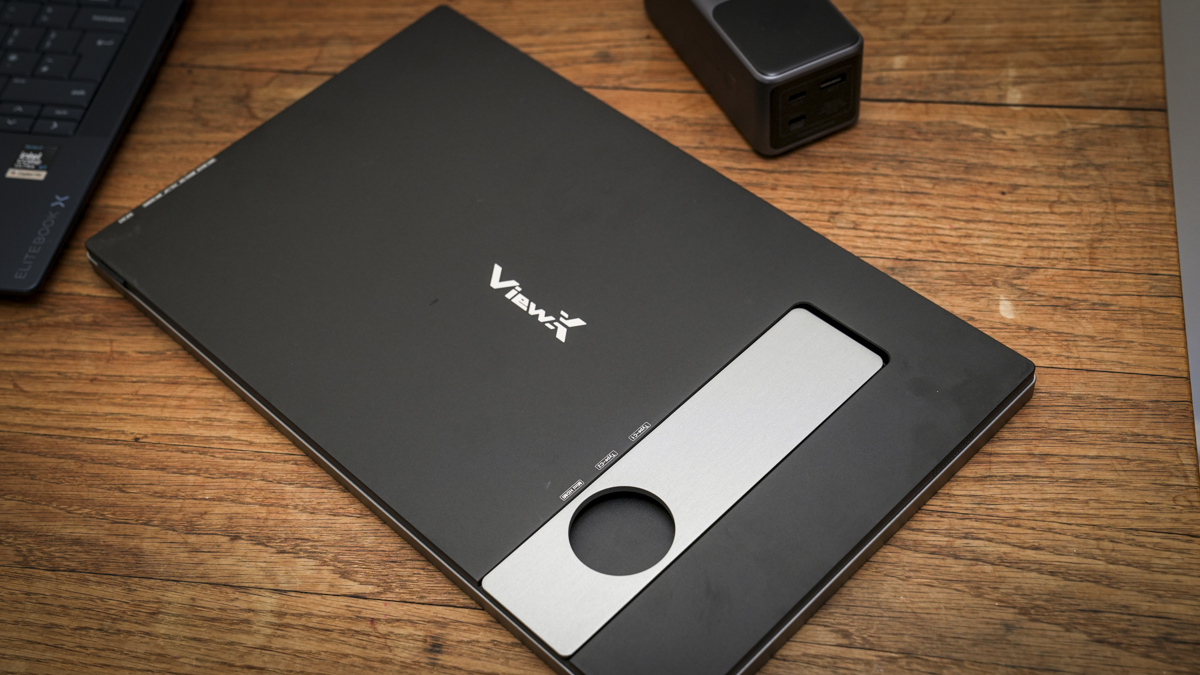
The front of the device features a relatively thin bezel surrounding the 16:9 panel, accompanied by a built-in camera and dual infrared sensors situated at the top edge. These sensors are vital for the monitor’s face-tracking capabilities, mapping the user’s position to render accurate stereoscopic depth in real time. On the rear, a sturdy metal stand offers reliable angle adjustment while cleverly concealing the input ports. Connectivity options include one mini HDMI 2.0 port, two USB-C ports supporting both video transmission and power delivery, a micro USB port intended for firmware updates, and a 3.5mm headphone jack. Physical control buttons line the right-hand edge, allowing users to toggle between 2D and 3D modes, navigate the on-screen display, and adjust volume and brightness levels.
Technical Specifications and Display Capabilities
The ViewX Liber is built around a 15.6-inch IPS-grade panel boasting a 4K resolution (3840 x 2160 pixels) and a standard 60Hz refresh rate. Additional technical specifications include:
- Brightness: 350 cd/m²
- Viewing Angles: 178 degrees in 2D mode; 40 degrees optimal in 3D mode
- Optimal 3D Viewing Distance: 40 to 70 centimeters
- Color Gamut: 72% NTSC, 100% sRGB
- Color Depth: 8-bit, supporting 16.7 million colors
- Static Contrast Ratio: 1000:1
- Response Time: 25ms
In standard 2D operation, the monitor performs admirably, rendering sharp text, balanced tones, and vibrant colors suitable for everyday office applications and web browsing. The 4K resolution provides exceptional clarity when utilized as an extended desktop workspace. However, color-critical creative professionals may find the 72% NTSC and 100% sRGB color gamut limitations insufficient for precise photo or video editing, as the panel’s engineering focus is heavily skewed toward media consumption and spatial rendering rather than professional studio accuracy.
The 3D Experience: AI-Driven Spatial Visuals
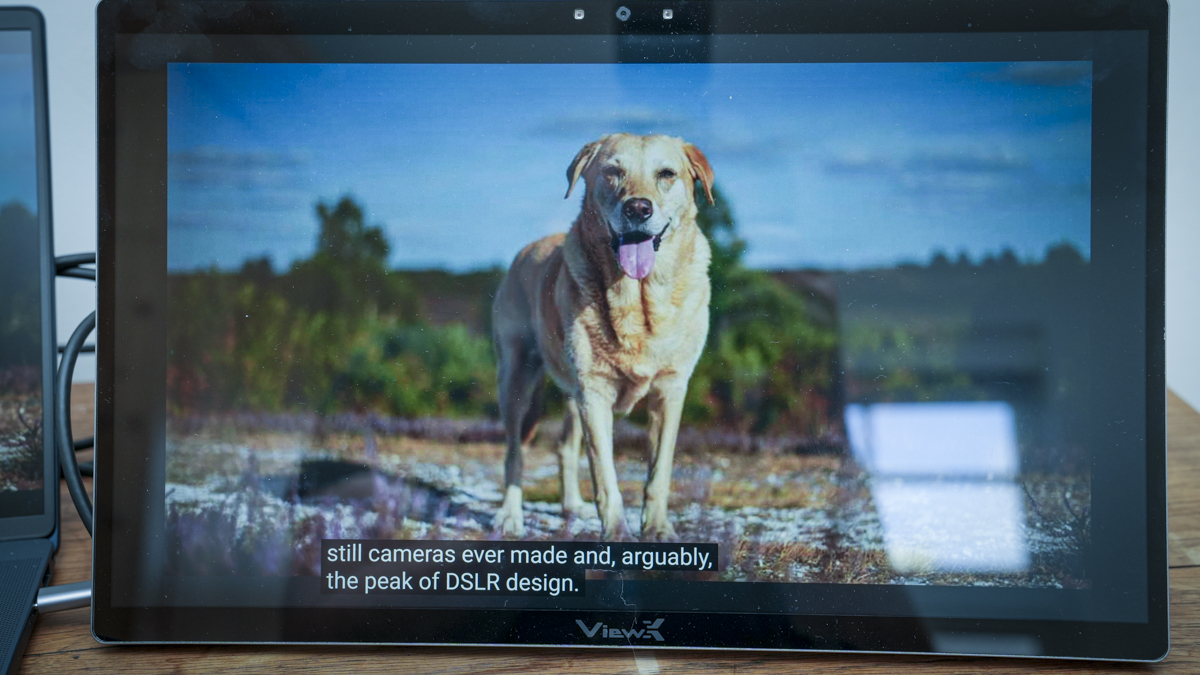
The defining feature of the ViewX Liber is its ability to deliver stereoscopic 3D content without requiring specialized eyewear. Utilizing an advanced liquid crystal gradient refractive lens and front-facing tracking sensors, the display dynamically adjusts imagery based on the viewer’s precise physical location.
Activating the 3D mode is as simple as holding down the dedicated physical button on the side of the chassis. Once engaged, the monitor requires a brief adjustment period for the user’s eyes to adapt to the simulated depth. Content can be experienced through proprietary software additions, including the 3D Playground Lite game launcher and the 3D Spatial Gateway, which employs artificial intelligence to convert standard 2D video files into spatial 3D formats in real time.
During practical testing, the spatial conversion proved remarkably effective for supported media. Standard streaming platforms, including YouTube and Netflix, displayed genuine perceived depth without manual configuration. Similarly, running titles like Indiana Jones and the Great Circle through Steam yielded a deeply immersive visual experience that far exceeded traditional flat-screen gaming.
Performance Limitations and Ergonomic Challenges
Despite its impressive technological achievements, the ViewX Liber comes with a distinct set of operational trade-offs and technical hurdles.
First, power management presents an unexpected challenge. The monitor requires a power delivery input exceeding 18W. Many high-end laptops fail to output sufficient wattage through their standard USB-C ports to sustain the display, necessitating an external power source such as the included AC mains adapter or a high-capacity portable power bank. Consequently, users cannot rely on a single-cable connection for both power and video transmission when paired with most mobile workstations.
Second, the viewing constraints for the 3D effect are notably strict. Users must remain seated directly in front of the screen within an optimal distance of 40 to 70 centimeters. Significant head movement or shifting out of the 40-degree viewing cone causes the sensors to lose track of the user, resulting in screen flicker as the monitor abruptly toggles back to a static 2D display. Furthermore, rapid camera pans in video or gaming content can introduce minor ghosting and motion jitter as the AI processing maps depth frames on the fly.
Compatibility is another consideration. Testing revealed that the current software ecosystem is optimized exclusively for Windows-based personal computers, with attempts to pair the monitor with Apple silicon MacBooks yielding unsuccessful results. Additionally, certain software menus and application settings feature untranslated text, requiring users to rely on external translation tools to configure advanced parameters.
Market Implications and Future Outlook
Priced at $1,099, the ViewX Liber occupies a unique, highly specialized segment of the display market. It does not attempt to unseat traditional portable monitors designed for general productivity; instead, it serves as an experimental proof-of-concept for glasses-free spatial computing in a mobile form factor.
While the hardware exhibits occasional quirks—such as tinny built-in speakers, strict positional requirements, and power delivery demands—it successfully demonstrates the viability of AI-assisted spatial conversion on a consumer-grade scale. For early adopters, mobile gamers, and technology enthusiasts seeking a glimpse into future display paradigms, the ViewX Liber offers a compelling, albeit imperfect, window into the next evolution of visual media.