Here’s how I’m solving the iPhone Duo kickstand problem, without any bulk

The Evolution of the iPhone Duo Accessory Market
The iPhone Duo was introduced with the promise of a seamless foldable experience, yet its physical footprint—measuring 11.3mm when folded—presents significant ergonomic hurdles. When the device is fully extended, the shift in center of gravity often causes instability on standard MagSafe stands. Market analysis indicates that while the broader iPhone ecosystem enjoys a wealth of support, the Duo has faced a scarcity of specialized peripherals.
Retail data from the past quarter shows that traditional MagSafe wallets often fail to serve as effective stands because their height is disproportionate to the back of the Duo, leading to poor balance. Furthermore, early-market cases have been criticized for their bulk, which contradicts the design philosophy of a thin-profile foldable phone. This gap in the market has forced early adopters to look toward universal accessories that prioritize low-profile design and strong magnetic adherence.
Technical Analysis of the PopSocket Low-Pro Integration
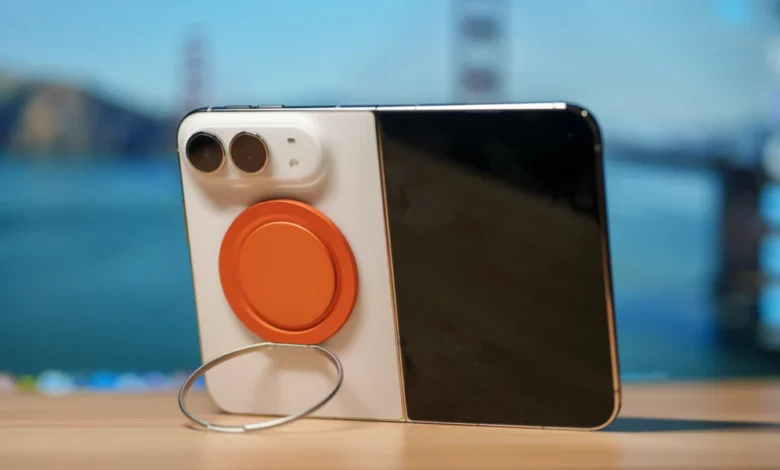
The PopSocket Low-Pro has emerged as a functional alternative due to its design, which utilizes a flip-out ring mechanism that acts as both a grip and a kickstand. From an engineering perspective, the accessory’s primary utility lies in its thinness. Because the iPhone Duo already carries a significant thickness profile, users are generally resistant to adding bulky components that hinder the phone’s ability to slide into pockets or sit flush on surfaces.

Tests conducted by independent reviewers suggest that the Low-Pro significantly mitigates the "slippage" issue commonly associated with the iPhone Duo on MagSafe stands. When the Duo is unfolded, the weight of the left display often causes the device to sag on magnetic mounts. The Low-Pro, when positioned correctly, provides a supplementary anchor point that stabilizes the device. While minor slippage remains possible over extended durations, the accessory demonstrably improves the usability of the Duo during media consumption or multi-tasking sessions.
Chronology of Accessory Adoption
- Launch Phase (Early Q4 2026): The iPhone Duo enters the market; users report immediate dissatisfaction with the official $129 folio kickstand, citing its structural fragility and obstruction of the outer display.
- Mid-Quarter Assessment: User forums and social media threads begin to identify the lack of viable, low-profile kickstand alternatives as a primary pain point.
- Late-Quarter Trend: Tech enthusiasts begin testing universal MagSafe accessories, with the PopSocket Low-Pro gaining popularity due to its slim profile and magnetic strength.
- Current Status: The Low-Pro is now widely regarded within the power-user community as a "hidden in plain sight" fix for the Duo’s stability issues.
Comparative Data and Market Impact
To understand the significance of this shift, one must consider the specifications of current market offerings. The average premium MagSafe wallet-stand weighs approximately 50–70 grams and adds 5mm to 8mm of depth to the device. In contrast, the PopSocket Low-Pro minimizes this footprint, protruding less than the device’s native camera array.
For the average consumer, this translates into a more seamless integration. Industry analysts suggest that this trend highlights a broader issue in the mobile accessory market: manufacturers are often too focused on creating device-specific products rather than optimizing universal designs for the unique physical requirements of foldables. By opting for a versatile, low-profile solution, users are bypassing the "early adopter tax" often associated with niche, poorly reviewed first-party or specialized third-party cases.
Industry Implications and Consumer Response
The shift toward accessories like the Low-Pro signals a growing maturity in how users interact with foldable technology. Rather than waiting for a specific brand to release a "Duo-optimized" case, users are applying critical thinking to cross-compatible hardware. This creates a challenging environment for accessory manufacturers who invest heavily in custom-molded cases, as they now must compete with established, multi-purpose peripherals.

Furthermore, the price disparity is notable. With official accessories retailing above $100, the $36 to $40 price point of the Low-Pro represents a significant value proposition. The availability of various finishes—ranging from classic Black and Gun Metal to more stylized options like Teal, Tortoise, and Carbon Lattice—allows for a level of customization that the limited, often monochromatic official Apple line lacks.
Future Outlook
As the iPhone Duo lifecycle continues, the market for accessories will likely become more bifurcated. We can expect to see two distinct segments:
- Specialized Protective Gear: High-cost, rugged cases designed for maximum protection, which may continue to struggle with kickstand integration due to the inherent complexity of the device’s hinge.
- Modular Minimalist Solutions: Low-cost, high-utility attachments that prioritize the device’s original aesthetic while adding necessary functionality, such as the Low-Pro.
For the consumer, the decision comes down to a trade-off between total protection and user experience. Currently, the evidence suggests that for those who prioritize the "naked" feel of the iPhone Duo, the latter category is winning the sentiment battle.
Summary of Findings
The integration of the PopSocket Low-Pro with the iPhone Duo is a case study in practical problem-solving. By leveraging the strength of the MagSafe standard, users have found a way to enhance the device’s ergonomics without sacrificing its form factor. While the accessory was not designed exclusively for the Duo, its low-profile ring and stable magnetic attachment address the specific physical vulnerabilities—namely weight imbalance—that have plagued the device since its inception.

As of late 2026, the accessory market for the iPhone Duo remains in a state of flux. While we may see future iterations of official Apple accessories that address the current shortcomings, the current demand for slim, effective, and affordable stands remains high. Until such a time as a dedicated, high-performance case reaches the market, the PopSocket Low-Pro stands as a benchmark for how third-party, universal design can outperform specialized but flawed alternatives.
Users looking to optimize their device experience should consider the cost-benefit analysis of such accessories. With a 10% price variation based on color and a wide availability across major retail channels, the Low-Pro serves as an accessible entry point for those frustrated by the current limitations of the iPhone Duo ecosystem. Whether this trend forces major manufacturers to reconsider their design approach remains to be seen, but for now, the user community has effectively voted with its wallet, favoring versatility over exclusivity.