WatchOS 27.3 Beta Introduces Cutting-Edge Audio Intelligence Features, Siri Recap and Live Rewind, to Apple Watch Series 12 and Apple Watch Ultra 4

Apple Inc. has officially rolled out the first developer beta of watchOS 27.3, bringing two highly anticipated artificial intelligence capabilities to its latest wearable hardware lineup. Specifically designed for the Apple Watch Series 12 and Apple Watch Ultra 4, the newly introduced "Audio Intelligence" suite consists of two distinct tools: Siri Recap and Live Rewind. Initially teased during Apple’s major hardware showcase in September—where company executives promised the features would arrive in a developer and public beta phase before the end of the year—these tools represent a significant leap forward in ambient computing, voice processing, and user privacy on the wrist.
The release of watchOS 27.3 beta marks a pivotal moment for Apple’s broader generative AI strategy, branded as Apple Intelligence. By extending these sophisticated auditory assistance features from the iPhone down to the smartwatch ecosystem, Apple aims to redefine how users interact with spoken communication in real-time, offering cognitive assistance without demanding constant, active attention to a screen.
Main Facts of the watchOS 27.3 Developer Beta Release
The deployment of watchOS 27.3 beta to registered developers initiates the testing phase for two flagship audio-focused utilities:
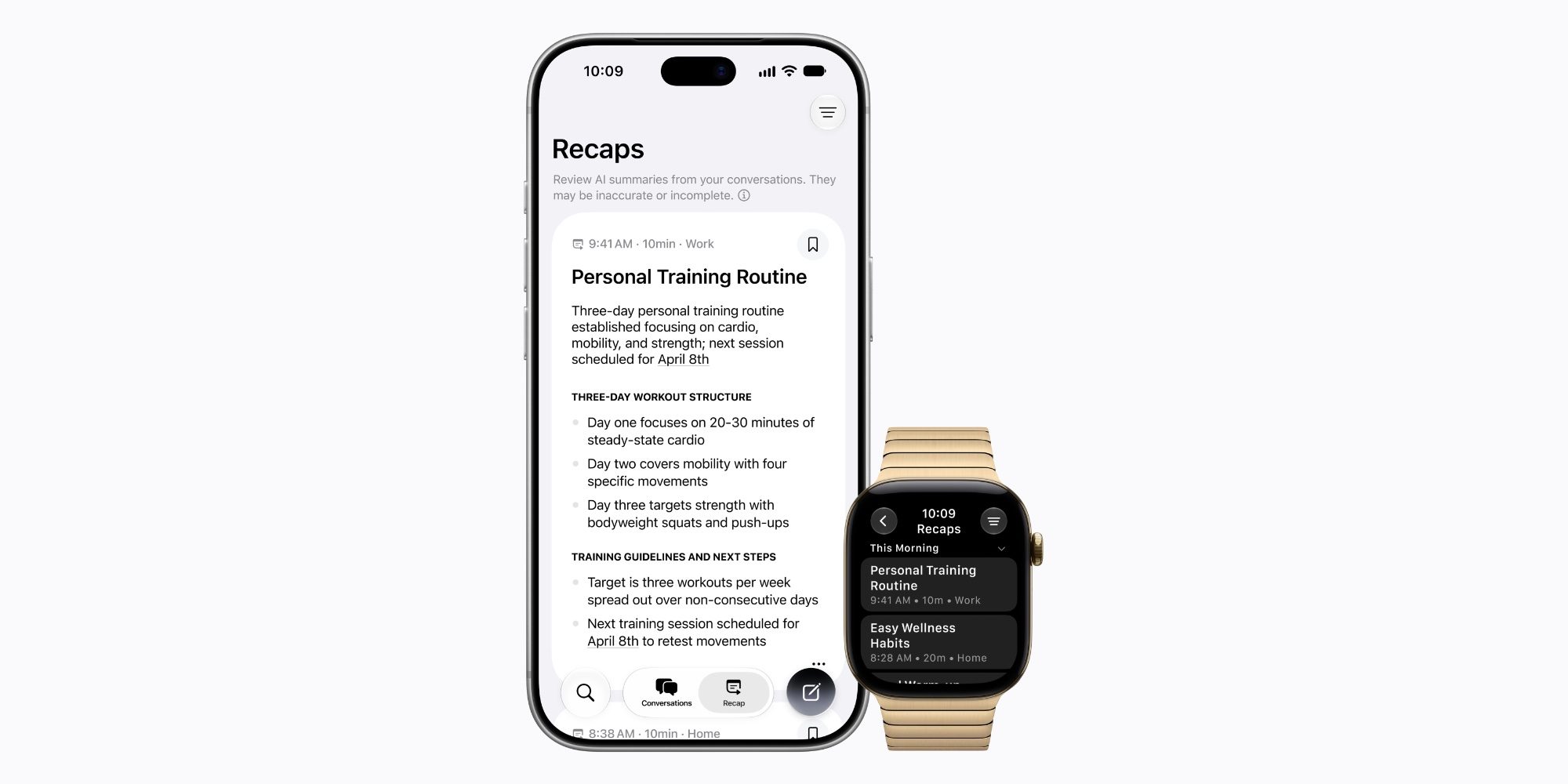
- Siri Recap: An ambient conversational note-taking and summarization tool. It runs quietly in the background, synthesizing lengthy discussions throughout the day into concise, high-level summaries accessible via the Siri application on a paired iPhone.
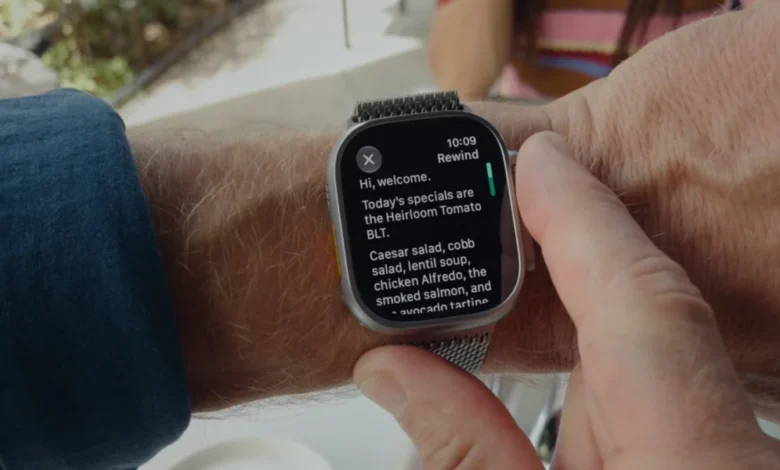
- Live Rewind: A short-term auditory recall mechanism. Triggered by a quick double-press of the Apple Watch Digital Crown, it instantly displays a text transcript of the previous 15 seconds of ambient audio or conversation.
- Hardware Exclusivity: At present, both features are exclusively supported on the Apple Watch Series 12 and the Apple Watch Ultra 4, heavily relying on the onboard S11 silicon chip and its dedicated hardware-isolated security enclave.
- Privacy and Security Framework: Operating under strict data minimization principles, the tools process audio strictly on-device, intentionally avoid speaker identification, exclude sensitive identifiers like financial or government data, and automatically purge data after short retention windows.
Chronology and Background Context
The groundwork for watchOS 27.3 was laid months prior during Apple’s annual September special event. During the keynote presentations, Apple’s software engineering teams outlined a roadmap to integrate deeper machine learning models into watchOS, emphasizing health, productivity, and contextual awareness.

The strategy behind Apple Intelligence on the wrist has evolved iteratively. While early implementations of the company’s AI suite focused heavily on text generation, notification triage, and Siri query handling on iOS and macOS, wearable devices presented a unique set of engineering hurdles. Smartwatches possess constrained thermal envelopes, smaller batteries, and strict processing limitations compared to smartphones and laptops.
To overcome these constraints, Apple developed specialized on-device machine learning pipelines optimized for the S11 chip architecture. When the September event concluded, Apple confirmed that the Audio Intelligence features would spend the subsequent months in rigorous internal testing before landing in developers’ hands "later this year." The release of the watchOS 27.3 developer beta fulfills that timeline, setting the stage for a public beta rollout in the coming weeks and a broad consumer release early next year.
Deep Dive Into Siri Recap and Live Rewind Functionality
The two features introduced in watchOS 27.3 serve distinct yet complementary roles in daily communication management.
Siri Recap is engineered to help users retain information from meetings, casual chats, and daily interactions without requiring them to manually take notes. When enabled via the Apple Watch app on a paired iPhone, Siri Recap ambiently listens to conversations based on user-configured schedules, timeframes, or geographical locations. Users can also toggle the feature on and off manually through the Apple Watch Control Center.
Rather than generating exhaustive, error-prone transcripts, Siri Recap creates structured overviews consisting of a title and key bullet points. Apple designed these summaries to jog the user’s memory while allowing them to remain fully present in ongoing conversations. To protect user privacy, these summaries auto-delete after seven days unless explicitly saved by the user.
Live Rewind, on the other hand, operates on a micro-scale for immediate comprehension. Designed for moments when a user mishears a phrase, encounters unfamiliar jargon, or loses the thread of a fast-moving discussion, Live Rewind captures a rolling 15-second buffer of ambient audio. By double-pressing the Digital Crown, the user summons a discrete text snippet onto the Apple Watch display. From there, the user can ask follow-up questions to Siri regarding the snippet’s content or save the text directly to the Siri app for later review.
Official Responses and Strict Privacy Architecture
Given the sensitive nature of ambient audio capture, privacy advocates and security researchers have closely scrutinized Apple’s implementation of the Audio Intelligence framework. In response, Apple has published comprehensive documentation, including a dedicated Privacy Overview and official support guides outlining the cryptographic and hardware safeguards protecting the system.
According to Apple’s engineering specifications, neither Siri Recap nor Live Rewind creates or stores permanent audio recordings. The raw audio utilized for real-time processing is rendered completely inaccessible to the operating system, third-party applications, the user, and even Apple itself.
This isolation is achieved through the S11 chip’s Secure Exclave—a dedicated, hardware-isolated compartment designed to process sensitive biometric and cryptographic data. Audio captured by the watch microphone is routed directly to the Secure Exclave, analyzed by the local machine learning models, and immediately purged once the summary or text snippet is generated. Furthermore, the system intentionally avoids speaker identification and is programmed to filter out sensitive personal identifiable information, such as financial details or government-assigned identification numbers.
Additional safeguards include user-facing transparency measures. When Live Rewind is activated, the Apple Watch triggers an audible chime to alert surrounding individuals, functioning even when the device is set to silent mode. Both Siri Recap summaries and Live Rewind text snippets are protected by end-to-end encryption when synced or stored across Apple’s ecosystem.

Broader Impact and Industry Implications
The introduction of audio intelligence tools to mainstream smartwatches signals a significant shift in consumer technology. As voice assistants evolve from simple command-and-response utilities into proactive, context-aware companions, the wearable device is increasingly positioned as the ideal form factor for ambient computing.
Competitors in the consumer electronics and artificial intelligence sectors have increasingly explored wearable audio processing, but privacy concerns have often hindered mainstream adoption. By embedding strict hardware-level safeguards—such as the S11 Secure Exclave, mandatory audio chimes, and automatic data deletion—Apple is attempting to establish a benchmark for privacy-conscious AI integration.
For enterprise users, students, and professionals, features like Siri Recap could fundamentally change how informal meetings and daily briefings are managed. By shifting the burden of note-taking to an automated, privacy-vetted wrist companion, users can theoretically engage more deeply in interpersonal communication.
However, broader societal implications remain under evaluation. The deployment of ambient listening technologies in public spaces will undoubtedly face ongoing scrutiny regarding social etiquette, consent, and the comfort of individuals in proximity to AI-enabled hardware. While Apple’s audible chime and lack of speaker attribution mitigate some concerns, the normalization of wrist-based recording tools will require continuous dialogue between tech developers, regulators, and consumers.
As the watchOS 27.3 beta cycle progresses, developers will test the limits of the S11 chip’s machine learning capabilities, stress-test battery consumption profiles, and evaluate the accuracy of the summarization algorithms. If successful, these tools will transition from developer preview to general availability, laying the foundation for the next generation of intelligent, context-aware personal technology.