WhatsApp Expands Apple Watch Experience With Full watchOS Emoji Reaction Support


The evolution of wearable technology has continuously redefined how humanity interacts with digital communication, narrowing the gap between pocket-sized smartphones and wrist-bound companions. Meta-owned messaging giant WhatsApp has taken another significant step in bridging this technological divide by rolling out comprehensive emoji reaction support for its dedicated Apple Watch application. This update eliminates one of the most persistent constraints faced by watchOS users, transitioning the platform from a limited notification-relay service into a fully realized, independent messaging ecosystem.
For years, Apple Watch owners utilizing WhatsApp faced a frustrating paradox. While the ecosystem boasted powerful hardware and seamless cellular and Wi-Fi connectivity, interacting with WhatsApp messages directly from the wrist was severely restricted. Communication was largely relegated to Apple’s native notification system, where users could read incoming texts and dictate or type brief replies. However, rich interactive elements—particularly the nuanced realm of emoji reactions—remained entirely inaccessible unless the user pulled out their primary iOS device.
The turning point arrived late last year when WhatsApp officially launched a native, standalone Apple Watch application. This release fundamentally altered the user experience, introducing a robust feature set that included call notifications, voice message playback, comprehensive chat history access, and the foundational elements of emoji reactions. Yet, even this major software milestone carried a noticeable compromise. When reacting to a message on watchOS, users were restricted to a meager selection of six preset emojis. Expressing precise emotion, humor, or agreement via a specific emoji outside of that rigid pre-selected half-dozen required abandoning the convenience of the wrist and reaching for an iPhone.
The Mechanics of the New watchOS Emoji Picker
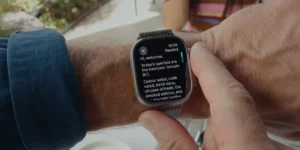
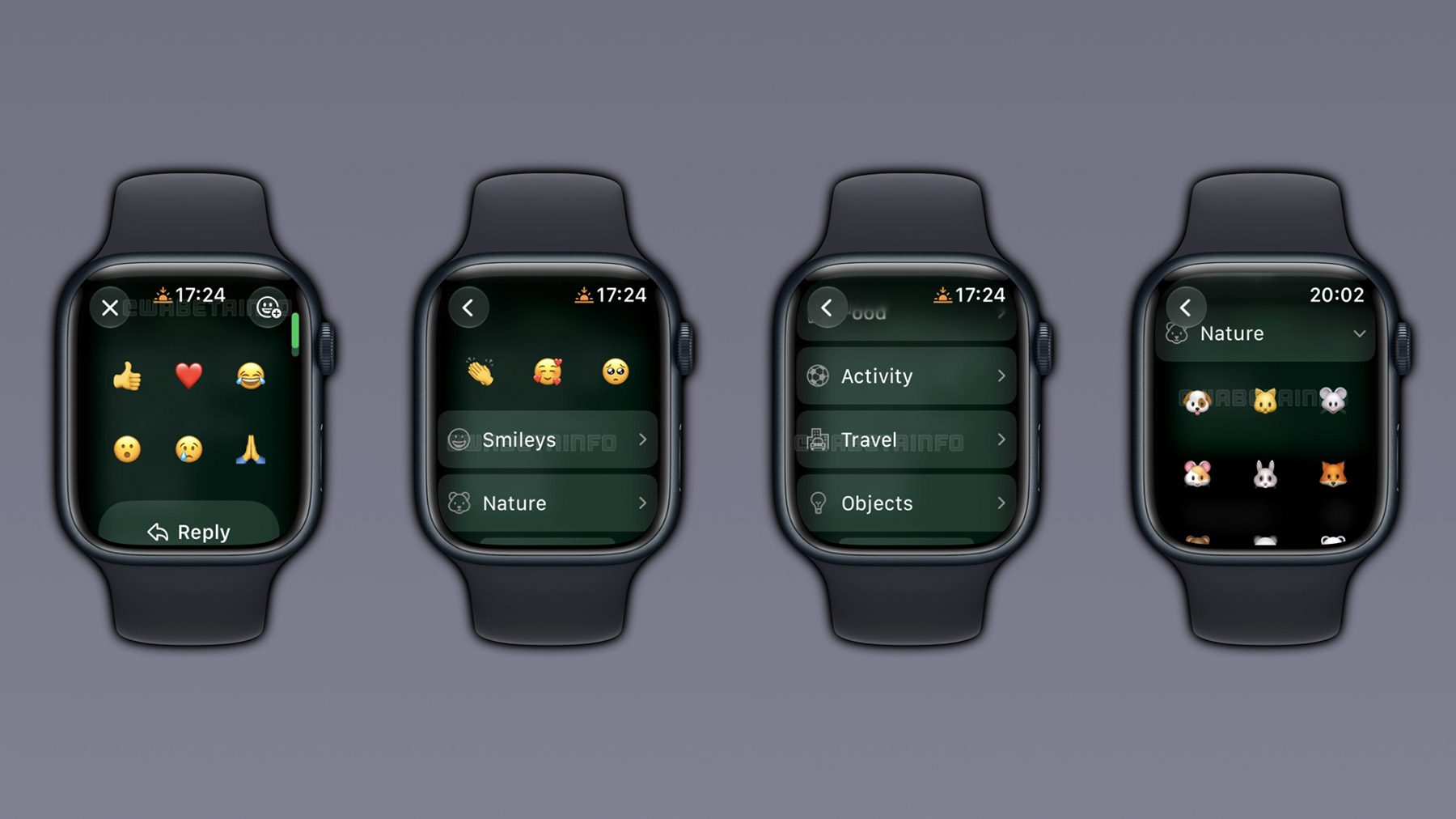
According to recent deployment tracking by industry publication WABetaInfo, WhatsApp is actively resolving this constraint. The platform is currently pushing a server-side update that brings the complete catalog of watchOS system emojis directly to the WhatsApp watch application.
Despite the expansion, the user interface remains intuitive and respectful of the Apple Watch’s limited screen real estate. When a user taps and holds a message bubble, the familiar interface initially presents the standard six default reactions for rapid, frictionless replies. However, an adjacent option now allows users to summon a comprehensive emoji picker.
This newly integrated library mirrors the organizational structure found across Apple’s broader software ecosystem. Emojis are systematically cataloged into eight distinct categories: Smileys and Emotions, Nature and Animals, Food and Drink, Activity and Sports, Travel and Places, Objects, Symbols, and Flags. Users can seamlessly scroll through these categories, expand specific sections with a tap, or select from a dynamically updated list of recently used emojis pinned conveniently at the top of the interface.
Industry analysts note that this architectural design strikes a careful balance between watchOS display constraints and functional depth, ensuring that navigation remains swift even on smaller watch displays.
A Chronology of WhatsApp on Wearable Devices
To fully appreciate the significance of this current rollout, one must examine the broader timeline of WhatsApp’s expansion onto non-traditional platforms. For over a decade, WhatsApp prioritized mobile operating systems—primarily Android and iOS—alongside desktop environments via WhatsApp Web and native Mac and Windows applications. Wearables were historically treated as an afterthought, relying on third-party companion apps or rudimentary system-level notification mirroring that offered zero native functionality.
The modern phase of WhatsApp’s multi-device strategy began with the introduction of its companion mode, allowing a single account to be linked across multiple independent devices without requiring the primary smartphone to remain online. This architectural overhaul laid the essential groundwork for hardware-agnostic applications.
The subsequent launch of the dedicated Apple Watch app late last year marked the company’s formal entry into the smartwatch application market. That initial deployment established the baseline architecture for voice processing, audio playback, and chat management on watchOS. The current introduction of full emoji support represents the first major feature enhancement to the native watch application, signaling that Meta views the wearable platform as a primary, rather than secondary, touchpoint for modern communication.
Gradual Deployment and Industry Context
True to form, Meta is deploying the updated emoji reaction framework via a staged rollout. While the feature has officially entered its distribution phase, tech industry observers note that it may take several weeks for the update to propagate globally to all Apple Watch users running the compatible WhatsApp build. This methodical distribution strategy allows developers to monitor server loads and catch unforeseen software bugs before the feature becomes universally available.

The timing of this update coincides with an increasingly competitive landscape in the smartwatch messaging sector. Rival messaging applications, including Telegram and Signal, have continually refined their own wearable integrations to capture market share among mobile-first consumers who increasingly value digital minimalism and device independence. By eliminating minor friction points like limited emoji selections, WhatsApp is reinforcing user retention and signaling long-term platform commitment to its massive global user base.
Broader Implications for Mobile and Wearable Ecosystems
The expansion of emoji support on watchOS carries implications that extend far beyond simple convenience. Emojis have evolved from playful visual novelties into essential components of digital discourse, frequently serving to soften tone, provide immediate contextual feedback, or replace lengthy text replies entirely in fast-paced conversations.
On smaller screens where text entry remains labor-intensive—even with advanced dictation and swipe-typing algorithms—expressive non-verbal communication tools are vital. By granting Apple Watch users unfettered access to the entire system emoji library, WhatsApp significantly reduces the frequency with which users must physically reach for their iPhones. This reduction in "context switching" aligns closely with the foundational design philosophy of smartwatches: keeping users present in the physical world while managing digital communications efficiently.
As wearable processors grow more powerful and battery efficiencies improve, the boundary between smartphone applications and wrist-based software clients continues to blur. WhatsApp’s steady iteration of its watchOS application underscores a broader industry realization that modern users expect feature parity across every screen they own, regardless of its physical dimensions.