The Best New Camping Gear at REI 2026: A Comprehensive Review of Innovation and Value in Outdoor Equipment

The landscape of outdoor recreation has shifted significantly over the last decade, moving away from high-barrier-to-entry survivalism toward a more accessible, experience-focused model known as "set and forget" camping. REI Co-op’s 2026 line of camping and hiking gear embodies this transition, prioritizing ease of use and durability without the prohibitive price tags often associated with professional-grade equipment. As the outdoor industry continues to see record-breaking participation—with the Outdoor Industry Association reporting that over 168 million Americans engaged in outdoor recreation in the previous year—the demand for reliable, mid-tier gear has never been higher. The 2026 collection features a blend of entirely new product entries and critical updates to legacy favorites, reflecting broader industry trends toward sustainability, family-oriented design, and integrated technology for the "digital nomad" or overlanding enthusiast.
Chronology of Development and Market Entry
The rollout of the 2026 collection follows a rigorous two-year development cycle typical of the Seattle-based co-op. Field testing for these items began in late 2024 and continued through the various seasonal extremes of 2025, ensuring that the materials—particularly the updated recycled polyesters and advanced battery chemistries—could withstand the rigors of multi-climate use. This release comes at a time when consumers are increasingly scrutinized for "value-per-use," seeking gear that serves multiple purposes, from backyard sleepovers to remote backcountry expeditions.
The strategy behind the 2026 lineup appears to be a direct response to the "luxury car-camping" boom. While traditional backpacking gear focuses on weight reduction at the cost of comfort, the new Westward and Campwell lines prioritize interior volume, thermal regulation, and ergonomic support. This shift acknowledges that for the modern camper, the gear is not the destination but the facilitator for activities like paddleboarding, hiking, or leisure.

Architectural Innovation in Family Shelters: The Westward 6
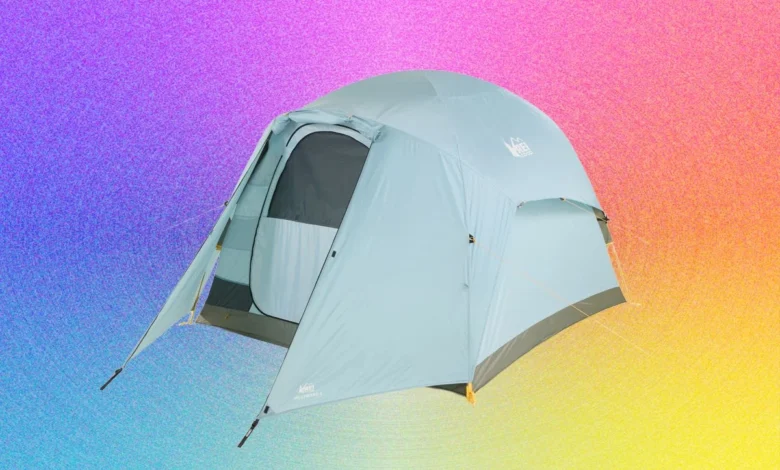
Central to the 2026 tent category is the Westward 6, a three-season shelter designed specifically for the family demographic. Utilizing a cross-pole architecture, the tent provides a 77-inch peak height, a specification that allows most adults to stand upright—a critical factor in reducing "tent fatigue" during extended trips. The design comfortably accommodates a configuration of two adults, three children, and a pet, though its theoretical maximum capacity is six adults.
One of the primary hurdles for casual campers is the complexity of assembly. REI addressed this via color-coded poles and a simplified sleeve-and-clip system, reportedly bringing setup time down to approximately 10 minutes for experienced users. Technical analysis of the Westward 6 reveals a focus on passive cooling. The light blue color of the rainfly was selected not just for aesthetics but for its higher albedo, reflecting more solar radiation than darker greens or oranges common in the industry. This is supplemented by high-density, bug-proof mesh paneling that facilitates a chimney effect, allowing warm air to escape through the ceiling while maintaining a barrier against insects.
Advancements in Sleep Systems and Thermal Resistance
The 2026 sleep category is highlighted by the Westward Dreamer Self-Inflating Bed, which represents a significant update to the previous Camp Dreamer XL. In the competitive landscape of sleeping pads, the "R-value"—a measure of thermal resistance—is the gold standard for performance. The Westward Dreamer boasts an R-value of 6.7, positioning it just below the industry-leading Therm-a-Rest MondoKing (R-value 7.0), yet at a price point roughly $60 lower.
This pad utilizes an improved valve system designed for micro-adjustments. Industry experts note that over-inflation is a common cause of sleep disruption in the field; the 2026 valve allows users to purge air in small increments to find a balance between support and pressure relief. Furthermore, the inclusion of a high-volume inflation sack reduces the introduction of moisture from human breath into the pad’s internal foam, which can lead to mold and degradation over time.

Complementing the pad is the Siesta Hooded 20 sleeping bag. Moving away from the restrictive "mummy" shape that has dominated the market for decades, the Siesta uses a rectangular cut to allow for natural movement. The 20-degree Fahrenheit rating is achieved through a recycled polyester fill that retains loft even in humid conditions. Its dual-zipper system—a full-length zipper on one side and a partial on the other—allows the bag to be converted into a quilt or vented for temperature regulation, making it a versatile tool for varied climates.
The Intersection of Work and Wilderness: Portable Power
As the "work-from-anywhere" culture persists, the integration of high-capacity power stations into camping setups has moved from a niche requirement to a standard expectation. The 2026 version of the Goal Zero Yeti 1500 portable power station, a staple at REI, features a transition to Lithium Iron Phosphate (LiFePO4) battery chemistry.
Data provided by Goal Zero indicates that this chemistry allows for approximately 4,000 charge cycles to 80% capacity, a significant increase over the 500 to 1,000 cycles typical of standard Lithium-ion (NMC) batteries. The unit includes a 2,000-watt inverter, capable of powering high-draw appliances such as portable refrigerators, medical devices (CPAP machines), and high-end laptop stations. Crucially for the overlanding community, the Yeti 1500 is engineered to withstand high-vibration environments, addressing a common failure point in cheaper power stations used in off-road vehicles or converted vans.
Rotomolded Cooling and the Economics of Durability
The inclusion of the Yeti Roadie 60 in the 2026 catalog highlights a continued consumer preference for rotomolded cooling technology. While the Tundra series remains the standard for stationary cooling, the Roadie 60 addresses the primary complaint regarding high-capacity coolers: weight. A fully loaded 60-quart cooler can exceed 100 pounds; the Roadie 60’s integrated "NeverFlat" wheels and "Periscope" handle mitigate this logistical challenge.

From a technical standpoint, the rotomolded construction ensures there are no seams where cold air can escape or heat can enter. This allows for ice retention that can span five to seven days, depending on external temperatures and opening frequency. While the $475 price tag remains a point of contention for budget-conscious shoppers, market analysis suggests that the longevity of these units—often lasting decades—provides a lower "cost-per-trip" than disposable styrofoam or thin-walled plastic coolers.
Youth Engagement and Mechanical Reliability
The 2026 lineup also emphasizes the importance of the youth market through the Rev 24 Kids Mountain Bike. For children in the 8-to-12-year-old demographic, equipment failure or poor ergonomics can be a significant deterrent to continued outdoor participation. The Rev 24 utilizes 2.6-inch wide tires on 24-inch wheels, providing a larger contact patch that increases stability on loose gravel and dirt.
Unlike many department-store youth bikes that use proprietary, low-quality parts, the Rev 24 is equipped with Shimano and Tektro components. This ensures that the bike is not only reliable but also repairable at any standard bike shop. The geometry is designed to fit children between 4’2" and 4’10", providing a "mid-fat" tire experience that builds confidence by allowing the rider to roll over obstacles that would deflect narrower tires.
Protective Apparel and Material Science
Sun protection has seen a shift from chemical topicals to physical barriers, evidenced by the popularity of the Sahara Shade Hoodie. The 2026 iteration utilizes "ShadeFactor50," a fabric rated at UPF 50+ that remains breathable in high-humidity environments. Redesigned thumbholes and the addition of a ponytail port in the hood reflect a design philosophy centered on user feedback. The move toward technical hoodies in the sailing and hiking communities is driven by the desire to reduce chemical runoff into water systems and to provide consistent protection that does not wear off with sweat or water exposure.
-Reviewer-Photo-SOURCE-Andrew-Watman.jpg)
Market Impact and Industry Implications
The release of the REI 2026 line signals a broader stabilization in the outdoor gear market. Following the supply chain volatility of 2021-2023, the industry has pivoted toward sustainable manufacturing and long-term durability. By utilizing recycled polyesters and longer-lasting battery chemistries, REI is aligning with a consumer base that is increasingly environmentally conscious.
Industry analysts suggest that the "set and forget" philosophy will likely dominate the market for the remainder of the decade. As more people seek the outdoors as a reprieve from digital saturation, the demand for gear that "just works" will continue to outpace the demand for ultra-technical, high-maintenance equipment. The 2026 collection effectively bridges the gap between the entry-level enthusiast and the seasoned adventurer, offering a suite of tools that prioritize the human experience over the technicality of the gear itself.
In conclusion, the 2026 camping lineup at REI reflects a mature understanding of the modern camper’s needs. By focusing on interior volume in tents, thermal efficiency in sleep systems, and robust power solutions for the connected traveler, the co-op has positioned itself to remain a central player in the ongoing "outdoor renaissance." The emphasis on "set and forget" gear ensures that the focus remains where it belongs: on the environment and the activities that draw people to the wilderness in the first place.
Related posts: