OpenAI Debuts Micro Keypad Amid Legal Friction with Apple and Mixed Industry Reception

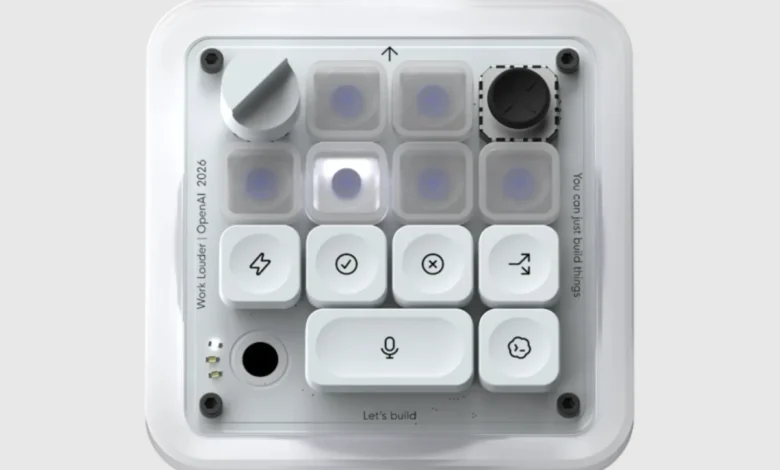
OpenAI has officially entered the hardware market with the release of Micro, a specialized artisanal keypad designed to integrate seamlessly with ChatGPT and its suite of productivity tools. Developed in collaboration with the boutique hardware designer Work Louder, the device represents a significant strategic pivot for the San Francisco-based artificial intelligence laboratory, which has previously focused almost exclusively on software and large language model development. The Micro keypad is positioned as a "macropad" for power users, featuring a minimalist aesthetic and a tactile interface intended to streamline complex AI-driven workflows. However, the launch arrives at a volatile moment for the company, as it faces a high-stakes legal battle with Apple and skeptical feedback from the professional coding community regarding the device’s utility and its $230 price point.
Technical Specifications and Design Philosophy
The Micro keypad is a compact, sturdy peripheral that emphasizes build quality and tactile feedback. Designed to sit alongside a traditional keyboard, the device features 12 primary keys divided into two functional categories. The top row consists of six frosted "agent" keys. These are fully customizable through the ChatGPT interface, allowing users to map them to specific "agents" or recurring tasks within ChatGPT or Codex, OpenAI’s model designed for programming assistance.
Below the agent keys are six command keys used for navigating and controlling the execution of AI tasks. One of the standout physical features is the dedicated voice dictation button. By holding this key, users can bypass manual typing, utilizing OpenAI’s Whisper speech-to-text technology to input prompts directly into the active session. Once a prompt is dictated, a neighboring "send" button facilitates immediate submission.
The device supports both Bluetooth connectivity and a wired USB-C connection, catering to both mobile setups and permanent desktop workstations. Visually, the product adheres to a "clean" aesthetic characterized by an immaculate white finish and minimalist branding. Industry observers have noted that the packaging and industrial design bear a striking resemblance to Apple’s hardware ecosystem—a point of contention given the current legal climate between the two tech giants.
To assist users in tracking AI processes, OpenAI implemented a color-coded LED system within the keys:
- White: Indicates the agent is idle and ready for instructions.
- Blue: Signals that the model is currently processing or "thinking."
- Green: Notifies the user that a task has been successfully completed.
- Red: Indicates a system error or a failed request.
A Chronology of OpenAI’s Hardware Ambitions
The path to the Micro’s release has been marked by both internal innovation and external controversy. While OpenAI has long been rumored to be exploring hardware, the project gained momentum following reports of the company recruiting former Apple talent.
In early 2024, whispers began circulating about a secret hardware division within OpenAI, allegedly led by high-profile veterans of Apple’s iPhone and Mac design teams. By mid-2025, these rumors were bolstered by the company’s collaboration with Work Louder, a firm known for creating "creator-centric" mechanical keyboards. The partnership was intended to marry OpenAI’s software capabilities with an "artisanal" physical form factor that would appeal to the "prosumer" market.
However, the lead-up to the launch was overshadowed by legal developments. In July 2026, Apple filed a comprehensive lawsuit against OpenAI, alleging the theft of trade secrets. The litigation centers on the claim that OpenAI systematically poached engineers from Apple’s specialized hardware and "Special Projects Group" to develop its own consumer electronics. Apple’s complaint suggests that the technologies being integrated into OpenAI’s upcoming products—including a rumored screenless smart speaker—utilize proprietary intellectual property developed at Apple Park.
Despite the legal pressure, OpenAI moved forward with the Micro as its "vanguard" product, intended to test the waters of consumer interest before committing to more complex devices like the aforementioned smart home speaker.
Market Reception and the Professional "Value Gap"
Since its release, the Micro has received a polarized reception from the tech community. While aesthetic enthusiasts and dedicated ChatGPT "power users" have praised the device for its build quality and the novelty of having a physical "AI button," the broader professional sector—particularly software engineers—has expressed significant reservations.

On platforms like Reddit, the consensus among the "code monkey" demographic has been largely dismissive. Many users have questioned the necessity of a $230 peripheral when the same functions can be achieved through software macros, Stream Decks, or even simple keyboard shortcuts. One widely circulated critique labeled the device a "prank," suggesting that the target audience of serious coders would find the 12-key limitation restrictive rather than helpful.
Independent tech outlets have been equally critical of the pricing strategy. A review by the publication Aftermath described the device as being "engineered to piss off" its target market, highlighting that $230 is a steep entry price for a macropad that lacks a screen or more extensive modularity. For comparison, established productivity controllers like the Elgato Stream Deck offer 15 or more customizable LCD keys for nearly $100 less, providing visual feedback that the Micro’s color-coded LEDs cannot match.
OpenAI’s response to these critiques has focused on the "agentic" future of AI. The company argues that as ChatGPT evolves from a chatbot into an "agent" capable of performing multi-step autonomous tasks, the need for a dedicated physical interface to manage those agents will become more apparent.
Legal Implications and the Apple Conflict
The lawsuit filed by Apple represents a significant hurdle for OpenAI’s long-term hardware roadmap. According to legal experts, the case focuses on "inevitable disclosure"—the theory that former Apple employees cannot work on similar hardware at OpenAI without eventually using the trade secrets they acquired at their former employer.
The similarities in design language between the Micro and Apple products have provided Apple’s legal team with circumstantial "optics" to support their claims of brand and design mimicry. If Apple succeeds in its litigation, it could potentially block the sale of future OpenAI hardware or force a radical redesign of the company’s product line.
Furthermore, the involvement of former Apple engineers in the development of a screenless, AI-integrated speaker has raised eyebrows across Silicon Valley. This device is reportedly intended to compete directly with Apple’s HomePod and Amazon’s Echo, but with a focus on "agentic" interaction rather than simple voice commands. The Micro is seen by many analysts as a "pilot program" to refine the human-AI interaction patterns that will eventually define this larger home device.
Broader Implications for the AI Industry
The launch of the Micro signals a broader trend in the tech industry: the "physicalization" of artificial intelligence. As AI models become more integrated into daily professional life, companies are seeking ways to move the interface beyond the browser tab.
OpenAI’s foray into hardware follows other notable, if troubled, attempts by startups to create dedicated AI devices. The Rabbit R1 and the Humane AI Pin both sought to replace or supplement the smartphone with AI-first interfaces, though both faced criticism for poor battery life and inconsistent performance. By choosing a desktop peripheral as its first hardware product, OpenAI is taking a more conservative approach, tethering the AI experience to the existing computing environment rather than trying to replace it entirely.
The success or failure of the Micro will likely dictate the pace of OpenAI’s future hardware releases. If the device finds a niche among the high-end creative and developer classes, it will validate the company’s belief that AI requires its own dedicated "tactile real estate" on the desk. If it fails to move beyond "novelty" status, OpenAI may find itself retreating to its software roots, especially if the legal costs of defending its hardware division against Apple continue to mount.
For now, the Micro stands as a symbol of OpenAI’s ambition to own the entire stack of the user experience—from the neural networks in the cloud to the mechanical switches under the user’s fingertips. Whether the "artisanal" appeal of a $230 keypad can overcome the practical skepticism of the very programmers who built the AI revolution remains the defining question of this launch. In an era where efficiency is the primary selling point of AI, the requirement for users to learn a new, color-coded physical language may be a barrier that even the most advanced "agentic" tools cannot easily overcome.