Jan Banning Uncovers the Human Face of Global Power in Bureaucratics Revisited

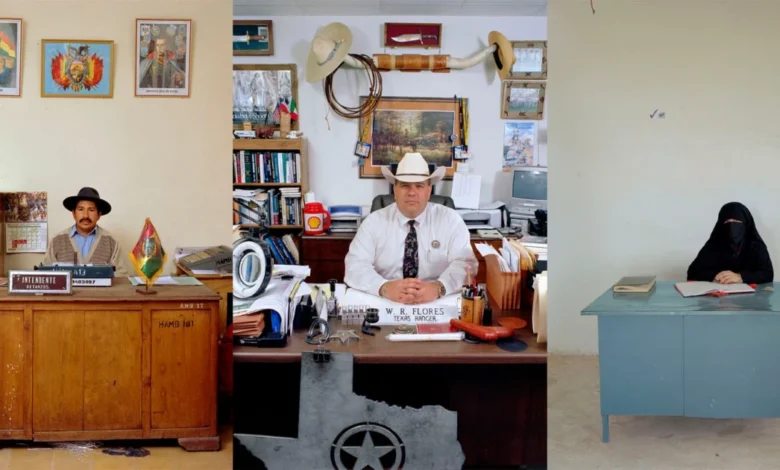
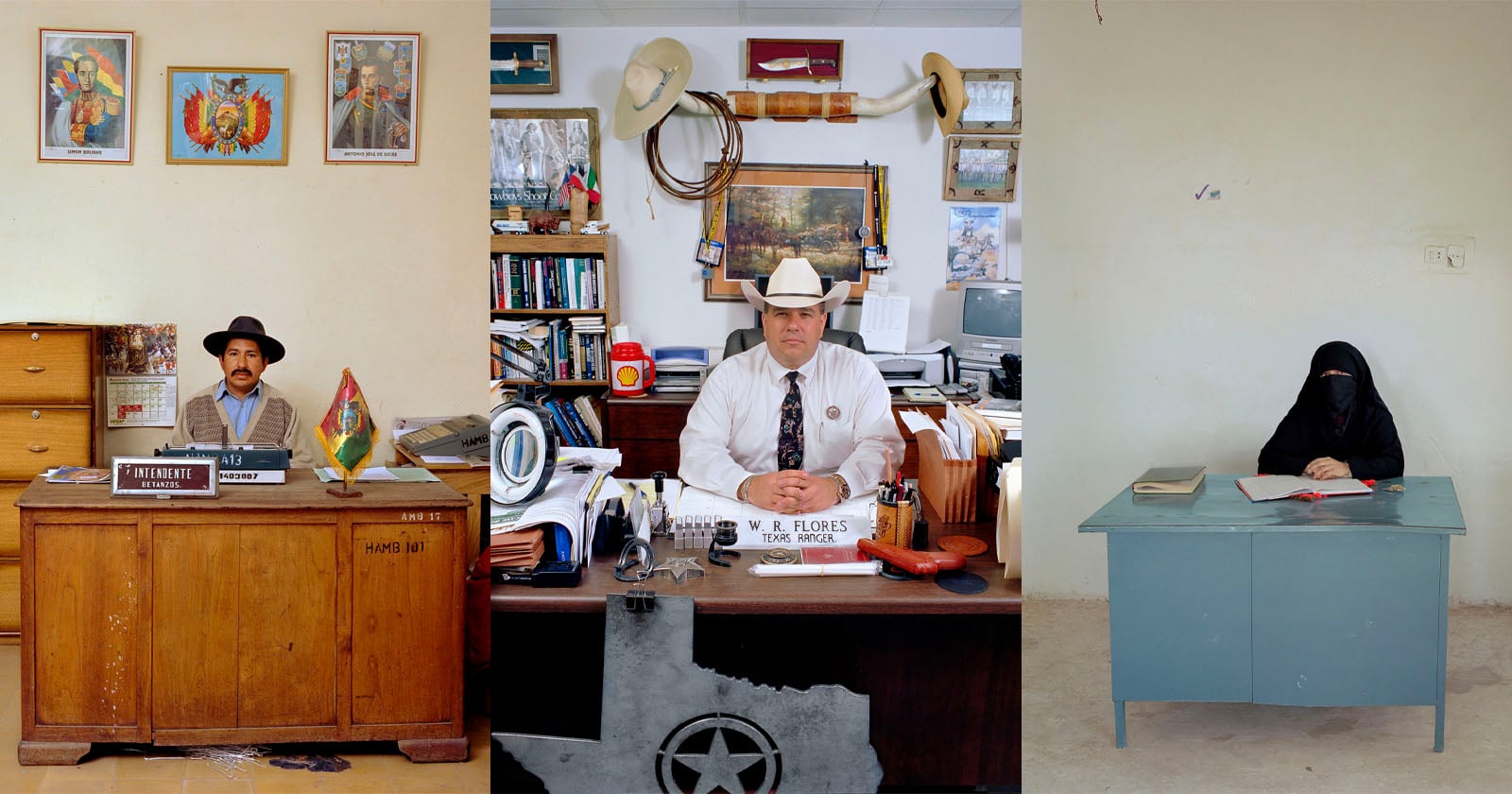
For more than two decades, Dutch documentary photographer Jan Banning has journeyed into the heart of the world’s administrative machinery, capturing the quiet, often overlooked individuals who enforce state power. His acclaimed long-term project, Bureaucratics, which originally culminated in a seminal 2008 publication, has now been expanded and re-released as Bureaucratics Revisited. This updated volume offers a fresh look at an extensive archive alongside previously unseen work, chronicling an ambitious global undertaking that spanned five years, crossed eight countries, and interrogated the very nature of civil service.
The Genesis of a Global Project
The conceptual roots of Bureaucratics date back to 2002, when Banning began conceptualizing a comprehensive visual study of state administration. Rather than focusing on the grand architecture of government palaces or the high-ranking politicians who draft legislation, Banning trained his lens on the lower- and mid-level functionaries. These are the clerks, police constables, local secretaries, and municipal inspectors who sit at the literal and figurative intersection where state authority meets everyday citizen life.
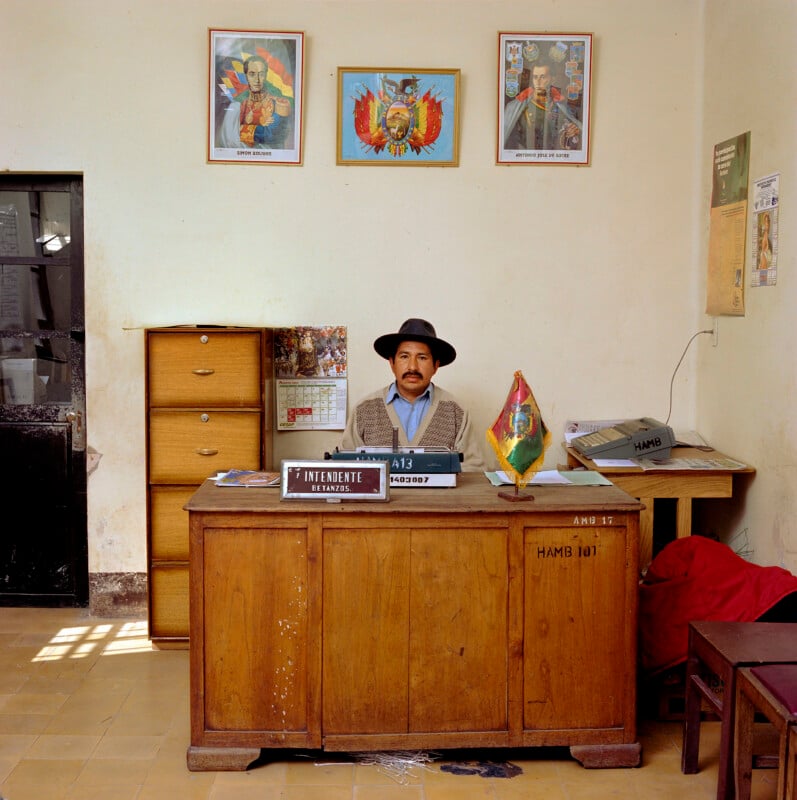
To gain access to these offices, Banning navigated complex bureaucratic mazes across diverse sociopolitical landscapes. As renowned British documentary photographer Martin Parr notes in the foreword to the publication, simply securing permission to photograph state employees in nations with stringent administrative controls—such as India, Yemen, and Bolivia—is a monumental achievement in its own right. Negotiating access required months of formal requests, official clearances, and navigating hierarchical red tape, turning the process of making the photographs into a minor bureaucratic trial of its own.
A Rigorous Visual Methodology
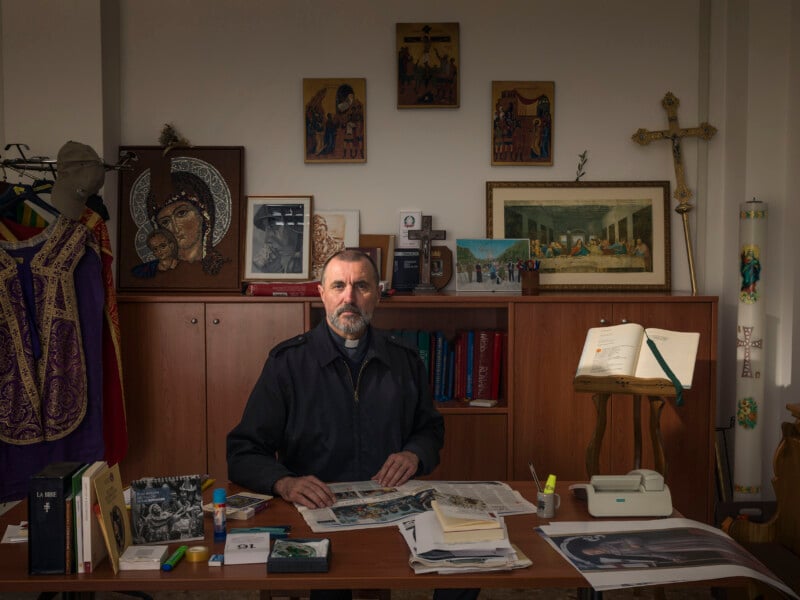
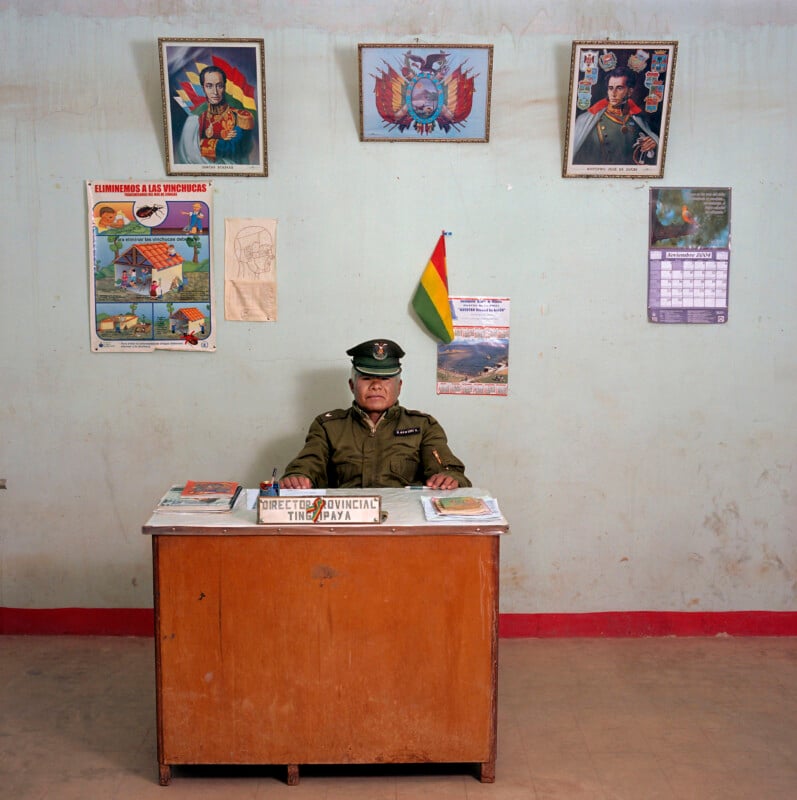
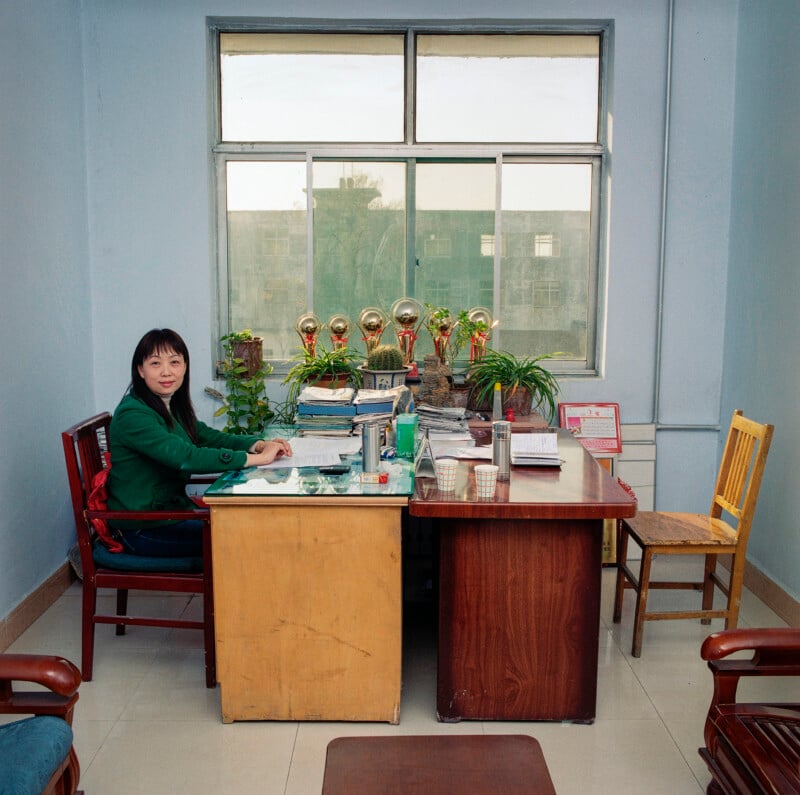
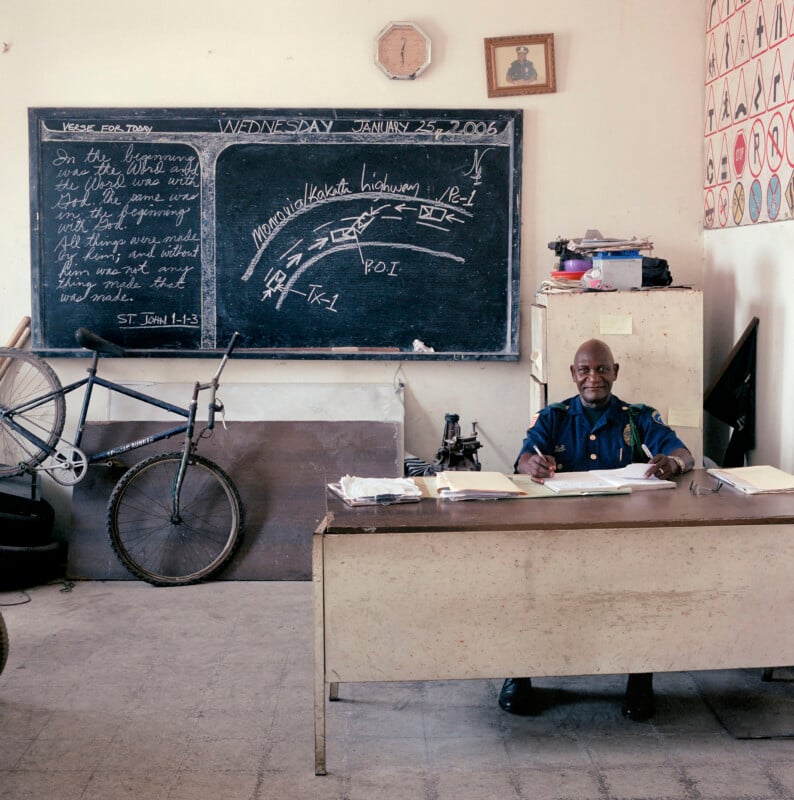
Banning established a strict, unyielding compositional framework to maintain absolute equality across his subjects, regardless of whether they operated in a high-tech Western metropolis or a remote rural outpost. Every portrait in the series is defined by a square format, a direct frontal perspective, and sharp, deadpan clarity. Crucially, the camera is always positioned precisely at the eye level of a citizen entering the office to conduct business.
This deliberate positioning serves a psychological and sociological function. It places the viewer in the shoes of the ordinary citizen, creating an intimate yet formal dialogue. The environmental portraits capture a tension between the office as a performative representation of official state power and as a deeply personal workspace reflecting the individual’s personality, idiosyncrasies, and regional realities.
Over the years, Banning utilized a progression of high-end medium-format camera systems to achieve his signature sharpness and tonal depth, starting with a Bronica SQ-Ai, moving to a Fuji GX-680III, and ultimately utilizing a Hasselblad H5 system for later additions to the archive.
A Tapestry of Administrative Realities
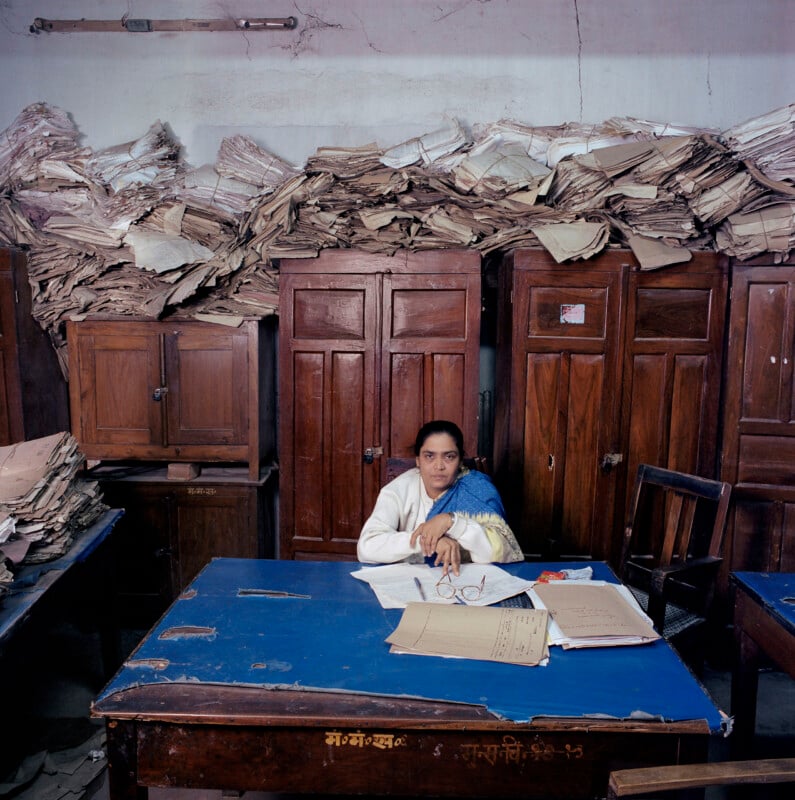
The sheer breadth of Banning’s subjects reveals the stark disparities in global governance. In the capital of the Indian state of Bihar, population 83 million, assistant clerk Sushma Prasad is captured in The Old Secretariat surrounded by towering wooden cabinets stacked high with decaying paper files. Prasad was hired on "compassionate grounds" following the death of her husband, who worked in the same department until 1997, illustrating generational continuity within civil service employment.
In stark contrast, the realities of under-resourced local policing are highlighted in rural outposts. In Tinguipaya, Bolivia, police officer third class Constantino Aya Viri Castro—formerly a construction worker—operated out of a police station that possessed neither a telephone, a car, nor a typewriter when photographed in 2005. Similarly, in the remote Siberian village of Oktyabrsky, Tomsk province, lone police officer Sergej Michailovich Osipchuk served a community of 2,000 residents without a patrol car, personal vehicle, or even a bicycle.
Other subjects reflect the intersection of culture, politics, and local enforcement. In Clermont-Ferrand, France, narcotics agent Roger Vacher is framed by an office decorated with posters of Bob Marley, Bart Simpson, and cannabis-themed imagery, humanizing an officer tasked with enforcing strict drug laws. In Monrovia, Liberia, Major Adolph Dalaney is documented working meticulously in the Reconstruction Room of the Traffic Police headquarters in the wake of civil conflict, utilizing chalkboards and logbooks to piece together vehicular accidents.
Chronology and Evolution of the Archive
The timeline of Banning’s fieldwork spans critical geopolitical shifts at the turn of the 21st century. Initiated in 2002 with documentation in Mozambique, the project steadily expanded across multiple continents through the mid-2000s, capturing administrative structures in countries including France, Russia, China, Yemen, and the United States.
Subsequent phases extended into the early 2010s, with deep dives into the legal and penal systems of nations like Uganda, where Banning documented high-security facilities such as Kirinya Main Prison in Jinja. The facility, built to house 336 inmates, was holding over 900 individuals at the time of documentation, with staff members like Chief Jailor Ivan Niwamanya acting not only as administrators but as arbiters in settling disputes among detainees.

The release of Bureaucratics Revisited brings this monumental archive back into public discourse, integrating vintage prints with contemporary scans and new selections. By revisiting the material, Banning allows observers to reflect on how administrative systems have evolved—or stubbornly remained stagnant—amid the digital transformation of global governance.
Implications and Anthropological Significance
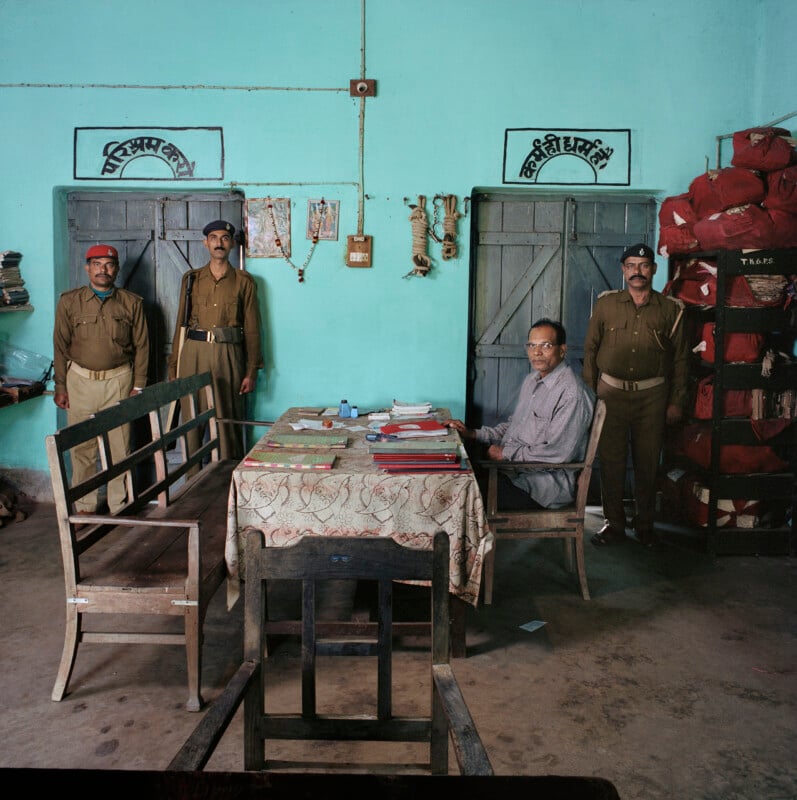
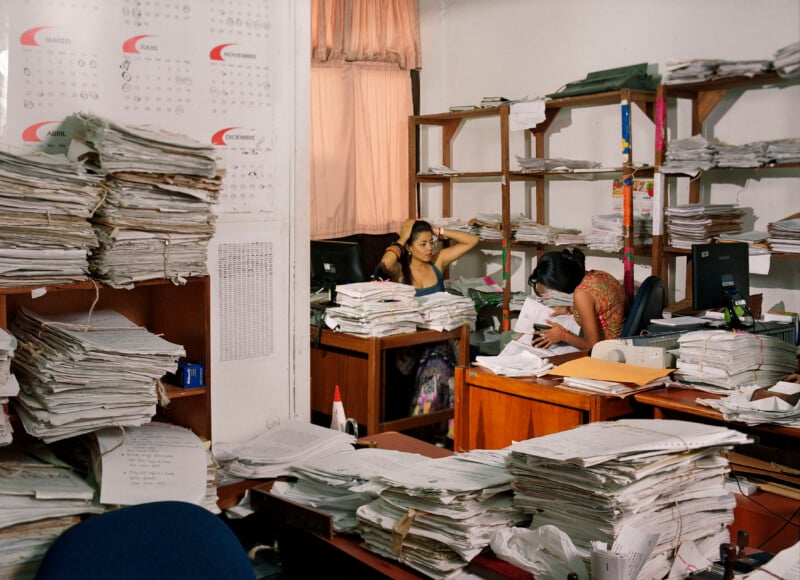
Scholars and critics have frequently categorized Bureaucratics as both an anthropological study and a work of visual poetry. By stripping away political rhetoric, Banning exposes the skeletal framework of the modern state. The massive piles of paper documents, the threadbare carpets, the peeling paint, and the mismatched office furniture serve as physical manifestations of the burdens placed on state employees.
The project raises pressing questions about the sustainability and efficiency of bureaucratic institutions. In many developing regions captured by Banning, civil servants function as the sole representatives of the rule of law, operating under extreme scarcity. Conversely, in highly developed nations, bureaucratic offices reflect overwhelming specialization and institutional complexity.
Through a subtle blend of irony and deep human empathy, Bureaucratics Revisited underscores the resilience of the individuals who sustain these administrative machineries. These civil servants remain largely invisible to the populations they govern, yet their daily labor forms the invisible glue holding civil society together.
Bureaucratics Revisited is currently available for acquisition through Jan Banning’s official platform, offering collectors, photography enthusiasts, and political scientists a definitive look at one of the most comprehensive documentary undertakings of the modern era.