Crusoe Energy Systems and Boom Supersonic Terminate High-Stakes Partnership for AI Data Center Power Infrastructure

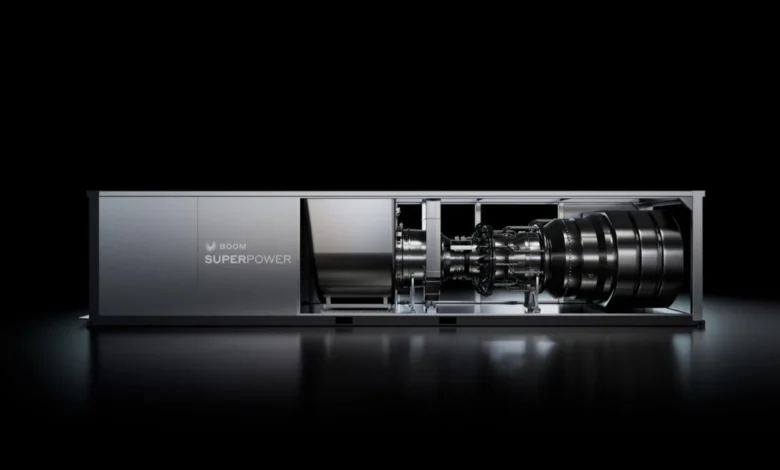
In a significant strategic pivot for both companies, Denver-based Crusoe Energy Systems has officially rescinded its plans to utilize specialized natural gas-fired turbines developed by aviation startup Boom Supersonic. The cancellation of this partnership marks the dissolution of what was initially positioned as a cornerstone agreement between two of Colorado’s most ambitious technology firms, impacting a $1.25 billion deal that would have seen 29 of Boom’s 42-megawatt "Superpower" turbines deployed to support massive AI infrastructure.
The decision arrives during a period of rapid scaling for Crusoe, which recently secured $3.9 billion in new funding to expand its footprint of modular, high-performance data centers. Despite the high-profile nature of the original agreement, both firms have confirmed that they are moving in separate directions regarding the future of their respective energy and infrastructure portfolios.
The Genesis of a Strategic Alliance
The collaboration was built on a premise of cross-industry synergy. Boom Supersonic, best known for its efforts to bring the Overture supersonic passenger jet to market, sought to monetize its engineering expertise by repurposing the "Symphony" jet engine for stationary power generation. By modifying the jet engine to run on natural gas, Boom created the Superpower turbine, which boasts approximately 80% component commonality with its aerospace counterpart.
For Crusoe, the partnership offered a unique, vertical integration strategy. Since its inception in 2018, Crusoe has evolved from a niche bitcoin miner—which utilized stranded natural gas from oil fields to power its operations—into a major player in the AI infrastructure sector. Its mandate to provide computing power to industry giants like OpenAI and Microsoft necessitates massive, reliable, and increasingly autonomous energy sources. The Superpower turbines were intended to serve as the heartbeat of these future "AI factories."
Chronology of the Partnership and Its Dissolution
The timeline of this venture highlights the volatility inherent in pioneering industrial partnerships:
- 2018: Crusoe Energy Systems is founded, focusing on capturing flared natural gas for digital infrastructure.
- December 2025: Boom Supersonic successfully raises $300 million, a significant portion of which is earmarked for the commercialization of its stationary power business to support Crusoe’s data centers.
- Early 2026: The companies finalize a $1.25 billion contract for 29 Superpower turbines, with the first deliveries scheduled for 2027.
- September 2026: Crusoe secures $3.9 billion in new capital, signaling a shift in its broader corporate strategy and capital allocation priorities.
- Late September 2026: Boom Supersonic CEO Blake Scholl confirms via social media that the partnership will not proceed, while simultaneously announcing that Boom continues to see strong demand from other potential clients.
Official Statements and Internal Divergence
The announcement of the breakup was initially shared by Blake Scholl on the social media platform X. In his public comments, Scholl expressed gratitude for the collaborative process, noting that Crusoe played a vital role in refining the design of the Superpower turbines. He emphasized that the pivot was not indicative of failure for his company, but rather a change in the procurement strategy of his partner.
"Boom will be delivering about 250MW of Superpowers next year to other sites, and we’re targeting 1GW in 2028," Scholl stated. "We’re grateful for the help Crusoe gave us in shaping Superpower and continue cheering for their successes."
A spokesperson for Crusoe, Andrew Schmitt, clarified that while the partnership with Boom has concluded, Crusoe’s broader commitment to turbine-based power remains intact. "We build AI factories from the power up, and we’re bringing new campuses online across the country, powered by innovative energy sources," Schmitt noted. He confirmed that the company’s energy requirements continue to evolve, and while they remain open to turbine solutions, they have opted for different providers that better align with the specific technical and operational requirements of their upcoming sites.

Contextualizing the Energy Demands of AI
The dissolution of this deal underscores the massive energy pressure facing the AI industry. As data center power requirements shift from standard grid reliance to more bespoke, on-site solutions, companies like Crusoe are under intense pressure to secure reliable, low-cost electricity.
Crusoe’s existing operations in Abilene, Texas, serve as a case study for this complexity. Its initial 1.2-gigawatt data center, which supports Oracle and OpenAI, relies primarily on the grid, with gas-fired turbines serving as a backup. However, the company is also constructing a 900-megawatt facility specifically for Microsoft that is intended to be powered by on-site turbines. The shift away from Boom suggests that Crusoe may be leaning toward more established or diverse power generation technologies to meet these rigorous, high-uptime requirements.
Economic and Market Implications
The fallout from this agreement has distinct implications for both entities involved:
For Boom Supersonic:
The loss of a launch customer of Crusoe’s magnitude is a tangible setback, particularly given that the power division was intended to subsidize the research and development costs of the Overture jet. However, by publicly pivoting to other customers—targeting 1 gigawatt of capacity by 2028—Boom is attempting to signal that its technology remains viable and that the business model is not solely dependent on a single client. Investors will be closely watching whether Boom can successfully land secondary contracts to replace the revenue lost from the Crusoe agreement.
For Crusoe Energy Systems:
Crusoe’s decision to walk away from a $1.25 billion contract suggests a high degree of confidence in its capital position following its $3.9 billion raise. By maintaining flexibility, the company is prioritizing operational agility over long-term commitments to unproven, experimental power hardware. This move allows Crusoe to potentially hedge its risks, utilizing a mix of wind, solar, battery storage, and traditional grid connections alongside, or instead of, specialized turbines.
Broader Industry Trends: The "Power-Up" Strategy
The trend toward "powering up" from the foundation is becoming a standard operating procedure for hyperscalers. As the demand for AI inference and training grows, traditional energy grids are often insufficient to meet the sudden, localized spikes in power demand. This has led to a surge in private-sector energy development, with data center operators increasingly acting as energy developers themselves.
The failure of the Crusoe-Boom partnership highlights the inherent risks when a high-growth, high-tech sector like AI computing attempts to force a vertical integration with an equally complex hardware sector like aerospace. The technical specifications, regulatory hurdles, and delivery timelines in aerospace are vastly different from the rapid, iterative environment of data center construction.
Looking Ahead
The future of both companies remains closely tied to their ability to execute on their core missions. For Crusoe, the challenge will be to demonstrate that its massive expansion plans can remain on schedule without the specific turbine technology it had banked on. For Boom, the mission remains focused on proving the efficiency and reliability of its Superpower turbines to a broader market, moving past the lost deal with Crusoe to secure a more diverse customer base.
As both firms continue to navigate the competitive landscape of the Denver tech corridor, the dissolution of this deal serves as a reminder that even the most ambitious synergies are subject to the cold, hard realities of evolving business requirements and the shifting priorities of a capital-intensive industry. Industry analysts expect further consolidation and re-alignment in the data center power space as companies continue to seek the "holy grail" of reliable, independent energy for their AI infrastructure.