The Quest for Optical Perfection: A Comprehensive Lab Analysis of the Sharpest Lenses Ever Tested

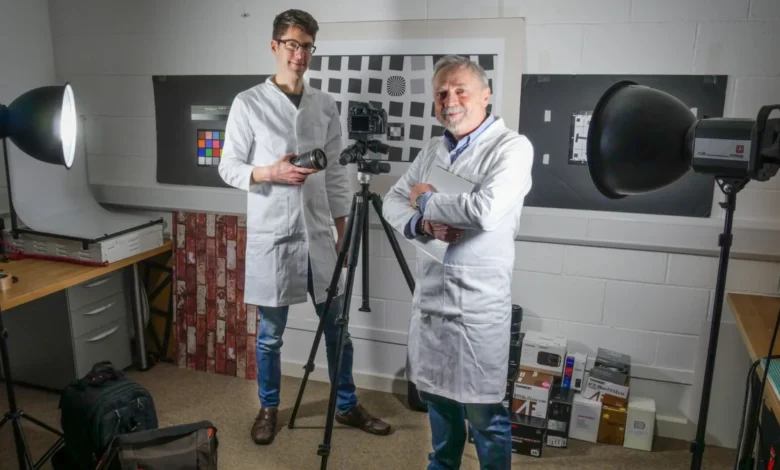
For the past two decades, the dedicated imaging laboratory at Digital Camera World has served as the industry’s arbiter of optical performance. By subjecting nearly every major own-brand lens for consumer DSLR and mirrorless camera systems to rigorous, standardized scientific testing, the lab has built a comprehensive database measuring metrics such as center-to-edge sharpness, chromatic aberration, and geometric distortion. While these findings are typically presented in individual product reviews, this comprehensive report aggregates that data to perform a rare cross-brand comparison. The goal is to identify the zenith of optical engineering across the landscape of modern photography, focusing exclusively on full-frame and medium-format optics.
The methodology behind these results relies on a standardized system that measures lens resolving power in terms of line widths per picture height. This metric provides a consistent benchmark, ensuring that the resolution of the camera body—whether it be a 24MP entry-level mirrorless or a 100MP medium-format powerhouse—does not unfairly skew the performance data of the glass itself. By normalizing the data against the vertical height of the image frame, the lab isolates the optical qualities of the lens, allowing for a direct, objective comparison between different systems and sensor formats.
The Evolution of Optical Engineering
To understand why certain lenses dominate these charts, one must consider the recent technological shift within the industry. The transition from DSLR systems to mirrorless mounts—specifically the shorter flange distances of systems like Nikon Z, Canon RF, and Sony E-mount—has fundamentally changed how optical engineers design lenses. The increased diameter of these mounts, combined with a closer proximity to the sensor, has allowed for significantly more complex lens designs that were previously physically impossible to manufacture for traditional SLR mirror boxes.
Over the last five years, this has resulted in an arms race of sharpness. Manufacturers are no longer just competing on focal length or maximum aperture; they are competing on the ability to resolve fine detail across the entire frame, even at wide-open apertures. While the historical trend favored prime lenses for absolute sharpness, recent advancements in glass molding and high-refractive-index elements have allowed manufacturers to produce zoom lenses that rival, and in some cases surpass, the resolving power of their fixed-focal-length counterparts.
Analyzing the Top Performers
The data reveals a clear hierarchy in peak center-frame sharpness. Representing the Canon ecosystem, the RF 35mm F1.4L VCM stands out with a peak score of 2804, recorded at f/2. This lens demonstrates the modern philosophy of consistent performance, maintaining high resolution from the wide-open aperture through to f/8. However, when compared to the broader market, it is surpassed by the Panasonic Lumix S PRO 50mm f/1.4, which achieves a peak sharpness of 3077 at f/2. The Lumix S PRO demonstrates superior control across its aperture range, a hallmark of L-mount optical design.
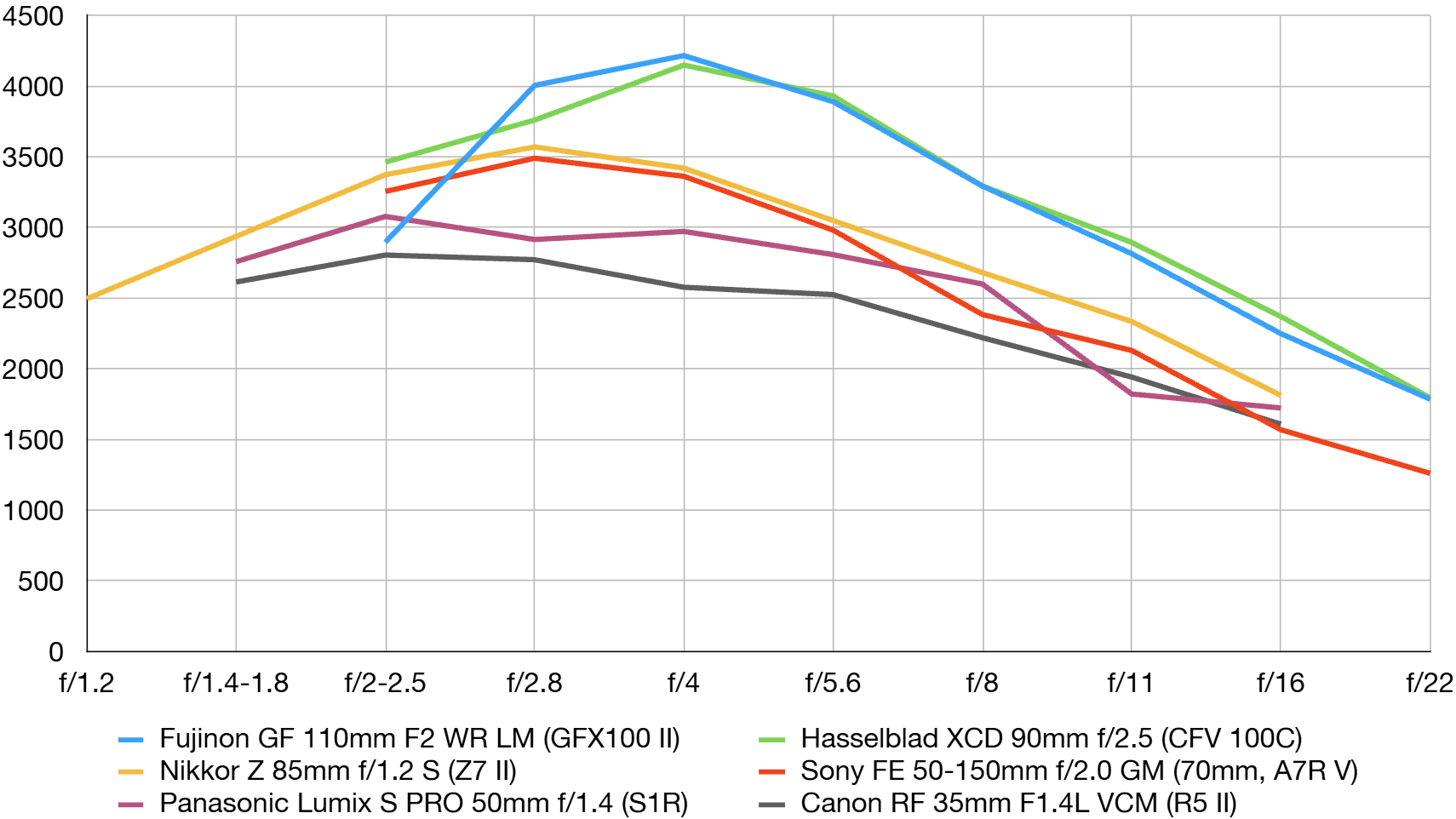
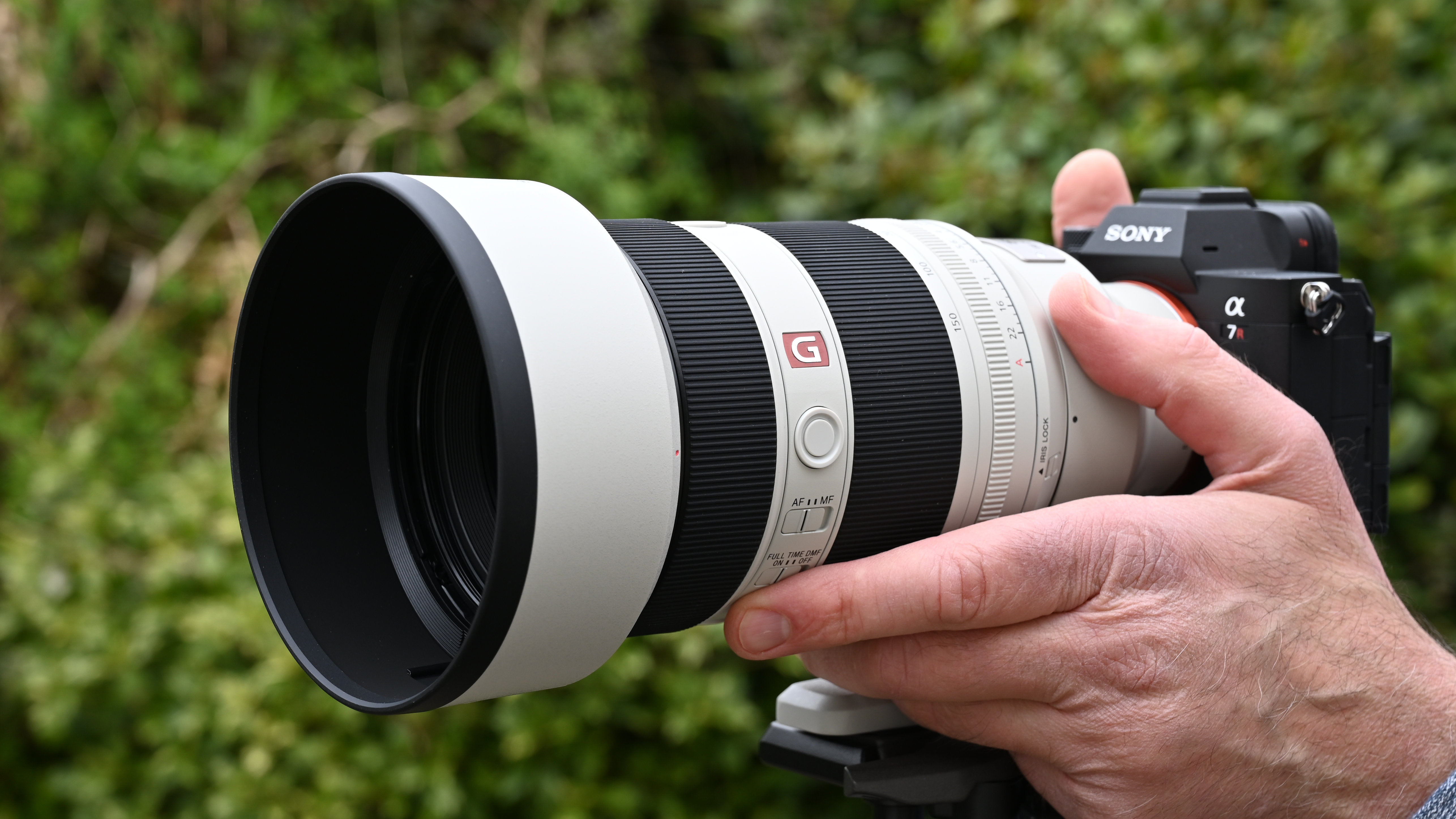
The most notable disruption in this ranking comes from the Sony FE 50-150mm f/2.0 G Master. Achieving a score of 3489 at 70mm, this lens represents a significant engineering milestone. It is exceptionally rare for a variable focal length optic to outperform high-end prime lenses in center sharpness. Traditionally, prime lenses are optimized for a single focal point, allowing for minimal optical compromises. The ability of the Sony 50-150mm to maintain this level of sharpness while providing the versatility of a zoom range suggests a breakthrough in lens element configuration and alignment precision.
Nikon’s entry, the Z 85mm f/1.2 S, secures a position at the top tier with a peak score of 3569 at f/2.8. Designed primarily for portraiture, the lens exhibits exceptional sharpness within the f/1.2 to f/5.6 range. It is important to note that the primary design objective for such a lens is subject isolation and bokeh quality, rather than extreme edge-to-edge resolution. Consequently, while it dominates in center-frame metrics, it shows a natural performance drop-off toward the corners of the frame.

The Medium Format Advantage
While full-frame systems have made extraordinary strides, the data confirms that physics still dictates a ceiling for optical resolution. The medium-format segment, specifically the Hasselblad XCD 90V and the Fujifilm GF 110mm F2 R LM WR, consistently outstrips the performance of full-frame glass. The Hasselblad XCD 90V delivers an impressive score of 4148 at f/4, but the current champion of the lab’s database is the Fujifilm GF 110mm F2, which reaches a peak of 4215 at f/4.
This margin of victory is marginal; at apertures of f/5.6 and smaller, the real-world performance difference between the Hasselblad and the Fujifilm is virtually imperceptible. However, the data confirms that these medium-format systems possess an inherent advantage in resolving fine detail, likely due to the larger image circle and the ability to utilize larger lens elements that minimize the diffraction effects often encountered in smaller sensor formats.

Corner Sharpness and System Priorities
When shifting the focus from center to corner sharpness, the narrative changes. The Nikon Z 85mm f/1.2 S, which performs exceptionally well in the center, falls to the bottom of this specific comparison. This confirms the intentional design bias toward portraiture, where corner performance is secondary to subject sharpness.
Conversely, the Canon RF 35mm F1.4L VCM exhibits remarkable consistency. While it does not claim the highest peak center sharpness, it provides an exceptionally balanced image quality across the entire frame, making it a more versatile tool for landscape or architectural photographers who require corner-to-corner clarity. The Sony FE 50-150mm f/2.0 G Master once again proves its engineering prowess by outperforming the prime lenses in the corner, a rare feat that validates the high investment required for "G Master" level optics.
Broader Implications for the Photography Market
The data gathered in this study suggests that we have reached a plateau where "sharpness" is no longer the primary differentiator between high-end systems. For the average professional and enthusiast, the current generation of optics from Canon, Nikon, Sony, Panasonic, and Fujifilm all provide resolution capabilities that far exceed the requirements for standard display, printing, and commercial reproduction.
The industry’s focus has, as a result, shifted toward other factors: autofocus acquisition speed, weather sealing, weight reduction, and the specific "character" or rendering of the glass. While the Fujifilm GF 110mm F2 stands as the technical victor in our lab tests, the implication for the market is that the choice of system should no longer be predicated solely on sharpness benchmarks.

A photograph’s impact is rarely dictated by its ability to resolve the highest number of line widths per picture height. Rather, the variables that define excellence in imagery—composition, light, timing, and narrative—remain firmly in the hands of the photographer. The technical perfection identified in these tests serves as an assurance to the user: the equipment is no longer a limiting factor in the pursuit of creative vision.
As the lab prepares for a follow-up analysis on third-party manufacturers such as Sigma and Tamron, the photography community can expect further insights into how the wider market is closing the gap on proprietary, own-brand glass. The ongoing evolution of these lens technologies continues to provide photographers with tools of unprecedented precision, ensuring that the legacy of high-fidelity imaging remains robust in the digital age.