Microsoft Patch Tuesday July 2026 Shatters Records with 570 Vulnerability Fixes as AI Accelerates Security Research and Discovery

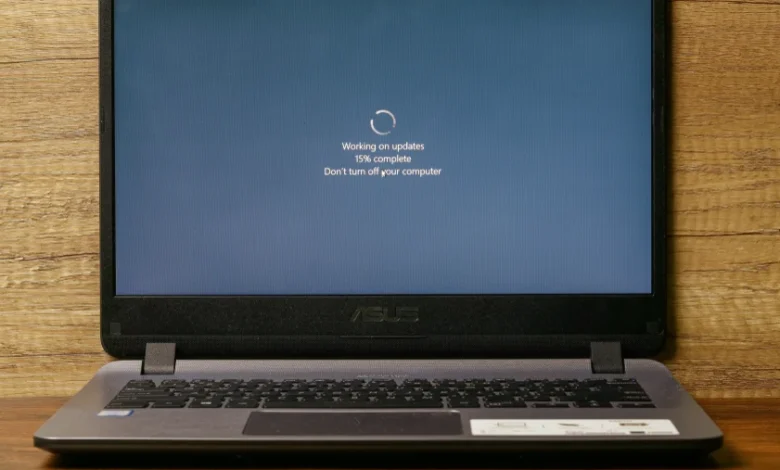
Microsoft Corp. has set a staggering new industry benchmark in cybersecurity, releasing a massive wave of software updates to address at least 570 security vulnerabilities across its Windows operating systems and broader software ecosystem. This release represents nearly triple the volume of the previous record-breaking Patch Tuesday in June 2026, signaling a fundamental shift in how software flaws are identified and remediated. According to Microsoft executives, the unprecedented surge in vulnerability counts is directly attributable to the integration of advanced artificial intelligence in the discovery and analysis of code-level weaknesses.
As the digital landscape becomes increasingly complex, the sheer volume of these updates highlights a growing "arms race" between automated defensive research and AI-powered exploitation. Of the 570 bugs addressed this month, nearly 60 were classified as "critical," the highest severity rating assigned by Microsoft. These critical flaws are particularly dangerous as they often allow for remote code execution (RCE), enabling attackers to seize complete control over a target system without requiring any significant interaction from the user.
A New Era of AI-Driven Vulnerability Management
The July 2026 update marks a turning point in the history of Microsoft’s monthly security cycle. Pavan Davuluri, Microsoft’s Executive Vice President, addressed the volume in a detailed communication on July 9, explaining that the era of manual, human-only code auditing is rapidly giving way to a more automated approach. Davuluri noted that the pace of vulnerability discovery is undergoing a seismic shift, with AI tools now capable of scanning vast repositories of legacy and modern code at speeds that were previously impossible.
"The pace of vulnerability discovery is changing with advances in AI making it possible to find more issues, faster, across more code," Davuluri wrote. He emphasized that Microsoft is utilizing new mechanisms that accelerate both the discovery of potential flaws and the subsequent analysis required to develop stable patches. While this allows Microsoft to "clean up" its software more comprehensively, it also presents a significant logistical challenge for IT administrators who must now test and deploy a volume of patches that was unthinkable only two years ago.
Zero-Day Exploits and Immediate Threats
Among the hundreds of fixes are three high-stakes "zero-day" vulnerabilities—flaws that were known to the public or already being exploited by hackers before a patch was available. Two of these zero-days were confirmed to be actively exploited in the wild, meaning cybercriminal groups or state-sponsored actors were using them to compromise systems in real-time.
The zero-day flaws primarily focused on "Elevation of Privilege" (EoP), a tactic where an attacker with limited access to a system uses a software bug to gain administrative or "system-level" rights. Once an attacker elevates their privileges, they can bypass security software, install persistent malware, and move laterally through a corporate network. Specifically, Microsoft addressed CVE-2026-56155, a critical bug within Active Directory Federation Services, and CVE-2026-56164, a vulnerability impacting Microsoft SharePoint.
A third notable zero-day, CVE-2026-50661, involves a security feature bypass in Windows BitLocker. While Microsoft stated it is not aware of active exploitation for this specific bug, the vulnerability has been detailed publicly. If an attacker gains physical access to a device, they could potentially exploit this flaw to access encrypted data, undermining one of the core security pillars of the Windows enterprise environment.
The Growing Risk to AI-Integrated Features
As Microsoft pushes its "AI-first" strategy across its product line, new attack surfaces are emerging. One of the most significant fixes this month concerns Microsoft Copilot, the company’s flagship AI assistant. Jack Bicer, director of vulnerability research at Action1, highlighted CVE-2026-48561, a remote code execution flaw in Copilot that carries a near-perfect CVSS threat score of 9.6.
This vulnerability illustrates a sophisticated new vector of attack: the "prompt injection" or "malicious prompt" exploit. Microsoft revealed that an attacker could exploit this bug by hosting a malicious website. When a user visits the site using Microsoft Edge for Android, the site can automatically send specially crafted prompts to Copilot. Because Copilot is deeply integrated into the operating system and the browser, these prompts can trigger the execution of unauthorized code over the network. This highlights the double-edged sword of AI; while AI helps find bugs, the AI features themselves represent complex new targets for exploitation.
Challenging the Traditional Exploitability Index
The massive volume of patches has sparked a debate among cybersecurity researchers regarding how risk is assessed. For years, Microsoft has used an "Exploitability Index" to help IT managers prioritize which patches to install first. This index represents Microsoft’s best estimate of how likely it is that a vulnerability will be successfully exploited by a hacker.
However, Satnam Narang, a senior staff research engineer at Tenable, argues that the current system is failing to keep pace with "machine-speed" discovery. Narang pointed out a discrepancy in this month’s SharePoint zero-day, which Microsoft initially labeled as "exploitation less likely," even though the Cybersecurity and Infrastructure Security Agency (CISA) had already added it to its Known Exploited Vulnerabilities (KEV) list on July 1.
Narang cited research from Anthropic’s Red Team, which demonstrated that modern AI models, such as the Mythos Preview model, are exceptionally good at creating functional exploits for bugs previously thought to be "unlikely" to be exploited. In testing, the AI was able to produce proof-of-concept exploits for 13 out of 14 vulnerabilities that humans had rated as low-risk.
"Our way of looking at Patch Tuesday has changed," Narang said. "The exploitability index is centered around humans, not AI tools. As these tools continue to improve, defense needs to improve alongside it."
Industry-Wide Acceleration of Patch Cycles
Microsoft is not alone in this trend. The July 2026 cycle reveals a broader industry movement toward more frequent and higher-volume security releases. Chris Goettl, an analyst at Ivanti, observed that the "Patch Tuesday" tradition is evolving into a near-constant stream of updates.
Adobe recently announced a shift to a twice-monthly security bulletin schedule, publishing updates on the second and fourth Tuesday of every month. Like Microsoft, Adobe cited AI-accelerated development and discovery as the primary reason for the increased cadence. Other tech giants, including Cisco, Mozilla, and Oracle, have also increased the frequency of their security shipments. Google, meanwhile, set its own record in June 2026, releasing more than 900 security fixes in a single month for the Android and Chrome ecosystems.
This industry-wide shift suggests that the sheer "volume of code" being produced globally, combined with AI’s ability to find flaws in that code, is creating a permanent increase in the maintenance burden for technology users.
Analysis of Implications for IT Infrastructure
The release of 570 patches in a single day creates a significant "deployment fatigue" for IT departments. Historically, a high volume of patches increases the statistical likelihood of "regressions"—instances where a security fix inadvertently breaks another part of the operating system or interferes with third-party software.
For enterprise environments, the July 2026 update represents a logistical hurdle. Administrators must balance the urgent need to patch two actively exploited zero-days and 60 critical RCE bugs against the risk of system instability. In large-scale server environments or critical infrastructure, a faulty patch can lead to costly downtime.
Security experts are currently advising a tiered rollout strategy. While critical workstations and high-risk users should be patched immediately to mitigate the zero-day threats, broader deployment might benefit from a brief observation period. "Given the volume of patches addressed this month, it may be wise for end users to wait a few days before applying these fixes," suggests the prevailing consensus among independent researchers. This allows the community to identify any widespread stability issues before the patches are applied to mission-critical systems.
Chronology of the 2026 Patch Escalation
The road to this 570-patch record has been building throughout the year:
- January – March 2026: Microsoft maintains a standard average of 70-90 patches per month, with minimal mention of AI-assisted discovery in official notes.
- April 2026: A noticeable jump to 140 patches occurs. Microsoft internal teams begin crediting "automated fuzzing" and LLM-based code auditing for the increase.
- June 2026: Microsoft breaks its previous all-time record with nearly 200 fixes. Concurrently, Google releases 900+ fixes, signaling a cross-industry shift.
- July 1, 2026: CISA flags a SharePoint vulnerability as being exploited in the wild, days before the official Microsoft fix is scheduled.
- July 9, 2026: Microsoft releases the 570-patch update, officially citing AI as the primary driver for the record-breaking count.
Conclusion: The Future of Security Maintenance
The July 2026 Patch Tuesday serves as a stark reminder that the nature of software maintenance has fundamentally changed. The integration of AI into the software development lifecycle (SDLC) is a double-edged sword: it allows developers to find and fix thousands of bugs that might have remained hidden for decades, but it also provides attackers with the tools to find those same bugs and weaponize them in a fraction of the time.
For the average Windows user, the message is clear: the volume of updates will likely remain high for the foreseeable future. Regular backups and a robust update strategy are no longer optional "best practices" but essential requirements for operating in a modern digital environment. As AI continues to accelerate the pace of both discovery and exploitation, the "Patch Tuesday" of the future may soon become a "Patch Daily" reality, requiring even more automation on the part of the end-user to keep systems secure.
Related posts: