Indiana Jones and the Great Circle inspires a real-world investigation into the historical authenticity of its iconic gear

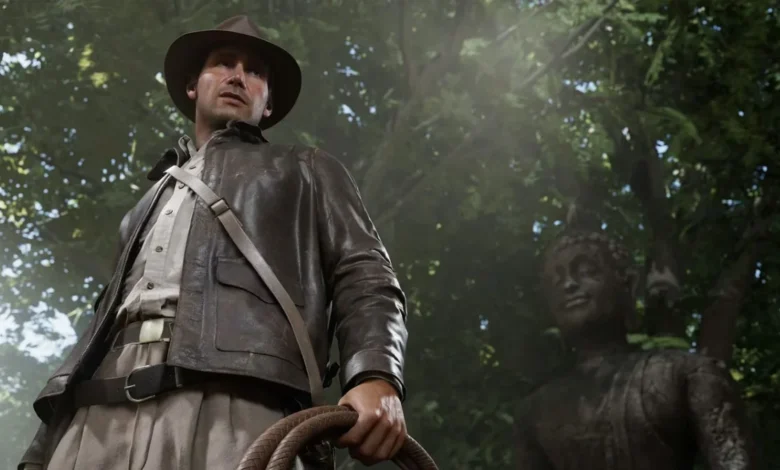
The intersection of interactive entertainment and historical technology often leads to unexpected educational pursuits, as demonstrated by the recent efforts of the YouTube channel WatchingtheAerial. While the 2024 release of Indiana Jones and the Great Circle, developed by MachineGames and published by Bethesda Softworks, has garnered significant critical acclaim for its immersive portrayal of 1930s archeological adventure, it has also sparked a niche interest in the period-accurate hardware featured in the game. Central to this inquiry is the "Relic" camera, a tool wielded by the protagonist to solve environmental puzzles and document findings, which content creators have identified as a digital recreation of the seminal Argus Model A.
The Digital Archeology of an Analog Icon
In Indiana Jones and the Great Circle, players are transported to a cinematic landscape set between the events of Raiders of the Lost Ark (1936) and Indiana Jones and the Last Crusade (1938). Within this narrative framework, the camera serves as more than a mere prop; it is an essential mechanic for recording clues and deciphering ancient mysteries. Although the developers opted to brand the item "Relic" within the game’s internal economy, the physical specifications, shutter design, and collapsible lens mechanism are unmistakably modeled after the Argus Model A.
The Argus Model A, manufactured by the International Radio Corporation (IRC) in Ann Arbor, Michigan, holds a distinguished place in the annals of photographic history. Introduced in 1936, the same year the first Indiana Jones film is set, the camera was a revolutionary consumer product. It effectively democratized 35mm photography, providing a compact, reliable, and affordable alternative to the expensive European imports of the era. By procuring a vintage unit, analysts have sought to determine whether the game’s depiction of this device matches the mechanical reality of the 1930s.
Chronological Context and Technical Specifications
To understand why the Argus Model A was chosen by the development team, one must examine the timeline of both the franchise and photographic innovation. The 1930s represented a golden age for portable, high-quality cameras. The Argus Model A was priced at a modest $12.50 upon its release—roughly equivalent to approximately $275 in modern currency when adjusted for inflation. This price point allowed amateur photographers and, theoretically, globe-trotting archeologists of the era to carry a device that was significantly more rugged than the fragile bellows cameras that preceded it.
The camera utilized a 50mm f/4.5 Anastigmat collapsible lens, a design choice that allowed it to be pocketed easily. Its body was constructed from a blend of Bakelite—an early, durable plastic—and aluminum, which provided a surprising amount of structural integrity. In the context of the game, this durability makes it a logical choice for a character who spends his time traversing unstable ruins and engaging in high-stakes physical confrontation. The mechanical simplicity of the Model A meant that it was less prone to the jamming issues that might plague more complex rangefinders, a detail that mirrors the "no-nonsense" aesthetic of the Indiana Jones character.

Supporting Data and Historical Significance
The Argus Model A is frequently cited by historians as the second most influential 35mm camera in history, trailing only the Leica in terms of its impact on the medium. Before its arrival, 35mm photography was considered an expensive hobby for the wealthy elite. The "Brick," as it was colloquially known due to its rectangular, utilitarian shape, sold over two million units during its production run, which spanned from 1936 to 1941.
From an archeological perspective, the mid-1930s were a transformative period for field documentation. Researchers began moving away from heavy, tripod-mounted glass-plate cameras toward more agile 35mm formats. This shift allowed for faster documentation of sites, the ability to capture candid action shots of excavations, and a reduction in the weight of field kits. By featuring this specific camera in The Great Circle, the developers at MachineGames have inadvertently provided players with a lesson in the evolution of field technology. The camera serves as a tangible link to the actual methodology employed by early 20th-century explorers.
Practical Performance and Modern Analysis
In the recent investigation by WatchingtheAerial, the YouTuber put the vintage hardware through a series of tests to evaluate its "field-readiness." The results highlighted the inherent challenges of pre-war photography. Unlike modern digital cameras, which offer instant feedback and sophisticated metering, the Argus Model A requires a deep understanding of manual exposure settings and manual focusing.
The analysis revealed that while the camera is indeed robust, its design features a "zone focusing" system rather than the sophisticated autofocus found in modern devices. For an archeologist in the field, this meant that the user had to estimate distance with precision—a skill that, when applied to the game’s puzzle mechanics, adds a layer of depth to the player’s engagement. The video evidence underscores that while the camera is capable of producing sharp, characteristic images, it was a tool that demanded patience and expertise, traits often associated with the Indiana Jones persona.
Broader Implications for Gaming and Historical Fidelity
The attention to detail in Indiana Jones and the Great Circle is indicative of a growing trend in the AAA gaming industry: the use of historical artifacts to enhance world-building. By modeling items after real-world counterparts rather than creating generic assets, developers can cultivate a stronger sense of authenticity. This practice has implications beyond aesthetic appeal; it encourages players to engage with the real-world history of the objects they use within the virtual space.
Industry experts have noted that when games incorporate real-world technology, it often leads to a "halo effect," where the consumer interest spills over into the collector’s market. Since the game’s release, interest in vintage 35mm cameras—specifically those from the mid-to-late 1930s—has seen a measurable uptick on secondary marketplaces. This highlights the role of interactive media as a gateway for broader historical education.

The Evolution of Photographic Documentation in Media
The integration of cameras as gameplay mechanics is not unique to this title; however, the level of fidelity applied to the Argus Model A represents a shift toward more deliberate design choices. In previous decades, the camera was often treated as an invisible tool or a generic menu screen. Today, the camera is an object with weight, history, and a specific user interface that must be "operated" by the player.
This evolution mirrors the broader trajectory of digital photography. Just as the industry has seen a resurgence in interest regarding film photography, gaming is reflecting this nostalgia through its mechanics. By focusing on the tangible, tactile experience of winding film, adjusting a lens, and framing a shot, developers are acknowledging the inherent appeal of analog processes in a digital world.
Conclusion: Bridging the Past and Present
The effort to document and test the camera featured in Indiana Jones and the Great Circle serves as a reminder that the best adventure stories are rooted in reality. By selecting the Argus Model A, the developers provided a nod to the actual photographic standards of 1937, ensuring that Indiana Jones’s journey felt grounded in the era’s limitations and breakthroughs.
Whether one is a collector of vintage optics or a fan of the franchise, the story of the Argus Model A offers a compelling look at how history influences modern design. As technology continues to advance, the appreciation for these mechanical relics—and the roles they played in capturing the world as it once was—remains a vital component of cultural storytelling. For the modern player, the virtual camera is more than just a piece of code; it is a digital tribute to an era of exploration, discovery, and the enduring power of the photographic image.