TP-Link Archer BE9500 Tri-Band Wi-Fi 7 Router Hits Unprecedented Low Price of $89.99 at Best Buy

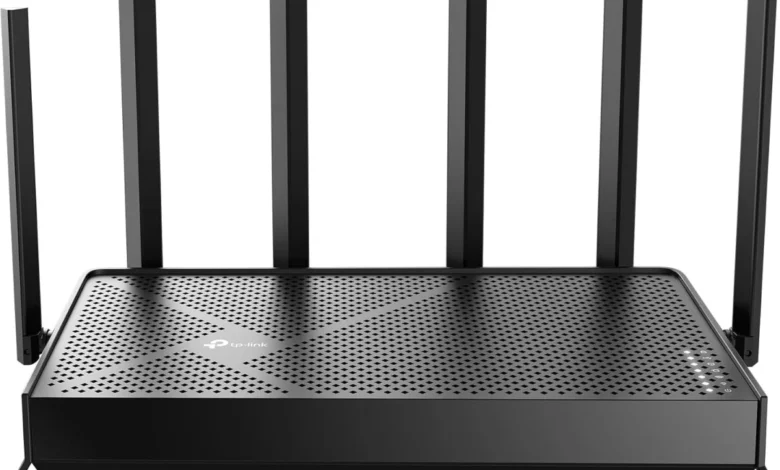
As the consumer networking market continues its rapid evolution toward next-generation wireless standards, shoppers have increasingly benefited from aggressive hardware pricing. Over the past few years, the proliferation of Wi-Fi 7 technology has driven the cost of entry down significantly, with various dual-band routers regularly dipping below the $100 threshold—and occasionally falling under $80. However, while these entry-level devices offer an affordable gateway into the latest wireless generation, they frequently come with a notable compromise: the complete exclusion of the high-performance 6 GHz band. This critical limitation restricts users from harnessing the full potential of interference-free spectrum channels designed to handle heavy bandwidth demands. Breaking this industry trend, the advanced TP-Link Archer BE9500 tri-band Wi-Fi 7 router is currently experiencing a historic price drop, available at Best Buy for an extraordinarily low $89.99.
The Evolution and Market Dynamics of Wi-Fi 7 Adoption
The transition from Wi-Fi 6 and Wi-Fi 6E to Wi-Fi 7—officially designated as IEEE 802.11be—represents one of the most substantial leaps in wireless networking history. Ratified to deliver significantly enhanced throughput, lower latencies, and vastly improved efficiency in congested environments, Wi-Fi 7 utilizes technologies such as 320 MHz channels, Multi-Link Operation (MLO), and 4K Quadrature Amplitude Modulation (QAM). When the standard first emerged from the IEEE and consumer hardware began rolling out from major manufacturers like TP-Link, Netgear, and Asus, early-adopter pricing positioned these routers firmly in the luxury tier, often retailing for several hundred dollars.
As manufacturing yields improved and component costs stabilized, networking brands sought ways to capture the budget-conscious consumer base. This commercial push initially manifested as stripped-down, dual-band Wi-Fi 7 routers. By eliminating the 6 GHz radio band—which requires costly specialized hardware and regulatory compliance across global markets—manufacturers were able to hit sub-$100 price points. Yet, network engineers and tech enthusiasts routinely cautioned that dual-band Wi-Fi 7 devices missed the core value proposition of the standard: the wide-open, uncrowded 6 GHz channels capable of supporting multi-gigabit wireless speeds without competing with legacy 2.4 GHz and 5 GHz devices.
The TP-Link Archer BE9500 bridges this gap by refusing to sacrifice the crucial tri-band architecture that defines high-end modern connectivity. By dropping to $89.99, a router equipped with tri-band capabilities approaches a price point previously reserved exclusively for compromised entry-level hardware, fundamentally altering the cost-to-performance equation for home network upgrades.
Decoding the Hardware: What the TP-Link Archer BE9500 Offers
The TP-Link Archer BE9500 is engineered to serve as a comprehensive command center for modern smart homes, multi-device households, and remote work environments. Unlike its dual-band counterparts, the tri-band designation means the router simultaneously broadcasts across the traditional 2.4 GHz band, the mainstream 5 GHz band, and the high-capacity 6 GHz band.
The inclusion of the 6 GHz band is particularly transformative for users operating compatible client devices, such as modern smartphones, high-end laptops, and current-generation gaming consoles equipped with Wi-Fi 7 or Wi-Fi 6E network interface cards. Because the 6 GHz spectrum is restricted to newer devices, it remains largely free of the congestion, interference, and signal degradation caused by legacy appliances, smart home gadgets, and neighboring Wi-Fi networks operating on crowded lower frequencies. This enables sustained multi-gigabit throughput, making wireless data transfers practically indistinguishable from hardwired Ethernet connections.
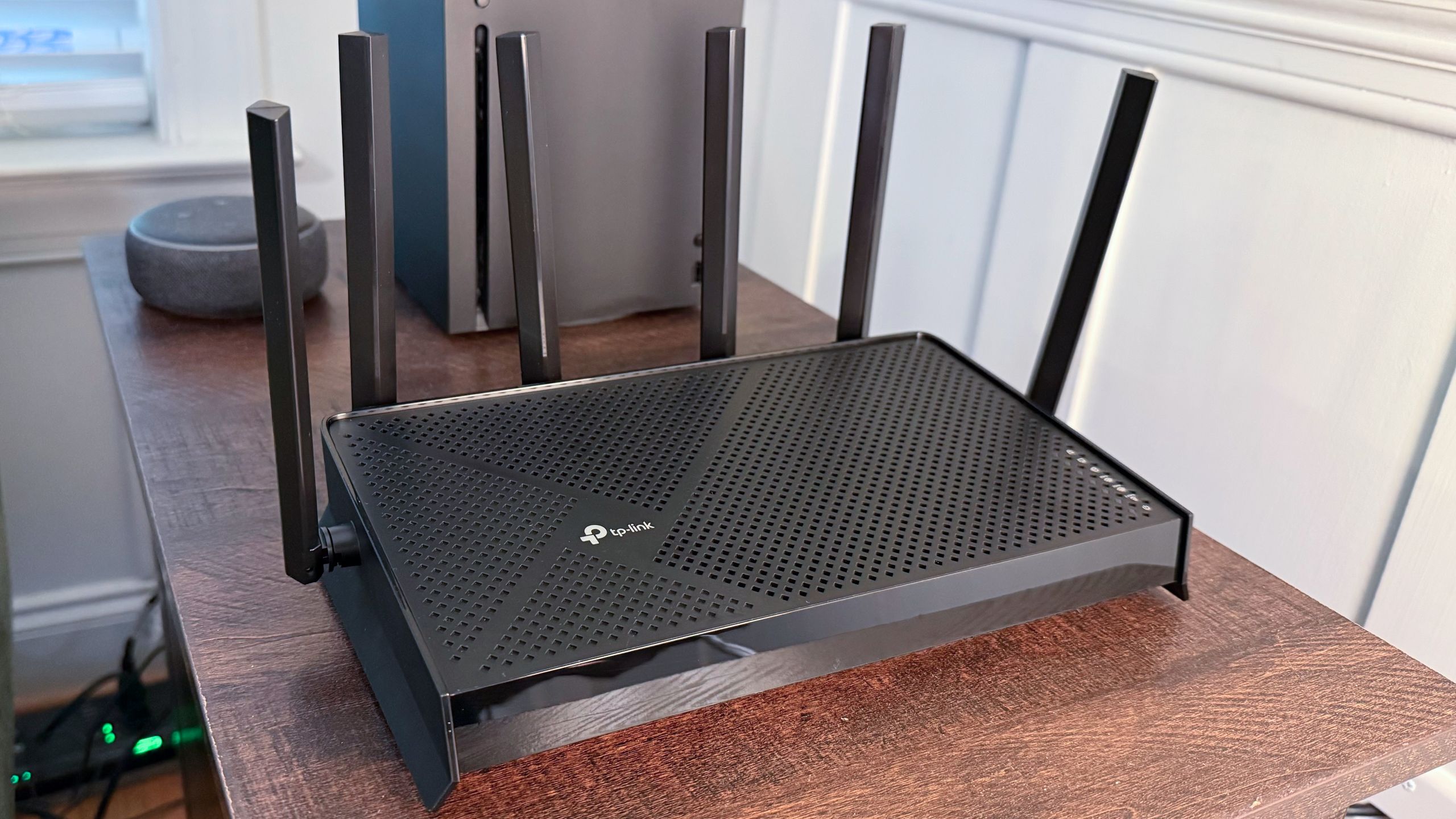
Furthermore, the hardware package accompanying the $89.99 promotional price tag at Best Buy includes additional value-added services. Consumers purchasing the device receive a complimentary one-year subscription to TP-Link’s HomeShield Premium security service. HomeShield provides a robust suite of network protection tools, including comprehensive parental controls, real-time IoT protection, advanced cybersecurity scanning, and customized QoS (Quality of Service) traffic prioritization bandwidth allocation. For average consumers, the inclusion of a commercial-grade security suite for twelve months adds tangible financial value to an already heavily discounted hardware purchase.
Industry Implications and the Future of Affordable Networking
The appearance of a high-performance tri-band Wi-Fi 7 router below the $90 threshold marks a significant inflection point in the consumer networking sector. Industry analysts observe that aggressive pricing strategies by market leaders like TP-Link are accelerating the commoditization of advanced wireless technologies. What typically takes five to seven years to trickle down from enterprise and enthusiast tiers to budget-conscious mainstream buyers is occurring at an accelerated pace with Wi-Fi 7.
This rapid downward pressure on prices is expected to trigger cascading effects across the competitive landscape. Rival networking manufacturers will likely be forced to reevaluate their pricing models and promotional strategies to compete with TP-Link’s aggressive retail positioning. Consumers who delayed upgrading their home networks due to the prohibitive initial costs of tri-band hardware now find themselves with a compelling financial incentive to modernize their infrastructure.
Moreover, the widespread adoption of multi-gigabit routers like the Archer BE9500 aligns with broader telecommunications trends. As fiber-optic internet connections and multi-gigabit cable plans become increasingly accessible to residential consumers, outdated home routers have routinely served as the primary bottleneck preventing users from experiencing their full subscribed internet speeds. By democratizing access to tri-band Wi-Fi 7 infrastructure, consumers can finally maximize the return on investment from high-speed broadband subscriptions.
Availability, Purchasing Considerations, and Final Analysis
The promotional pricing for the TP-Link Archer BE9500 is currently live through Best Buy. Given the aggressive nature of the discount—reducing a sophisticated tri-band networking device to a price point typically associated with basic, single-band or entry-level dual-band hardware—stock levels are anticipated to fluctuate as word spreads across consumer tech communities.
Prospective buyers should verify compatibility with their existing devices, noting that while backward compatibility ensures older Wi-Fi 4, 5, and 6 devices will connect seamlessly, unlocking the maximum speed and latency advantages of the router requires client hardware equipped with Wi-Fi 7 or Wi-Fi 6E capabilities. Additionally, consumers should review the terms of the included one-year HomeShield Premium subscription to understand renewal options following the expiration of the complimentary twelve-month period.
Ultimately, the availability of the TP-Link Archer BE9500 at $89.99 represents a rare convergence of advanced technological capability and aggressive market pricing. By eliminating the traditional performance penalties associated with budget-friendly networking gear, this offering redefines consumer expectations and signals a major milestone in the mainstream maturation of Wi-Fi 7 technology.