Elon Musk Proposes High-Speed Hyperloop Link Between Austin and San Antonio as The Boring Company Secures Significant Funding

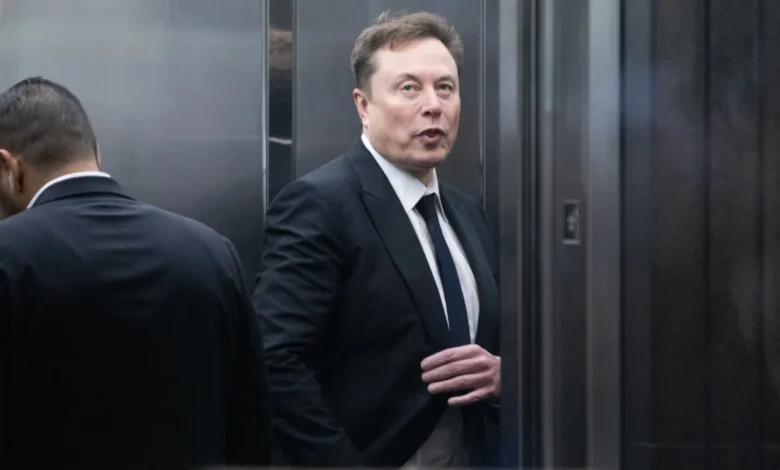
Elon Musk has officially signaled an intent to connect the Texas hubs of Austin and San Antonio via a high-speed transit system, describing the ambitious infrastructure project as a "simple precursor Hyperloop." The announcement, delivered via the social media platform X on September 20, 2026, suggests a transit time of less than 30 minutes between the two cities. This proposal marks the latest in a series of ambitious transportation visions put forth by Musk, whose company, The Boring Company, has recently secured a substantial $3 billion infusion of capital led by investors from the United Arab Emirates.
The prospect of a Hyperloop—a system defined by high-speed pods traveling through low-pressure tubes—has long been a cornerstone of Musk’s public-facing engineering goals. While the technology has faced significant skepticism from urban planners and transit experts regarding its economic and technical feasibility, the renewed interest from The Boring Company suggests that the firm is pivoting toward more concentrated regional projects.
Chronology of The Boring Company’s Ambitions
To understand the context of the Austin-San Antonio proposal, one must review the company’s tumultuous history of project announcements. Founded in 2016, The Boring Company was initially conceived as a solution to the "soul-crushing traffic" Musk encountered in Los Angeles.
- 2017–2018: The company unveiled plans for expansive tunnel networks in Los Angeles, Chicago, and a high-profile "loop" between New York City and Washington, D.C.
- 2019–2021: Many of these early, grandiose projects stalled or were formally cancelled. The Chicago Express Loop, for instance, failed to gain the necessary regulatory and political momentum, leading to its effective abandonment.
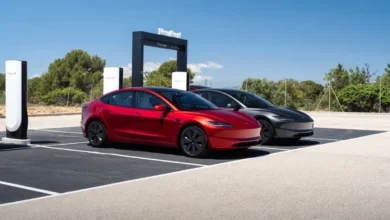
- 2022–2024: The company shifted its focus toward the Las Vegas Convention Center Loop. This project, while significantly smaller in scale than the original hyperloop vision, became the first operational proof-of-concept for the firm, utilizing Tesla vehicles in underground tunnels.
- September 2026: Following a $3 billion funding round, the company’s focus has seemingly shifted toward the Texas corridor, capitalizing on the rapid population growth and increased traffic congestion between Austin and San Antonio.
The Economic and Technical Landscape
The proposed route between Austin and San Antonio covers roughly 80 miles. Currently, the transit time via Interstate 35—the primary artery connecting the two cities—can fluctuate significantly due to heavy traffic, often exceeding 90 minutes during peak hours. A sub-30-minute transit time would represent a radical shift in regional mobility, potentially integrating the two metropolitan areas into a single economic super-region.
However, the technical hurdles remain substantial. A "precursor Hyperloop" implies a system that may not achieve the theoretical 700+ mph speeds originally envisioned in Musk’s 2013 white paper but would instead focus on pressurized or semi-pressurized high-speed transit. The Boring Company has not yet released specific engineering schematics, cost estimates, or environmental impact reports for this corridor.
The $3 billion funding round led by the United Arab Emirates provides the company with a massive liquidity cushion. Historically, the firm has operated with a leaner budget, but the scale of an 80-mile intercity tunnel project would likely cost tens of billions of dollars, requiring either private capital on a massive scale or public-private partnerships with state and federal agencies.
Official Responses and Public Discourse
The announcement originated from an interaction on X, where Musk responded to an AI-generated video depicting a futuristic civilization. When asked about the potential for such advancements, Musk re-posted the content with the comment, "This is the future we shall bring into being," before specifically naming the Austin-San Antonio route.
The Boring Company’s official corporate account bolstered this sentiment, stating, "We would be excited and honored to build this massive infrastructure project."

While the sentiment is optimistic, the broader reaction from the scientific and historical community has been more measured. Historian Jill Lepore, who has extensively studied the intersection of technology and culture, recently observed that the current wave of "techno-optimism" in Silicon Valley is often disconnected from the practical realities of democratic governance and urban planning. Critics argue that Musk’s reliance on sci-fi aesthetics often precedes a lack of rigorous, long-term operational planning, pointing to the numerous "canceled" projects as evidence of a "vision-first, execution-later" corporate culture.
Broader Impact and Implications
The implications of an Austin-San Antonio Hyperloop are twofold: economic and political.
Economic Implications:
Should the project proceed, it would likely spur massive real estate development in the corridor between the two cities. Proponents argue that high-speed transit acts as a catalyst for regional GDP growth by allowing for a more fluid labor market. Conversely, economists warn of the "displacement effect," where high-speed rail or tunnel projects can sometimes exacerbate housing affordability issues in smaller towns situated between larger hubs.
Political Implications:
The project would require extensive cooperation from the Texas Department of Transportation (TxDOT) and federal environmental regulators. Texas, known for its focus on highway expansion, has historically been skeptical of rail-based or alternative mass transit. However, given Musk’s significant corporate footprint in the state—including Tesla’s Gigafactory Texas—the project may find a more receptive audience in the state legislature than previous attempts in more regulated environments like California or New York.
Analysis: Can the Vision Materialize?
The central challenge for The Boring Company is bridging the gap between "concept" and "infrastructure." To date, the company’s success in Las Vegas relies on a closed-loop system using standard electric vehicles. A high-speed Hyperloop requires a fundamentally different set of technologies: vacuum-sealed environments, magnetic levitation (maglev), and sophisticated safety systems to manage potential breaches in the vacuum.
From an engineering perspective, there is no industry precedent for an 80-mile vacuum-sealed tunnel system designed for human transit. The safety requirements—including egress, ventilation, and fire suppression—would be exponentially more complex than those currently deployed in the Las Vegas tunnels.
Furthermore, the "precursor" terminology suggests that Musk may be willing to compromise on speed to ensure the project is actually constructed. If the result is a high-speed tunnel for electric vehicles rather than a true vacuum-tube hyperloop, the transit time might be higher than 30 minutes, yet still significantly faster than existing road traffic.
Conclusion
As of late 2026, the Austin-San Antonio Hyperloop remains a vision supported by a significant, albeit unspecified, capital base. Whether the project will transcend the "concept" phase and enter the permitting and construction stages depends on the company’s ability to demonstrate technical viability to regulators and convince the public that the project can be delivered on time and within budget.
For now, the proposal serves as a reminder of the shifting priorities of The Boring Company. After years of testing the waters in various municipalities and encountering the realities of urban bureaucracy, the company is targeting a high-growth corridor where it potentially possesses the political and economic leverage to move the needle. Whether this results in a revolutionary transportation breakthrough or another footnote in the history of stalled tech-infrastructure remains to be seen. Industry observers will be watching closely to see if the company releases a formal proposal or a project timeline in the coming months, as such documents will be the true test of the project’s legitimacy.