Tesla and SpaceX Announce Direct Integration of Starlink V5 Satellite Technology into Cybercab to Support Global Autonomous Fleet Connectivity

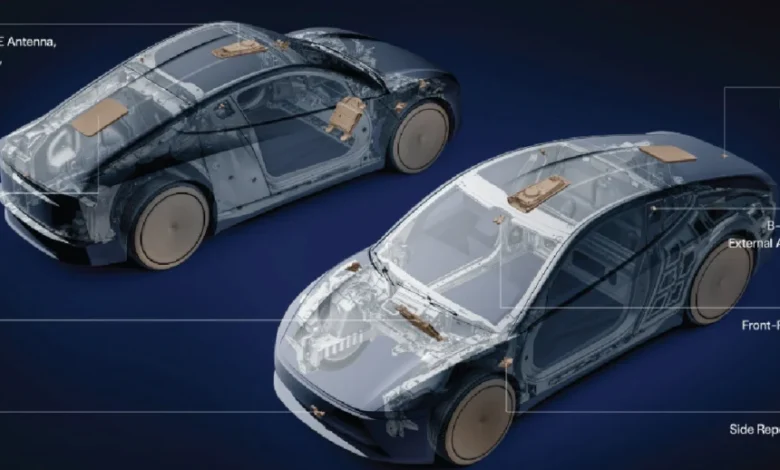
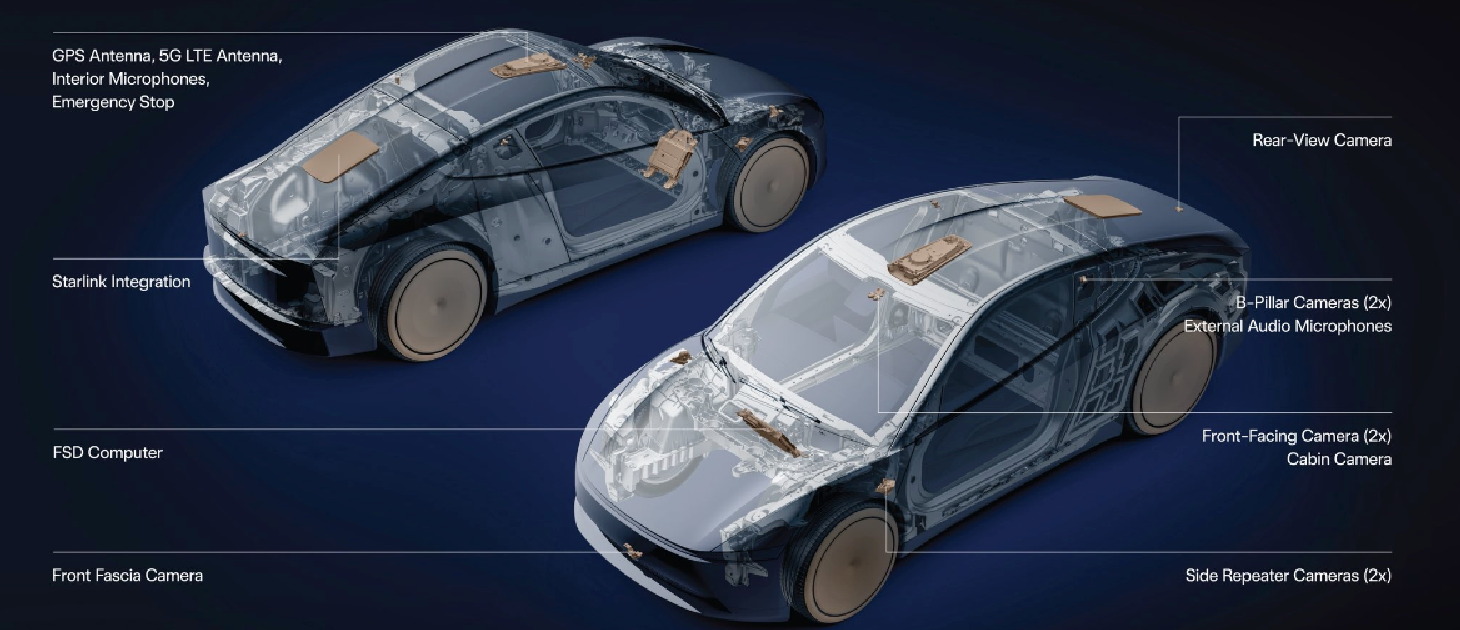
In a series of strategic announcements released via social media on July 20, 2026, Tesla and SpaceX confirmed that the Starlink satellite internet system is now directly integrated into the architecture of the Tesla Cybercab. The reveal, which included a detailed cutaway diagram of the vehicle, identifies a "Starlink V5" antenna embedded within the roof structure of the dedicated robotaxi. This integration represents a significant technological convergence between Elon Musk’s electric vehicle manufacturer and his aerospace venture, aiming to provide high-speed, low-latency internet connectivity to the next generation of autonomous transport.
The announcement featured a technical graphic labeling the "Starlink Integration" block positioned adjacent to the vehicle’s primary camera and sensor arrays. While Tesla has historically emphasized that its Full Self-Driving (FSD) software operates independently of an active data connection, the inclusion of dedicated satellite hardware suggests a pivot toward enhanced fleet redundancy and expanded operational capabilities. The Starlink V5 hardware, according to the release, is designed specifically for the form factor of the Cybercab, ensuring that the vehicle remains connected even in environments where terrestrial cellular networks are unavailable or congested.
Technical Specifications and the Role of AI4 Hardware
The Cybercab is built upon Tesla’s "AI4" hardware suite, a powerful onboard computing platform designed to process massive amounts of visual data in real-time. Tesla’s fundamental approach to autonomy relies on "vision-only" neural networks that perceive, plan, and execute driving maneuvers without the need for external data inputs. This localized processing ensures that the vehicle can navigate safely through tunnels, parking garages, and remote areas where signals may drop.

However, the integration of Starlink V5 introduces a secondary layer of operational utility. While the driving logic remains onboard, the satellite link facilitates several critical functions:
- Remote Teleoperation and Support: In the event that a robotaxi encounters an "edge case"—a scenario it cannot resolve independently—remote human operators can intervene. A high-bandwidth satellite link ensures these operators have a low-latency video feed to guide the vehicle.
- Real-Time Fleet Dispatch: For a massive robotaxi network to function efficiently, the central "Tesla Network" must communicate constant updates regarding passenger demand, traffic patterns, and charging station availability.
- Over-the-Air (OTA) Updates: Satellite connectivity allows Tesla to push critical software patches and neural network refinements to the fleet simultaneously, regardless of local infrastructure quality.
- Passenger Experience: As a vehicle designed without a steering wheel or pedals, the Cybercab is intended to serve as a mobile lounge. Integrated Starlink provides passengers with high-speed streaming, gaming, and communication services, creating a "premium connectivity" tier for the autonomous ride-hailing service.
Chronology of the Cybercab and Starlink Partnership
The path to integrating satellite technology into Tesla’s automotive lineup has been several years in the making. The following timeline outlines the key milestones leading to the July 2026 announcement:
- October 2024: Tesla officially unveils the Cybercab at the "We, Robot" event at Warner Bros. Studios. The prototype showcases a two-door, butterfly-wing design with no steering wheel or pedals, utilizing inductive charging instead of a traditional plug.
- February 2026: SpaceX and xAI enter a multi-billion dollar deal, signaling a tightening of the financial and technical bonds between Musk’s various enterprises. Reports begin to circulate regarding a "unified hardware" strategy.
- May 2026: Regulatory filings in Texas and Florida reveal Tesla’s intent to test "unsupervised" FSD in specific geofenced zones. Analysts note the inclusion of SpaceX-related communications equipment in the filing documents.
- July 3, 2026: Tesla maps out a "tiny" but highly detailed service area in Miami, Florida, alongside existing test zones in Austin, Houston, and Dallas.
- July 20, 2026: Tesla and SpaceX formally announce the integration of Starlink V5 into the Cybercab production line.
Strategic Implications for the Robotaxi Market
The decision to equip every Cybercab with a Starlink terminal has profound implications for both the competitive landscape of autonomous ride-hailing and the internal economics of Musk’s companies. Currently, industry leaders such as Waymo and Zoox rely heavily on 5G cellular networks for their remote assistance and data offloading. By utilizing a proprietary satellite constellation, Tesla effectively bypasses the limitations of traditional telecom providers.
Starlink’s Low Earth Orbit (LEO) constellation currently consists of over 6,000 satellites, providing near-global coverage. For a robotaxi service aiming for global scale, this infrastructure is a significant moat. While initial deployments are focused on dense urban centers like Miami and Austin—areas where cellular coverage is already robust—the long-term vision for the Cybercab includes rural and inter-city transport. In these regions, cellular "dead zones" are common. A satellite-linked fleet would be the only autonomous service capable of maintaining constant communication in the American Midwest, the Australian Outback, or rural Europe.
Financial Analysis: Vertical Integration and Self-Dealing Concerns
From a business perspective, the integration of Starlink into Tesla’s fleet creates a recurring revenue stream for SpaceX. If Tesla successfully deploys tens of thousands of Cybercabs, each vehicle would theoretically require a Starlink subscription. This arrangement has drawn scrutiny from market analysts who point to a pattern of "self-dealing" between Musk’s entities.
Earlier in 2026, Tesla’s $2 billion investment in xAI was eventually absorbed into SpaceX through a complex merger. Critics argue that by "bolting" SpaceX hardware onto Tesla products, Musk is effectively using Tesla’s balance sheet to subsidize the growth and operational costs of SpaceX. However, proponents of the move argue that vertical integration is Tesla’s greatest strength. By controlling the vehicle, the software, the charging infrastructure, and now the communication network, Tesla reduces its dependence on third-party vendors and ensures a seamless user experience.
Regulatory and Safety Considerations
The National Highway Traffic Safety Administration (NHTSA) and various state-level Departments of Transportation (DOT) have expressed ongoing interest in the communication redundancies of autonomous vehicles. A primary concern for regulators is the "zombie car" scenario, where an autonomous vehicle loses its data connection and becomes a stationary obstacle or, worse, continues to operate without oversight.
The addition of Starlink V5 addresses these safety concerns by providing a "fail-safe" communication link. If a Cybercab’s cellular modem fails or enters a signal-deprived area, the satellite link can take over within milliseconds. This redundancy is likely a proactive move by Tesla to satisfy regulatory requirements for "unsupervised" operation, which demands higher safety standards than "supervised" Level 2 autonomy.

Broader Impact on the Autonomous Industry
The integration of Starlink V5 into the Cybercab signals a shift in the hardware requirements for the autonomous industry. If Tesla can prove that satellite connectivity significantly reduces downtime or improves safety metrics, competitors may be forced to seek similar partnerships with satellite providers like Kuiper (Amazon) or OneWeb.
Furthermore, the "Starlink V5" designation suggests a new iteration of satellite hardware that is likely smaller, more aerodynamic, and more power-efficient than previous consumer-grade dishes. This technology could eventually trickle down to Tesla’s consumer vehicles, such as the Model 3 and Model Y, potentially replacing the current premium connectivity packages that rely on local LTE/5G providers.
As Tesla prepares to move the Cybercab into full-scale production, the focus remains on the "unsupervised" service areas in Texas and Florida. While the satellite link may seem redundant in the high-density cellular environments of downtown Austin or Miami, its presence is a clear indicator of Tesla’s intent to build a "go-anywhere" autonomous network. The Starlink integration ensures that the "future of autonomous vehicles," as SpaceX described it, is not tethered to the ground, but rather linked to a global network in the stars.