Samsung Electronics, a global technology leader, has announced a significant strategic realignment with the establishment of its new Robotics eXperience (RX) Business Promotion Office. This pivotal move consolidates the company’s existing and burgeoning robotics research and development efforts under a unified, high-level command structure, signaling a profound commitment to becoming a dominant force in the rapidly evolving global robotics industry. The new division will be directly led by CEO TM Roh, underscoring the strategic importance and enterprise-wide priority Samsung is placing on this initiative.
Strategic Vision and Leadership
The decision for CEO TM Roh to personally spearhead the RX Business Promotion Office highlights Samsung’s intent to integrate robotics deeply into its long-term corporate strategy, extending beyond traditional consumer electronics and semiconductor manufacturing. This leadership demonstrates a top-down commitment to innovation and market expansion in a sector poised for exponential growth. The office is designed to streamline R&D, foster cross-functional collaboration, and accelerate the commercialization of Samsung’s robotics technologies.
A critical appointment within this new structure is Lee Dong-geon, who will serve as the head of the Robotics Strategy Team. Lee brings invaluable expertise from his previous role leading robot strategies for Boston Dynamics during his tenure at Hyundai. His background with one of the world’s most renowned robotics firms is expected to provide Samsung with a competitive edge, particularly in advanced motion control, perception, and autonomous navigation systems. His leadership will be instrumental in defining Samsung’s product roadmap, market entry strategies, and technological differentiation. The RX division’s primary headquarters will be situated at Samsung’s Seoul R&D Campus in Umyeon-dong, a hub known for cutting-edge technological development. Complementing this central base, Samsung plans to establish additional research hubs in key international markets, including the United States, China, and Japan. This global footprint is intended to leverage local talent pools, foster international collaborations, and gain proximity to diverse market demands and technological advancements.
Focus on Industrial Automation: Paving the Way for AI Autonomous Factories
Samsung’s immediate strategic thrust within the RX division is directed towards industrial robotics. The company envisions its vast global manufacturing facilities as the ultimate proving ground for its advanced robotics solutions. This internal application strategy serves a dual purpose: first, to enhance the efficiency, precision, and safety of its own production lines, and second, to rigorously test and refine its robotic technologies in real-world, high-stakes environments before offering them to other manufacturers.
The ambition is significant: Samsung aims to transform all its manufacturing facilities into "AI autonomous factories" by 2030. This initiative goes beyond simple automation, integrating artificial intelligence, machine learning, and advanced sensor technologies to create self-optimizing, highly flexible, and resilient production ecosystems. The benefits of such a transformation are multifaceted. From an operational perspective, AI-driven automation can lead to substantial reductions in manufacturing costs, improved product quality through minimized human error, increased throughput, and enhanced safety by delegating hazardous tasks to robots. In the context of global supply chain volatility and escalating labor costs, particularly in high-wage economies, intelligent automation offers a compelling solution for maintaining competitiveness and ensuring production continuity.
According to industry reports, the global industrial robotics market, valued at approximately $45-50 billion in 2023, is projected to reach over $80 billion by 2028, exhibiting a compound annual growth rate (CAGR) of around 12-15%. Samsung’s entry, particularly with a vertically integrated strategy that begins with internal deployment, positions it to capture a significant share of this growth by demonstrating proven capabilities within its own massive manufacturing footprint. This approach minimizes risk for potential external clients, as Samsung can present a track record of successful implementation at scale. The company’s vast experience in complex manufacturing processes, from semiconductors to consumer electronics, provides an unparalleled testbed for developing robust, scalable, and highly specialized industrial robots.
Future Frontiers: Pioneering Humanoid Robotics and Advanced Manipulation
Beyond industrial applications, Samsung is also making a concerted push into the realm of humanoid robotics, signaling a long-term vision that extends to service, healthcare, and potentially consumer markets. This ambition is underscored by the recruitment of Kim Eui-gyeom, an Ajou University professor renowned for his specialization in robotic hands and manipulation, to the RX team. The complexity of replicating human-like dexterity and tactile feedback in robotic systems is one of the most significant challenges in advanced robotics. Professor Kim’s expertise is expected to be crucial in advancing Samsung’s capabilities in this area.
Samsung’s commitment to this field is not entirely new; the company reportedly already operated a Robotic Hand Lab, which is believed to have developed highly advanced, though undisclosed, robo-hand technology. The integration of such specialized expertise and existing R&D into the unified RX division suggests a concerted effort to accelerate development and move these sophisticated technologies from laboratories to practical applications. Humanoid robots, while still largely in the research and development phase for widespread commercial use, hold immense potential across various sectors. They could revolutionize assistance in elder care, perform complex tasks in hazardous environments, enhance logistics, and even serve as companions or educational tools. The global market for humanoid robots, though nascent, is projected to grow significantly, with some estimates placing it at several billion dollars by the end of the decade, driven by advancements in AI, sensor technology, and mechanical engineering.
Expansion Through Investment and Strategic Acquisitions
To further strengthen its position and accelerate its entry into the competitive robotics landscape, Samsung has articulated a dual strategy involving direct funding of robotics startups and strategic mergers and acquisitions (M&A). This approach allows Samsung to tap into external innovation, acquire specialized technologies, and integrate established talent and market presence without having to build everything from scratch.
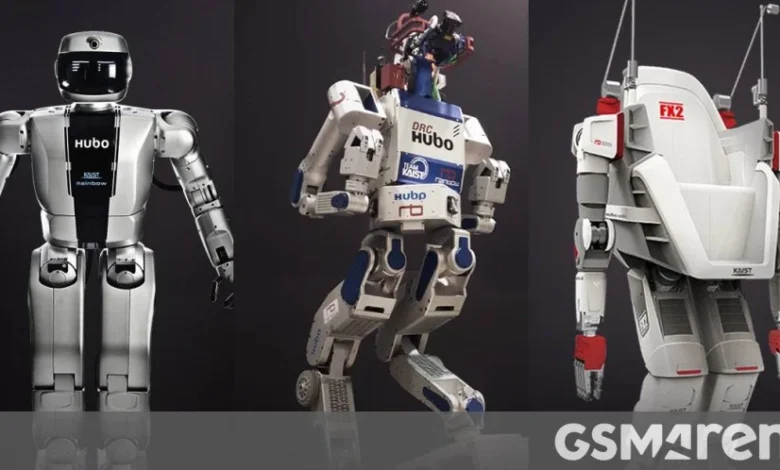
This strategy is already actively underway. In 2024, Samsung made a substantial investment that positioned it as the largest shareholder in Rainbow Robotics. Based in South Korea, Rainbow Robotics is a significant player known for its diverse range of robots, including collaborative robots (cobots), mobile robots, and, notably, quadruped robots resembling a "robo dog." The video showcasing Rainbow Robotics’ robo-dog exemplifies the practical application and advanced mobility these systems offer. This investment provides Samsung with immediate access to proven robotic platforms and expertise, particularly in areas like dynamic locomotion and human-robot interaction. Strategic investments and acquisitions are a common tactic in high-tech industries to gain a competitive edge, acquire intellectual property, and expand market reach rapidly. For Samsung, this means not only enhancing its internal R&D capabilities but also establishing a diversified portfolio of robotics solutions.
Navigating a Competitive Landscape
Samsung’s heightened focus on robotics places it squarely in a burgeoning and intensely competitive arena, where numerous global technology giants and specialized robotics firms are vying for market leadership. The race to develop and deploy advanced robotics is accelerating, driven by breakthroughs in artificial intelligence, sensor technology, and materials science.
One of the most prominent competitors is Tesla, whose Optimus robot has garnered significant attention. Tesla’s pivot towards humanoid robotics, particularly after reports of shifting focus from certain automotive models to its Fremont plant for Optimus development, highlights the perceived long-term potential of general-purpose humanoid robots. Tesla’s approach leverages its deep expertise in AI, battery technology, and advanced manufacturing.
Other major players are also making significant strides. Just a few weeks prior to Samsung’s announcement, fellow South Korean conglomerate LG unveiled its own Robotics Business Center, indicating a similar strategic intent to expand its footprint in the robotics sector, potentially focusing on service robots, logistics, and smart home applications. The Chinese technology firm Honor has also showcased impressive capabilities, with one of its humanoid robots reportedly winning a half marathon and setting a new record, demonstrating advanced locomotion and endurance. Unitree, another Chinese company, has gained recognition for its humanoid and quadruped robots, with one model notably used by Meizu for drop-testing phones, illustrating practical applications in industrial quality control. Hisense, yet another Chinese electronics giant, entered the fray in January with the announcement of its humanoid robot named Harley, signaling broad interest across the tech industry.
This competitive landscape is characterized by diverse approaches and specialized expertise. While some companies, like Tesla and Honor, are pushing the boundaries of general-purpose humanoid robots, others, including Samsung in its initial industrial focus, are concentrating on specific applications that offer immediate commercial viability and operational benefits. The convergence of AI, IoT, and robotics is creating new market segments and challenging traditional industry boundaries, making strategic differentiation and rapid innovation critical for success.
Market Context and Industry Trends
The global robotics market, encompassing industrial, service, and humanoid robots, is experiencing unprecedented growth. Driven by factors such as labor shortages in manufacturing, the increasing demand for automation in logistics and healthcare, advancements in artificial intelligence, and the decreasing cost of robotic components, the industry is undergoing a transformative phase. Analysts project the overall robotics market to exceed $200 billion by the mid-2020s, with various segments contributing to this expansion. The service robotics sector, including professional and personal service robots, is particularly expected to surge, driven by applications in hospitality, healthcare, retail, and domestic assistance.
Samsung’s move aligns perfectly with these macroeconomic and technological trends. By establishing a dedicated RX office under direct CEO leadership, Samsung is positioning itself to not only capitalize on these burgeoning markets but also to shape the future direction of robotics innovation. The company’s vast resources, including its global R&D network, manufacturing capabilities, and expertise in semiconductors and AI, provide a robust foundation for its ambitious robotics venture. The integration of AI into robotics is a particularly potent driver, enabling robots to perform more complex tasks, adapt to unstructured environments, and learn from experience, thereby expanding their applicability across a multitude of industries.
Broader Implications and Outlook
The establishment of Samsung’s RX Business Promotion Office carries significant implications, both for the company and for the broader technology and industrial sectors. For Samsung, it represents a bold diversification strategy, moving beyond its traditional strongholds into a high-growth, high-potential market. Success in robotics could cement Samsung’s position not just as a consumer electronics and component manufacturer, but as a holistic technology provider at the forefront of the Fourth Industrial Revolution. The internal deployment of industrial robots and AI autonomous factories could set new benchmarks for manufacturing efficiency and resilience, potentially creating a significant competitive advantage in its core businesses.
On a broader scale, Samsung’s aggressive entry into robotics will intensify competition, likely accelerating innovation across the industry. This could lead to more sophisticated, affordable, and accessible robotic solutions for businesses of all sizes. The focus on humanoid robots, while a long-term play, could eventually revolutionize human-robot interaction, leading to new forms of assistance, companionship, and productivity. However, this also raises important societal questions regarding job displacement, ethical considerations of AI in autonomous systems, and the future of human labor. Samsung, as a major global player, will undoubtedly contribute to these ongoing discussions as its robotics initiatives mature.
In conclusion, Samsung’s creation of the Robotics eXperience (RX) Business Promotion Office is a clear declaration of intent: to become a dominant force in the global robotics market. With strong leadership, a dual focus on industrial automation and advanced humanoid development, and a strategic approach to investment and M&A, Samsung is poised to make a profound impact on how industries operate and how humans interact with intelligent machines in the decades to come. The coming years will reveal the full extent of this ambitious strategic pivot and its ramifications for the future of technology and manufacturing.