Malicious GitHub Actions reactivated in security oversight exposing software supply chain vulnerabilities

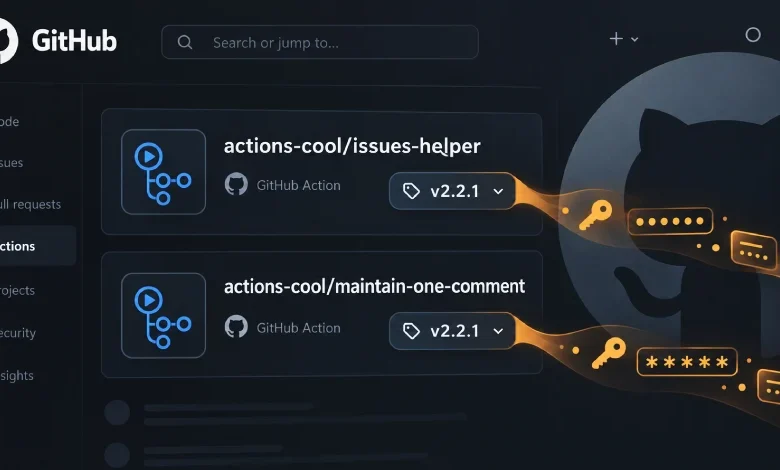
The precarious nature of modern software supply chain security was thrust back into the spotlight this week as two compromised GitHub Actions repositories, previously neutralized following the May 2026 Mini Shai-Hulud campaign, were inexplicably restored to public access. This development, which occurred on September 16, 2026, inadvertently reactivated dormant malicious payloads that had remained embedded in the repositories since their initial compromise. The incident serves as a stark reminder of the persistent risks associated with mutable version tagging in automated CI/CD pipelines.
The Chronology of a Recurring Threat
The initial breach occurred on May 18, 2026, when threat actors associated with the Mini Shai-Hulud activity cluster successfully compromised two GitHub Actions used for routine repository housekeeping, such as issue management and pull request automation. The attackers injected malicious code designed to harvest sensitive environment variables and credentials from CI/CD runners, exfiltrating the data to an external server linked to the domain "t.m-kosche.com."
Following the discovery of this campaign in late May 2026, GitHub took corrective action, disabling the affected repositories to prevent further exploitation. For several months, these repositories remained inaccessible, effectively quarantining the threat. However, on September 16, 2026, between 11:09 a.m. and 6:16 p.m. GMT+2, the repositories were restored to an active state.
Security researchers at Socket, led by Karlo Zanki, were the first to identify the renewed danger. Upon investigation, it was discovered that the release tags associated with the repositories had not been purged or reverted to a clean state. Consequently, the repositories were still pointing to the malicious code injected back in May. Any CI/CD workflow that referenced these actions via a mutable version tag—such as "v1" or "latest"—automatically pulled the compromised version upon its next execution.

The Mechanics of the Vulnerability
The core issue lies in the reliance on mutable tags within GitHub Actions workflow files. In a standard software development lifecycle, developers often configure their CI/CD pipelines to pull the "latest" version of a third-party action to ensure they receive bug fixes and feature updates without manual intervention. While this practice promotes ease of maintenance, it creates a significant security blind spot.
If an upstream repository is compromised—as was the case with the Mini Shai-Hulud incident—the malicious code is pushed as part of the "latest" release. Because the code was never scrubbed from the repository, the moment GitHub re-enabled public access, the malicious payload was once again live. No new exploit, no new infrastructure, and no additional social engineering were required from the threat actors. The automation itself performed the work of re-infecting the downstream users of these actions.
Contextualizing the Mini Shai-Hulud Cluster
The Mini Shai-Hulud campaign is not an isolated incident but part of a broader, sophisticated effort to target software developers and CI/CD environments. Intelligence reports from the time of the initial breach confirmed that the tactics, techniques, and procedures (TTPs) observed in the GitHub Actions incident matched those used in a simultaneous campaign involving malicious npm packages in the @antv ecosystem.
Philipp Burckhardt, head of threat intelligence at Socket, noted at the time that the overlaps in infrastructure—specifically the exfiltration domain—conclusively linked the GitHub Actions breach to the wider Mini Shai-Hulud activity cluster. This suggests that the attackers are focused on a multi-vector approach, targeting both package registries and the automation tools that developers rely on daily to manage their repositories.
Implications for CI/CD Security
The reactivation incident highlights a critical failure in the remediation lifecycle. When a platform provider or a repository owner disables a project due to a security violation, the assumption is that the malicious content has been removed or that the platform will ensure the repository is safe before it is reinstated. In this instance, the "re-enabling" process occurred without the necessary cleanup of malicious commits or tags.

This event has significant implications for enterprise security teams:
- The Fallacy of ‘Fixed’ Dependencies: Simply assuming that a repository is "clean" because it was previously taken down is a dangerous practice. Security teams must treat third-party dependencies as potentially hostile if they have a history of compromise.
- The Necessity of SHA Pinning: The most effective defense against this specific class of attack is the use of immutable references. By pinning actions to a specific, verified commit SHA (e.g.,
uses: action@a1b2c3d4...), developers ensure that their workflows remain locked to a known, safe version of the code. Even if an attacker pushes a malicious update to the repository, the pinned version remains unaffected. - Automated Monitoring: Organizations should implement tools that monitor for changes in their dependency tree, specifically flagging when an action or package is updated or when a repository experiences unusual activity.
The Path Forward: Best Practices for Developers
In the wake of this incident, cybersecurity experts are reiterating the standard guidance for securing CI/CD pipelines. While the convenience of mutable tags is undeniable, the security trade-offs have become untenable in an environment where supply chain attacks are increasingly automated.
Developers are strongly advised to perform the following audit:
- Audit Workflow Files: Immediately review all
.github/workflows/configurations. - Pin by SHA: Transition from using version tags (like
v1.2) to specific commit SHAs for all third-party actions. - Review Permissions: Ensure that GITHUB_TOKEN permissions are set to the minimum necessary level (Principle of Least Privilege). This prevents an attacker, even if they successfully execute a malicious action, from accessing sensitive secrets or modifying repository contents.
- Monitor Logs: Regularly inspect CI/CD logs for unexpected network connections, especially those directed toward unknown domains or external IP addresses.
Analyzing the Platform Responsibility
While the burden of security largely falls on the developer, the incident raises questions about the platform’s role in managing compromised resources. When GitHub staff disable a repository, there is an implicit expectation that the infrastructure is being secured. The fact that the repository was restored without a full audit of its contents indicates a gap in the automated enforcement or human review processes currently employed to handle repository reinstatements.
The ease with which this threat was "re-activated" suggests that the lifecycle of a malicious repository needs to be more robust. If a repository is flagged for a Terms of Service violation due to malware, it should arguably be permanently locked or wiped of all release tags until an explicit, verified security review is performed.

Broader Impact on Software Trust
The software supply chain is built on a foundation of trust. When that trust is undermined—not just by the initial attack, but by the failure of the remediation process—it erodes confidence in the ecosystem. This event serves as a case study in how "zombie" threats can linger in the digital infrastructure, waiting for a simple policy change to spring back into action.
As the software development community moves toward more integrated and automated workflows, the responsibility to defend these systems must evolve in tandem. The Mini Shai-Hulud incident is a sobering reminder that in the world of cybersecurity, the end of an incident is not always the end of the risk. Continuous vigilance, rigorous dependency management, and a healthy skepticism of "automated" updates are the new requirements for maintaining the integrity of the modern software build process.
For now, the affected repositories remain disabled again, but the incident serves as a definitive warning to developers everywhere: in the landscape of supply chain security, the only version of code you can trust is the one you have personally verified. Pinning your dependencies is no longer a "best practice"—it is a fundamental necessity for survival in an era of persistent supply chain exploitation.
Related posts: