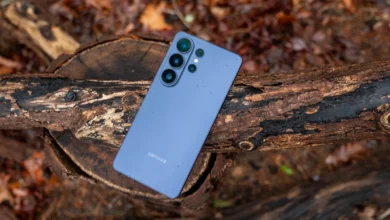
The Sideload 050: The Phones Samsung and Google Won’t Make with Nick Sutrich


The landscape of the mobile telecommunications industry is undergoing a period of profound recalibration as the fiftieth episode of The Sideload, the premier podcast from 9to5Google, examines the widening chasm between the North American smartphone market and the global stage. Hosted by Will and Daniel, this milestone episode features tech journalist Nick Sutrich to dissect the structural shifts within the industry, specifically focusing on the disappearance of key competitors, the technological convergence between mobile devices and handheld gaming consoles, and the controversial role of generative artificial intelligence in the software development ecosystem.
The Divergence of Global and North American Markets
For over a decade, the North American smartphone market has been characterized by a distinct "duopoly" dominated by Apple and Samsung, with Google’s Pixel line serving as the primary alternative. In contrast, the global market—particularly in Asia and Europe—has long benefited from a much wider array of high-performance hardware from manufacturers such as Xiaomi, Oppo, Vivo, and the now-defunct presence of OnePlus as a disruptive force.
The primary point of friction lies in regional carrier exclusivity and band support. While North American consumers are often restricted to devices certified by major telecommunications providers like AT&T, T-Mobile, and Verizon, the global market thrives on unlocked, hardware-agnostic competition. This divergence has led to a situation where consumers in the United States and Canada frequently lack access to devices that offer superior hardware specifications at significantly lower price points compared to domestic equivalents. As the podcast guests highlighted, this regional disparity has effectively shielded incumbents from the kind of aggressive price-to-performance competition that has defined the growth of Chinese smartphone manufacturers over the last five years.
The OnePlus Effect and Marketplace Consolidation
The discussion surrounding the shifting marketplace centers heavily on the transition of OnePlus from a "flagship killer" brand to a more traditional, mainstream manufacturer. Following its closer integration with Oppo and its subsequent shift in product philosophy, many analysts have noted a decline in the brand’s ability to disrupt the mid-range market.
This consolidation has left a vacuum. Historically, OnePlus served as the bridge between budget-conscious consumers and high-end flagship enthusiasts. With that bridge effectively removed, the market has seen a narrowing of options. When manufacturers prioritize profit margins and enterprise partnerships over enthusiast-focused hardware, the diversity of the ecosystem suffers. Data from industry research firms suggest that this lack of competition has contributed to a stagnation in hardware innovation, where incremental updates to camera modules and processor speeds are marketed as revolutionary, despite a plateau in year-over-year user experience improvements.

Mobile Hardware as a Replacement for Handheld Gaming
Perhaps the most compelling trend discussed is the encroaching capability of modern smartphones to supersede dedicated handheld gaming devices like the Steam Deck. With the rise of high-end chipsets, such as the Qualcomm Snapdragon 8 Elite and specialized mobile GPUs, smartphones are reaching a computational threshold that challenges the need for secondary portable gaming hardware.
The implications for this are vast. Currently, the Steam Deck occupies a unique niche by providing a x86-based ecosystem that allows for a vast library of PC games to be played on the go. However, the advancement of cloud gaming services and local emulation on Android devices is rapidly narrowing this gap. If a standard smartphone can provide a comparable visual experience—aided by active cooling solutions or specialized controllers—the economic argument for purchasing a dedicated $400–$600 gaming handheld diminishes significantly.
Industry analysts point to the rapid evolution of mobile thermal management and screen refresh rates as the key catalysts. As these components become standard across all flagship devices, the "gaming phone" category may eventually dissolve, with every high-end smartphone becoming a formidable contender for the mobile gaming market share.
The AI Dilemma: Innovation or Obsolescence?
The episode further explores the contentious impact of generative AI on the gaming and software development industries. While AI has undoubtedly accelerated the production of assets and code, critics argue that it is "choking" the space by prioritizing volume over quality.
The concerns raised are two-fold:
- Developer Displacement: There is a growing fear that studios are replacing entry-level creative roles—such as concept artists and junior programmers—with generative AI tools. This risks creating a "lost generation" of developers who lack the fundamental skills acquired through the traditional grind of junior-level tasks.
- Quality Saturation: As AI-generated content becomes more prevalent, the marketplace is increasingly flooded with low-effort titles that lack the polish or artistic intent of human-led projects. This "noise" makes it increasingly difficult for independent developers to achieve discoverability, ultimately harming the long-term health of the gaming industry’s creative ecosystem.
Historical Context and Industry Implications
To understand the current state of the industry, one must look at the timeline of the last five years:

- 2020-2021: The post-pandemic surge in demand for electronics, followed by severe global supply chain shortages, forced manufacturers to prioritize high-margin flagship devices over budget options.
- 2022: The emergence of global economic instability saw consumers lengthening their upgrade cycles, moving from a two-year cycle to a three-to-four-year cycle.
- 2023-2024: The "AI Pivot" began, with manufacturers marketing "AI Phones" as the primary driver for new hardware sales.
- 2025: The industry now faces a reckoning where the consumer appetite for software-based AI features is being weighed against the demand for genuine hardware breakthroughs.
The data supports this trend. According to recent market intelligence reports, the average selling price of smartphones has increased steadily, even as unit sales have remained relatively flat. This indicates that manufacturers are successfully squeezing more revenue out of a smaller pool of dedicated users, rather than expanding the market through innovation.
Official Responses and Strategic Shifts
While major companies like Google and Samsung have not commented on the specific criticisms raised in the podcast, their strategic roadmaps provide insight into their priorities. Google’s commitment to seven years of software support for the Pixel line is a direct response to the lengthening upgrade cycle. By shifting the value proposition from "hardware specs" to "software longevity," Google is attempting to mitigate the risk of consumers switching brands.
Similarly, Samsung’s focus on the Galaxy S series and its foldable lineup demonstrates a strategy of premiumization. By moving the market toward foldable devices, Samsung is attempting to justify higher price points, thereby offsetting the stagnation in the traditional slab-phone market.
Future Outlook: What to Expect
The implications of these shifts are significant for the average consumer. As we move further into the decade, the distinction between a "gaming phone," a "productivity phone," and a "camera phone" will likely blur further. However, the lack of competition from global players in the North American market remains a major hurdle for innovation.
Without a revitalized mid-range segment that forces the industry to innovate on price and hardware, consumers may find themselves locked into an ecosystem of increasingly expensive, AI-centric devices that offer diminishing returns in terms of daily utility. The conversation on The Sideload 050 serves as a crucial reminder that the health of the tech industry is not measured solely by the success of its largest companies, but by the diversity of choices available to the end user. As the industry continues to iterate, the challenge for manufacturers will be to balance the allure of generative AI with the fundamental demand for reliable, high-performance, and affordable hardware that satisfies the needs of a diverse global audience.
Related posts: