The Great EV Retreat Why Major Automakers are Pulling Electric Models from the United States Market

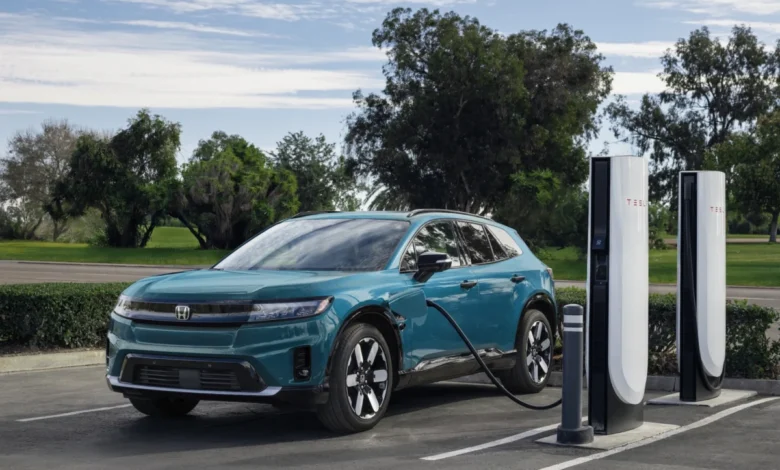
The Honda Prologue, once a cornerstone of the Japanese automaker’s transition toward a sustainable future, is officially dead, as confirmed by the company in a statement to industry analysts and media outlets. The decision to discontinue the Prologue represents the removal of the final all-electric vehicle from Honda’s current U.S. portfolio, signaling a significant strategic retreat. This departure is not an isolated incident but rather a symptom of a broader trend within the North American automotive sector. As the global electric vehicle (EV) market continues to expand in regions like Europe and China, the United States is experiencing a starkly different trajectory, characterized by a winnowing of consumer choices and a cautious pivot by major manufacturers back toward internal combustion engines and hybrid technologies.
The Economic Catalyst: The End of Federal Incentives
The primary driver behind the current thinning of the U.S. EV market is the expiration of the $7,500 federal tax credit in the fall of 2025. This incentive was a crucial pillar for middle-market EV adoption, bridging the price gap between traditional gasoline vehicles and more expensive electric alternatives. When the credit ended, sales for several models entered a precipitous decline.

Data published in July 2026 by Kelley Blue Book and Cox Automotive highlights the impact of these shifting economics. In the second quarter of 2026, EV sales in the U.S. totaled 247,226 units, representing approximately 5.8% of the total automotive market. While this figure showed a slight recovery compared to the first quarter of the year, it remains significantly lower than the same period in 2025. Specifically, Q2 2026 sales were 20.5% lower than Q2 2025. The year-over-year gap was even more pronounced in the fourth quarter of 2025, which saw a 36% drop compared to the previous year.
Beyond the loss of tax credits, automakers are navigating a complex web of challenges, including high interest rates, a restrictive regulatory environment regarding Chinese-made components, and a shifting consumer preference for hybrid vehicles over pure battery-electric models. Consequently, several high-profile EV projects have been shuttered or indefinitely postponed.
The Honda and Sony Partnership: A Vision Unfulfilled
The demise of the Honda Prologue is accompanied by the collapse of several other ambitious projects under the Honda umbrella. In early 2026, Honda announced a major overhaul of its EV strategy, which included stopping the development of the Acura RDX EV and the much-hyped "0 Series." The 0 Series was intended to be a futuristic line of electric vehicles, featuring a mid-sized SUV prototype and the "Saloon" and "Space-Hub" concepts that debuted to critical acclaim at CES 2025. These vehicles were slated for production at Honda’s dedicated "EV Hub" factory in Ohio, with a North American launch planned for 2026.

Instead, Honda has cited U.S. tariffs and aggressive Chinese competition as the primary reasons for abandoning these projects. The Prologue, which was developed in partnership with General Motors and built at GM’s Ramos Assembly Plant in Mexico, saw moderate success initially, selling 33,000 units in 2024 and 39,000 in 2025. However, without federal subsidies, the model’s price point became uncompetitive, leading to the decision to end production in July 2026.
Simultaneously, the high-profile joint venture between Sony and Honda, known as Sony Honda Mobility, has effectively ceased its EV ambitions. The brand’s flagship project, the Afeela, first appeared as the Vision-S prototype in 2020. Despite years of marketing blitzes and appearances at major tech trade shows like TechCrunch Disrupt and CES, the Afeela never reached the production line. In March 2026, the joint venture officially gave up on the two planned Afeela-branded EVs, marking the end of Sony’s direct entry into the automotive manufacturing space.
Tesla: Shifting Focus from Hardware to Autonomy
Even Tesla, the long-standing leader of the American EV market, has not been immune to the shifting tides. In January 2026, Tesla announced it would end production of its legacy flagship models, the Model S sedan and the Model X SUV. These vehicles, which were instrumental in proving the viability of high-performance EVs a decade ago, had seen steadily declining sales as consumers gravitated toward the more affordable Model 3 and Model Y.

The final Model S and Model X units rolled off the assembly line in the spring of 2026. Tesla’s decision reflects a fundamental shift in the company’s identity. CEO Elon Musk has increasingly pivoted the company’s resources toward artificial intelligence, robotics, and autonomous driving. The assembly lines at Tesla’s Fremont, California, factory that once produced the S and X models are currently being repurposed for the production of "Optimus," Tesla’s humanoid robot. For Tesla, the future of the company is no longer tied to traditional luxury sedans but to the "Cybercab" and the realization of a fully autonomous transport network.
Regulatory Barriers and the Geely Portfolio
The geopolitical landscape has played a decisive role in the departure of Swedish brand Polestar from the U.S. market. Owned by the Chinese automotive giant Geely, Polestar fell victim to the U.S. Department of Commerce’s ban on Chinese-connected vehicle technology. While Polestar attempted to navigate these restrictions by producing the Polestar 3 at a factory in South Carolina, the company failed to receive the necessary specific authorization to continue importing and selling its newer models.
As a result, Polestar has been effectively barred from the United States. The company has stated it will sell through its existing inventory of the Polestar 3 and Polestar 4 but has no immediate path forward for new releases. Interestingly, Volvo Cars, Polestar’s sibling company also owned by Geely, managed to receive the required authorization to continue its operations. Nevertheless, Volvo has also scaled back its U.S. ambitions, pulling the subcompact EX30 and EX30 Cross Country from the market in March 2026. The company will instead focus its U.S. electric efforts on larger, higher-margin SUVs like the EX60 and EX90.

The Pivot to Hybrids: Volkswagen and Hyundai
Volkswagen’s strategy in the U.S. has undergone a dramatic reversal. In April 2026, the German automaker announced it would stop producing the ID.4 electric SUV at its Chattanooga, Tennessee, facility. The factory is being retooled to prioritize high-volume, internal combustion engine vehicles, specifically the upcoming gas-powered Atlas SUV. Volkswagen executives admitted that the shift is a response to a market that is "pivoting back to gas," though they noted that the ID.4 will remain available in dealerships until existing inventory runs out, likely in 2027.
The ID. Buzz, Volkswagen’s electric reimagining of the classic microbus, is also on hiatus for the 2026 model year. While VW insists the model will return in 2027, the current focus has shifted toward autonomous versions of the vehicle. Volkswagen’s subsidiary, MOIA America, has begun testing self-driving ID. Buzz units in Los Angeles in partnership with Uber, aiming for a robotaxi launch late in 2026.
Hyundai has also made surgical cuts to its U.S. lineup. While the company has seen success with its Ioniq series, it decided in March 2026 to discontinue the Ioniq 6 sedan in the United States. Because the Ioniq 6 is manufactured in South Korea and imported, it faced a disadvantageous tariff structure compared to the Ioniq 5 and the upcoming Ioniq 9, both of which are assembled at Hyundai’s "Metaplant" in Georgia.

Implications for the U.S. Energy Transition
The mass departure of these EV models suggests a period of "market rightsizing" that could have long-term implications for U.S. climate goals. The reduction in available models, particularly in the affordable and mid-range segments, may slow the overall rate of decarbonization in the transport sector.
Furthermore, the retreat by major automakers creates a vacuum that is increasingly being filled by hybrid vehicles. Toyota, which was once criticized for its slow adoption of pure EVs, now appears to have been prescient, as demand for its hybrid and plug-in hybrid models remains robust.
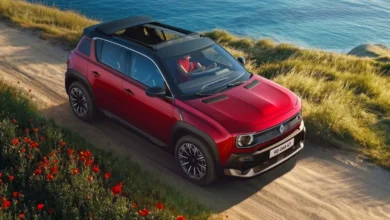
However, it is not a total withdrawal from the electric space. New entrants and specialized models, such as the Rivian R2, continue to move toward production, suggesting that the market is becoming more consolidated around brands that are "EV-native" or those that can successfully navigate the complexities of domestic manufacturing and battery sourcing.

Chronology of the EV Market Shift (2020–2026)
- 2020: Sony reveals the Vision-S prototype at CES, sparking interest in a tech-first EV. Nissan unveils the Ariya, its first major EV since the Leaf.
- 2022: Honda and Sony announce their joint venture, Sony Honda Mobility.
- 2024: Honda Prologue enters the U.S. market, achieving steady sales growth through the end of the year.
- Fall 2025: The $7,500 federal tax credit for many EV models expires, leading to an immediate 36% drop in year-over-year Q4 sales.
- January 2026: Tesla announces the end of production for Model S and Model X.
- March 2026: Honda cancels the 0 Series and Acura RDX EV. Sony Honda Mobility abandons the Afeela project. Volvo pulls the EX30 from the U.S.
- April 2026: Volkswagen stops ID.4 production in Tennessee, pivoting to the gas-powered Atlas.
- July 2026: Honda confirms the official death of the Prologue, leaving the brand without a pure EV in the U.S. market.
As the U.S. market settles into this new reality, the "K-shaped" recovery of the global EV industry becomes more apparent. While the rest of the world moves toward an all-electric future, the United States is currently taking a detour, defined by a return to familiar fuel sources and a cautious wait-and-see approach to the next generation of automotive technology.