Humpback Whales Face Deadly Entanglement Crisis Across Pacific in Early July

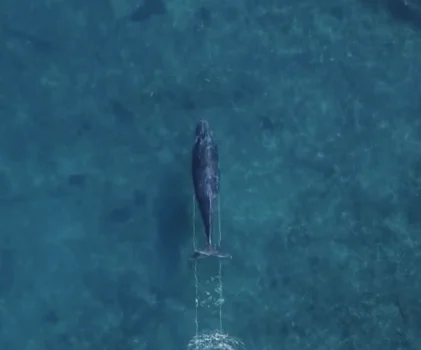
The first two weeks of July witnessed a disturbing surge in humpback whale entanglements across both the eastern and western Pacific Ocean, prompting urgent rescue efforts that met with mixed success. While some whales were successfully freed from the deadly grip of fishing gear, others vanished before responders could reach them, and tragically, at least one whale succumbed to its ordeal. This alarming pattern underscores a persistent and escalating threat to marine megafauna, highlighting the complex challenges of coexisting with human maritime activities.
Widespread Entanglements Emerge Across Continents
Reports of humpback whales trailing fishing lines and debris emerged from diverse geographical locations, painting a grim picture of the pervasive nature of marine entanglement. In Western Australia, the Ningaloo Marine Park, typically celebrated for its whale shark encounters, became the epicenter of a particularly severe cluster of entanglements. Between July 5 and July 10, the Department of Biodiversity, Conservation and Attractions (DBCA) received multiple reports of humpback whales ensnared in fishing gear off the Ningaloo coast. While some sightings may have referred to the same individual, the frequency of these reports indicated a significant problem.
One particularly tragic case unfolded on July 8 when responders located a nine-meter humpback whale exhibiting severe signs of distress. The department described the animal as "emaciated and heavily embedded in entanglement." Despite efforts to attach a satellite tag before nightfall for continued monitoring, the whale died overnight. Its carcass subsequently washed ashore on the reef at Mandu, attracting sharks and necessitating the closure of two local beaches, underscoring the potential public safety risks and ecological disruptions associated with such incidents.
The nature of the entangling gear provided critical clues about the source of the problem. Brinkley Davies of the Balu Blue Foundation, speaking to ABC News, noted the prevalence of rope consistent with commercial fishing gear, specifically mentioning crab and cray pot lines. "We’re seeing a lot of rope consistent with commercial fishing gear like crab and cray pots, and there’s a lot of uncertainty as to where they’re coming from and why there’s more this year," Davies stated. This uncertainty is a significant challenge for rescue efforts. Entangled whales can travel vast distances, covering tens of kilometers in a single day, making it incredibly difficult to locate and assist them once a report is filed. The Balu Blue Foundation operates a wildlife rescue hotline in the region, relying heavily on the vigilance of water users to report sightings.
The plight of the Ningaloo whales was not an isolated incident. On July 4, a humpback whale entangled in a Gold Coast shark-control net required an extensive four-hour rescue operation. The successful release was a collaborative effort by Queensland Fisheries’ Marine Animal Release Team and rescuers from the Sea World Foundation, completed the following day. New South Wales also reported an increase in entangled humpbacks during the annual migration period.
Across the Pacific, in the waters off British Columbia, Canada, a well-known humpback whale, affectionately nicknamed "Pop Tart," was observed trailing hundreds of meters of fishing line for nearly a week. Whale-watchers first flagged its distress on July 2. However, adverse weather conditions delayed the commencement of rescue operations. It wasn’t until July 10 that the Pacific Whale Watch Association’s response network confirmed the whale’s successful disentanglement. During the same timeframe, the Hawaiian Islands Humpback Whale National Marine Sanctuary announced the successful release of two additional humpback whales that had been entangled in gear posing a significant threat to their lives.
The Crucial Role of Public Reporting and Documentation
In light of these widespread entanglements, rescue teams and conservation organizations repeatedly emphasize the paramount importance of prompt and accurate reporting by the public. Bystanders are urged to prioritize documentation over direct intervention. In Western Australia, for instance, only trained and authorized responders are permitted to attempt disentanglements. The DBCA has issued stern warnings that well-intentioned but untrained attempts to cut an animal free can be dangerous and can significantly hinder or delay a professional rescue.
The Balu Blue Foundation outlines precise guidelines for those who spot an entangled animal. If an animal is observed dragging line, floats, or buoys, or exhibiting unusual behavior, the public is asked to capture high-quality video or photographic evidence, record the GPS coordinates of the sighting, note the direction of travel, and immediately alert the relevant authorities. The National Oceanic and Atmospheric Administration (NOAA) in the United States echoes this guidance, emphasizing that clear photos or videos, taken from a safe and legal distance (exceeding 100 yards for humpback whales), provide response teams with invaluable real-time information crucial for planning and executing rescues.
Data and Analysis: Understanding the Scale of the Problem
The International Whaling Commission (IWC) estimates that over 300,000 whales and dolphins perish annually due to bycatch and entanglement, a stark statistic that underscores the magnitude of this conservation crisis. Humpback whales, in particular, are exceptionally vulnerable. Their long pectoral fins, which they use for maneuvering and communication, can become easily snagged on fishing gear. Furthermore, their migratory patterns often take them along coastlines, placing them directly in the path of static fishing equipment such as pots and nets.
The repetitive nature of these incidents is also deeply concerning. The case of a humpback whale in the Salish Sea, nicknamed "Starry Knight," exemplifies this. After being freed from a life-threatening entanglement in July, the whale was found snagged again in a nearly identical location weeks later. The new line was digging into wounds that had not yet fully healed, indicating a cycle of suffering and near-fatal encounters.
Chronology of Key Incidents in Early July:
- July 2: Whale-watchers in British Columbia, Canada, first flag the distress of a humpback whale nicknamed "Pop Tart" trailing significant amounts of fishing line.
- July 4: A humpback whale becomes entangled in a shark-control net off the Gold Coast, Australia.
- July 5 – July 10: The DBCA in Western Australia receives multiple reports of entangled humpback whales off the Ningaloo coast.
- July 8: Responders in Western Australia locate an emaciated, heavily entangled nine-meter humpback whale. Despite tagging efforts, the whale dies overnight.
- July 9/10: The rescue operation for the Gold Coast entangled whale is successfully completed.
- July 10: The Pacific Whale Watch Association confirms the successful disentanglement of "Pop Tart" in British Columbia.
- During the same period (early July): The Hawaiian Islands Humpback Whale National Marine Sanctuary announces the successful release of two additional entangled humpback whales.
Broader Impact and Implications: A Call for Collective Action
The recurring nature of these entanglements and the sheer number of animals affected highlight a systemic issue that requires multifaceted solutions. The economic activities of commercial fishing, while vital for livelihoods, are undeniably contributing to this crisis. The uncertainty surrounding the origin of the gear, as noted by Brinkley Davies, points to potential gaps in regulatory oversight, enforcement, and the tracking of fishing equipment.
Conservationists argue for a range of interventions, including the development and adoption of fishing gear that is less likely to cause entanglement or that breaks away more easily. Furthermore, improved spatial management of fishing grounds, particularly in areas and during times of high marine mammal activity, could significantly reduce the risk. The implementation of real-time reporting systems and advanced tracking technologies for fishing gear could also play a crucial role in identifying and mitigating high-risk areas.
The vulnerability of humpback whales, coupled with their ecological importance as apex predators and migratory indicators, means that their well-being is intrinsically linked to the health of the broader marine ecosystem. The continued loss of these magnificent creatures due to preventable entanglements serves as a stark reminder of the need for urgent and collaborative action from governments, the fishing industry, conservation organizations, and the public.
The effectiveness of citizen science in documenting and reporting these incidents cannot be overstated. Each photograph, video, and GPS coordinate provided by a concerned observer can be the critical piece of information that enables rescuers to locate and save a whale. As the International Whaling Commission’s data suggests, the scale of the problem is immense, and every effort to mitigate it, from policy changes to individual vigilance, is essential. The images captured by the public are not merely aesthetic records; they are vital tools that can identify individual animals, detail the nature of the entanglement, and guide rescue teams through the vastness of the ocean, ultimately offering a chance for survival to animals facing a silent, deadly threat. The persistent entanglement of whales like "Starry Knight" underscores the urgent need for comprehensive strategies that address the root causes of bycatch and protect these vital marine inhabitants.