Tesla Robotaxi takes over for Uber credits and loaners at Service locations

This strategic shift, currently being piloted in Austin, Texas, marks a significant evolution in Tesla’s customer service operations. For years, the automaker has navigated the logistical and financial burdens associated with maintaining a fleet of loaner vehicles or subsidizing third-party rideshare services for owners whose vehicles are undergoing maintenance. By pivoting to its own autonomous network, Tesla is effectively closing the loop on its service ecosystem, converting a traditional operational cost into a showcase for its emerging autonomous transport division.
The Mechanics of the Transition
For Tesla owners in Austin, the experience of bringing a vehicle in for service has been transformed by a simple, in-app notification. Rather than being handed keys to a legacy loaner vehicle or receiving a digital voucher for a third-party service like Uber or Lyft, customers are now prompted to utilize the Tesla Robotaxi network.
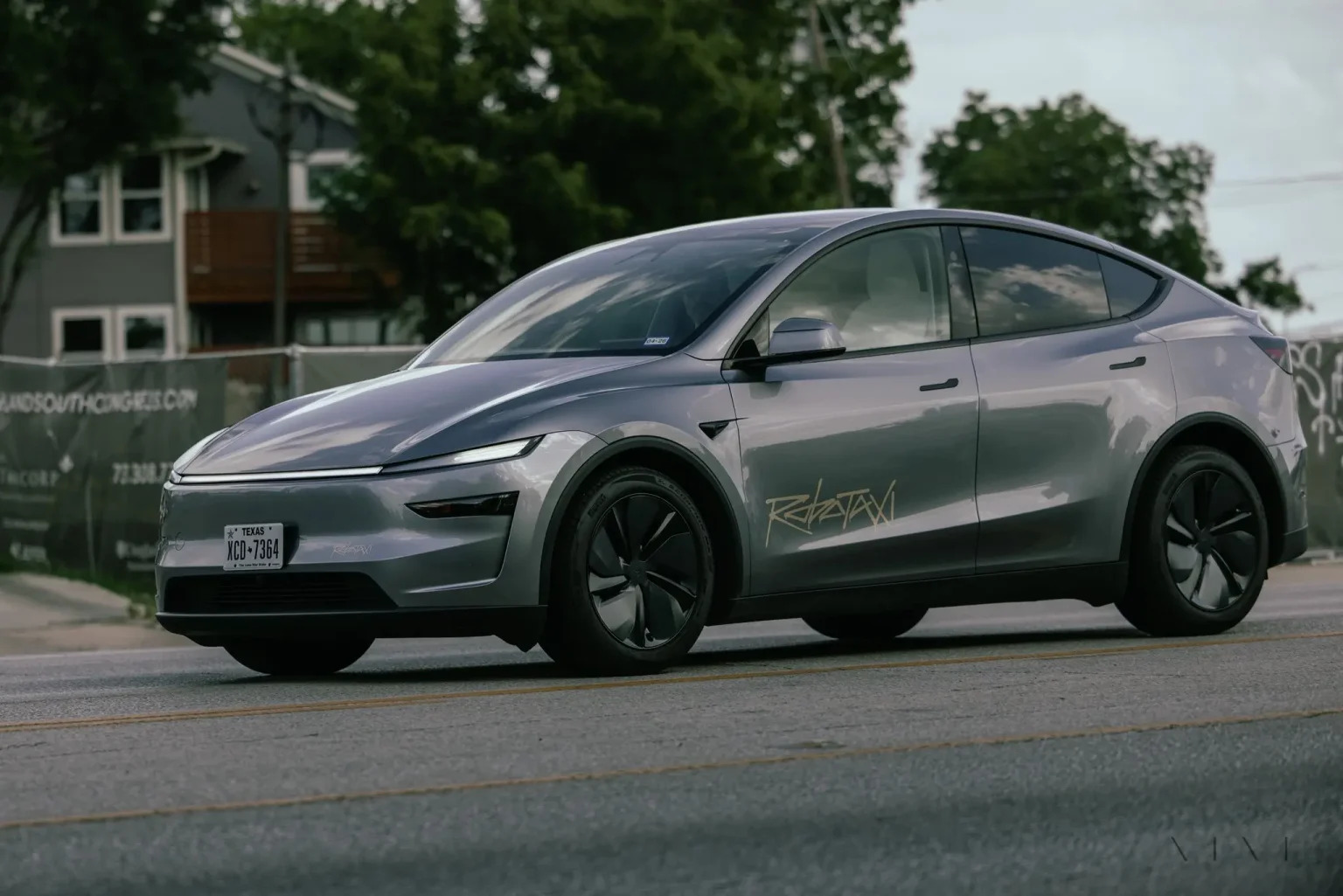
Recent reports from owners indicate that these notifications are integrated directly into the service appointment workflow. For instance, a customer dropping off a vehicle for a routine repair—such as a front trunk (frunk) maintenance issue—received an in-app prompt titled "Try Robotaxi During Your Service Visit." The interface encourages users to download and activate the Robotaxi app, which then facilitates autonomous transport to their next destination. This seamless integration ensures that mobility is maintained without the logistical friction of coordinating traditional rental vehicle handoffs or managing external ride credits.
Historical Context and Financial Implications
The reliance on loaner vehicles and third-party ride credits has long been a point of friction for Tesla’s service department. Loaner vehicles, while convenient for the customer, represent a significant inventory commitment; every Model 3 or Model Y utilized as a loaner is a vehicle that could have been sold to a customer, thereby impacting potential revenue. Conversely, the provision of Uber or Lyft credits, which became a common practice when loaner fleets were insufficient, represents a direct, recurring operating expense paid to third-party competitors.
By transitioning to its own Robotaxi fleet, Tesla achieves three primary objectives:

- Cost Internalization: The company eliminates the need to pay for external rideshare services, keeping the revenue—or the utilization value—within its own ecosystem.
- Fleet Utilization: It ensures that a portion of the Robotaxi fleet is consistently in use, providing data and operational feedback even during hours that might otherwise see lower demand.
- Product Familiarization: By requiring service customers to engage with the Robotaxi app, Tesla is effectively onboarding a new segment of users to its autonomous ecosystem, potentially converting them into long-term subscribers or users of the service outside of service-related needs.
Chronology of Development
The rollout in Austin is the culmination of a long-term development roadmap that has been visible through software updates and public testing.
- September 2026: Eagle-eyed developers and enthusiasts discovered specific code within Tesla app version 4.60.5. The string "sv_transport_robotaxi" appeared alongside existing options for loaners and third-party transport, signaling that the company had been internally preparing for this exact integration.
- November 11, 2026: Tesla officially expanded its unsupervised Robotaxi operations across an expansive zone in Austin, covering approximately 400 to 440 square miles. The service began operating on a 24/7 basis, setting the stage for the integration of service center transport.
- November 17, 2026: The first public instances of the service-linked Robotaxi prompts were confirmed by Tesla owners, confirming that the "sv_transport_robotaxi" code had transitioned from development to production.
The Austin Model and Market Expansion
Austin currently serves as the primary testing ground for Tesla’s autonomous ambitions. The city’s geography and the density of Tesla’s infrastructure make it the ideal location for the company’s most mature driverless deployments. With a fleet of Model Ys and the purpose-built Cybercab operating across the city, the density of the network allows for minimal wait times for service customers.
Beyond Austin, Tesla has been aggressively scaling its autonomous footprint. Public driverless service is already active in major metropolitan areas including Dallas, Fort Worth, Houston, San Antonio, Miami, Orlando, and Tampa. Industry analysts anticipate that as these markets reach the operational maturity seen in Austin, service centers in those cities will likely adopt the same "Robotaxi-first" transport model. This approach is not merely a convenience; it is a scalability strategy. As the Robotaxi fleet grows, the reliance on traditional loaner vehicles is expected to diminish, potentially allowing Tesla to reallocate those units to its primary sales inventory.

Strategic Synergy with Cybercab and Starlink
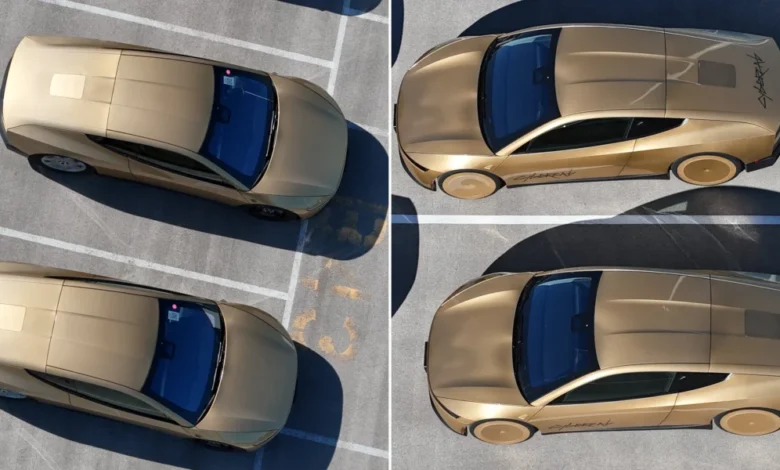
The efficiency of this service model is further bolstered by hardware upgrades recently spotted at Giga Texas. Aerial imagery from late November 2026 revealed that new production Cybercabs are now being manufactured with integrated Starlink V5 terminals. These terminals, which sit flush against the vehicle’s rear hatch, provide high-bandwidth connectivity essential for the real-time data requirements of an autonomous fleet.
The integration of Starlink ensures that even in areas with suboptimal cellular coverage, the Robotaxi fleet maintains consistent connectivity. This is critical for the service model; if a customer is relying on the vehicle to get to a professional engagement, the reliability of the network is paramount. The shift toward a factory-integrated, "built-in" solution rather than a bolt-on accessory suggests that Tesla is moving toward a highly standardized, mass-production phase for its autonomous vehicles.
Implications for the Future of Automotive Service
The broader implication of this shift is a fundamental change in the relationship between the consumer and the dealership model. In the traditional automotive industry, the dealership service center is a standalone profit center that relies on physical infrastructure and legacy logistics. Tesla’s move to unify service transport with its autonomous fleet suggests a vision where the "car ownership" experience is increasingly decoupled from the "transportation" experience.

Furthermore, this model addresses a common pain point in the transition to autonomy: public trust. By forcing—or rather, gently incentivizing—the use of its Robotaxi fleet during service visits, Tesla is providing its customer base with practical, hands-on experience with its autonomous technology. This "forced adoption" is an effective marketing tool. Once an owner realizes that a robotaxi can reliably transport them from a service center to their office or home, the psychological barrier to using the service for leisure or daily commuting is significantly lowered.
Regulatory and Operational Challenges
While the transition offers clear benefits, it is not without challenges. Regulatory scrutiny of autonomous vehicles remains intense. The Federal Aviation Administration’s recent interactions with Tesla CEO Elon Musk regarding Starlink terminals—while unrelated to the ground-based Robotaxi fleet—highlight the friction that can arise when a company operates across multiple, highly regulated sectors.
Additionally, the scalability of the service depends heavily on the "geofencing" of these vehicles. As Tesla continues to expand its operating zones, it must ensure that the density of its fleet matches the demand generated by its service centers. If a service center is located on the periphery of a service zone, the ability to provide prompt, reliable transport could be hindered. However, if the current trajectory of fleet expansion holds, it is likely that Tesla will prioritize its service centers as "hubs" within its autonomous network, ensuring that the vehicles are always available where they are needed most.
Conclusion
Tesla’s decision to replace loaner vehicles with its own Robotaxi fleet is a hallmark of the company’s "vertical integration" philosophy. By controlling the vehicle, the software, the charging infrastructure, and now the transportation logistics for its service customers, Tesla is creating an ecosystem that is increasingly self-contained.
For the average owner, the change is likely to be viewed as a high-tech convenience. For the industry, it is a signal that the age of the autonomous fleet is not just coming—it is already here, embedded in the very mechanics of how we maintain our vehicles. As Tesla continues to refine its software, expand its geographic reach, and scale its production of the Cybercab, the "Robotaxi-first" service model may soon become the industry standard, further distancing Tesla from traditional automakers and accelerating the shift toward an autonomous, service-based future.