IPhone Ultra Faces Renewed Delay Rumors Amidst Production Challenges, Raising Questions on Apple’s Foldable Debut

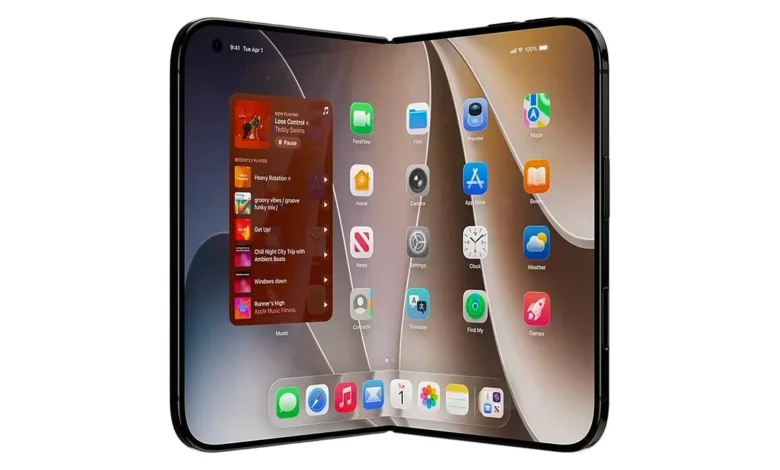
In the latest installment of the highly speculative ‘will it, won’t it?’ saga surrounding Apple’s anticipated foldable device, the iPhone Ultra, a new report has emerged suggesting that the device may indeed face a delay in its market availability, despite previous indications to the contrary. This development adds another twist to a narrative characterized by conflicting rumors, creating an atmosphere of uncertainty for consumers and industry observers alike. While the device is still widely expected to be unveiled as scheduled in September alongside the iPhone 18 Pro and iPhone 18 Pro Max, the crucial question now revolves around whether it will be available for purchase at the same time as its non-folding counterparts.
Latest Report Signals Potential Setback for iPhone Ultra Launch
Today’s report, originating from industry sources, specifically points to Apple’s primary manufacturing partner, Foxconn, as encountering significant issues in the production process of the iPhone Ultra. These challenges are reportedly necessitating "final adjustments" to the manufacturing lines, impacting the device’s readiness for a simultaneous retail launch with other new iPhone models. The core of these production hurdles appears to be concentrated on two critical components integral to any foldable device: the hinge mechanism and the durability of the folding screen.
The hinge, a complex marvel of engineering in foldable phones, must offer both robust longevity and a seamless folding experience, free from excessive creasing or structural weakness. Similarly, the folding screen demands a delicate balance between flexibility and resilience, resisting scratches and wear from repeated use. According to the report, Foxconn is grappling with these intricate design and manufacturing requirements, leading to potential delays. The precise duration required to resolve these production issues remains unclear, adding to the ambiguity surrounding the iPhone Ultra’s eventual market debut. This situation underscores the formidable technical challenges inherent in bringing a truly polished and durable foldable smartphone to mass production, especially under Apple’s notoriously stringent quality control standards.
A Rollercoaster of Rumors: Tracking the iPhone Ultra’s Unpredictable Timeline
The current report is not an isolated incident but rather the latest chapter in a long-running narrative of speculation regarding the iPhone Ultra’s launch timeline. Earlier reports had initially suggested a potential delay for the device, pushing its release into the following year. This was then contradicted by subsequent rumors, which claimed the iPhone Ultra would launch on time, creating a brief period of optimism. Now, with the re-emergence of delay rumors, the timeline has become a perplexing pendulum swing.
This back-and-forth illustrates the intense scrutiny and high expectations surrounding Apple’s entry into the foldable market. Each rumor, whether confirming or denying a delay, has fueled further discussion and analysis, reflecting the significant impact an Apple foldable could have on the smartphone industry. Despite the fluctuating predictions regarding its availability, there has been a consistent consensus among most recent rumors: the official unveiling event for the iPhone Ultra is still expected to occur in September, aligning with Apple’s traditional annual product launch schedule. This suggests that while production might be lagging, the device’s design and initial specifications are likely finalized, ready for public presentation. The distinction between an "unveiling" and "in-store availability" has become a critical nuance in this ongoing saga.
The Strategic Imperative: Apple’s Calculated Entry into the Foldable Arena
Apple’s foray into the foldable smartphone market, albeit a cautious and drawn-out one, represents a strategic move to address a burgeoning segment of the premium smartphone market. While competitors like Samsung, Huawei, Xiaomi, and Google have already established a presence with multiple generations of foldable devices, Apple has historically adopted a "wait and perfect" approach to new product categories. This strategy involves allowing early adopters and competitors to iron out initial kinks, then entering the market with a highly refined, user-centric product that often sets new benchmarks for quality and integration.
The foldable phone market, though still a niche compared to traditional smartphones, is experiencing robust growth. Reports from analytics firms like Counterpoint Research and IDC consistently show double-digit percentage increases in foldable shipments year-on-year, driven by technological advancements and increasing consumer acceptance. Samsung, with its Galaxy Z Fold and Z Flip series, has largely dominated this space, demonstrating the commercial viability and technological maturity of foldable form factors. Other players, such as Huawei’s Mate X series and Google’s Pixel Fold, have also contributed to diversifying the market, offering various approaches to the foldable design.
For Apple, entering this market is not just about capturing a share; it’s about maintaining its reputation as an innovator and leader in premium mobile technology. An "iPhone Ultra" foldable is expected to integrate seamlessly within the Apple ecosystem, offering a unique blend of hardware, software, and services that define the Apple experience. The anticipation, therefore, is not merely for a foldable phone, but for an "Apple Foldable" – a device that promises to redefine the user interaction with a flexible display, much like the original iPhone revolutionized the smartphone.
Unpacking the Engineering Hurdles: Hinge and Display Durability
The core reasons cited for the potential delay – issues with the hinge and the durability of the folding screen – are not trivial. They represent the most complex and critical engineering challenges in foldable smartphone design.
The Intricacies of Foldable Hinge Technology
A smartphone hinge is far more than a simple pivot point; it’s a sophisticated mechanical system that must withstand tens of thousands, if not hundreds of thousands, of folds and unfolds over the device’s lifespan. For an Apple device, the hinge must also contribute to an aesthetically pleasing design, allowing the phone to close completely flat without a gap, resisting dust and water ingress, and feeling robust yet smooth during operation.
Competitors have faced their own challenges. Early foldable devices often exhibited visible creases along the fold line, which, while improved, still remain a minor characteristic of most flexible displays. Some designs struggled with durability, with hinges failing or accumulating debris. Samsung’s "Flex Hinge" design, for example, uses a waterdrop-shaped mechanism to reduce the crease and improve durability. Google’s Pixel Fold also features a robust, multi-gear hinge. Apple, known for its meticulous engineering, would likely aim for a hinge mechanism that not only minimizes the crease but also offers unparalleled longevity and a premium tactile feel, surpassing current industry standards. Developing such a mechanism at scale, with consistent quality, is an enormous undertaking. "Final adjustments" could mean anything from minor material tweaks to significant redesigns of internal components, each with cascading effects on the manufacturing timeline.
The Fragility of Flexible Displays: UTG vs. CPI
The flexible display itself is another major area of concern. Most modern foldables utilize either Ultra-Thin Glass (UTG) or Colorless Polyimide (CPI) as the protective layer over the OLED panel. UTG, pioneered by Samsung, offers a more premium feel and better scratch resistance than CPI, which was used in earlier foldable generations. However, UTG is incredibly delicate during the manufacturing process, requiring precise handling and lamination. It is also more prone to cracking under specific stress points if not properly supported or designed.
Durability concerns extend beyond just the protective layer. The underlying OLED panel must be designed to bend repeatedly without degrading pixel quality or developing dead spots. The adhesives used must maintain their integrity over time and temperature fluctuations. Apple’s reputation for display quality is paramount; any visible crease, unevenness, or susceptibility to damage would be unacceptable for a product bearing the "iPhone Ultra" moniker. Achieving high yield rates for these complex display panels, especially at the scale Apple demands, is a significant industrial challenge. The problems related to "durability of the folding screen" could encompass issues with the UTG layer, the OLED panel’s resilience, or the integration of the display assembly into the device’s frame.

Foxconn’s Role and the Global Supply Chain Dynamics
Foxconn, formally Hon Hai Precision Industry Co., Ltd., is Apple’s long-standing and most crucial manufacturing partner. Its vast production facilities and immense workforce are responsible for assembling the majority of Apple’s iconic devices, including the iPhone. The sheer scale and complexity of Foxconn’s operations, coupled with Apple’s exacting standards, make any reported "issues" in their collaboration significant.
When a report claims Foxconn has "encountered some issues and is making some final adjustments to the manufacturing process," it signals more than just minor hiccups. It could imply challenges in achieving desired production yields, problems with component integration, or difficulties in maintaining Apple’s stringent quality benchmarks for a novel product like the iPhone Ultra. Apple is renowned for its meticulous supply chain management and demands exceptionally high standards from its partners. If Foxconn is struggling to meet these, it suggests the challenges are substantial, perhaps requiring new tooling, re-calibrating assembly lines, or even sourcing alternative materials or processes. The intricate dance between Apple’s design specifications and Foxconn’s manufacturing capabilities is a delicate balance, and any disruption can have far-reaching consequences on launch schedules and product availability.
Market Implications and Analyst Perspectives
The potential delay of the iPhone Ultra carries significant implications for Apple, the broader foldable market, and consumer expectations.
Impact on Apple’s Product Launch Calendar and Revenue
A delay in the iPhone Ultra’s market availability could have several repercussions for Apple. While an unveiling in September would maintain the company’s annual cadence, a delayed retail launch, particularly if it extends beyond the crucial holiday shopping season, could impact quarterly revenue projections. Premium devices like the iPhone Ultra are significant revenue drivers, and missing a key sales window could be costly. Furthermore, managing consumer expectations becomes critical. Apple has successfully cultivated a brand image synonymous with perfection and seamless user experience. Releasing a product that is perceived as rushed or flawed could risk that reputation, making a delay for refinement a potentially necessary evil. Industry analysts generally agree that Apple would prioritize product quality and user experience over hitting an arbitrary launch date, especially for a new product category.
The Broader Foldable Market Landscape
An Apple delay could provide a temporary reprieve for its competitors. Samsung, which has been aggressively innovating in the foldable space, might see an extended period of dominance without Apple’s direct competition. Companies like Google, Huawei, and Xiaomi could also leverage this window to further solidify their offerings and attract consumers keen on foldable technology. However, an Apple delay might also inadvertently validate the inherent difficulties in producing high-quality foldable devices, suggesting that even the industry’s most powerful player faces significant hurdles. Conversely, the continued anticipation for an Apple foldable, even if delayed, could keep consumer interest in the broader foldable market high, potentially benefiting all players in the long run.
Pricing Strategy and Consumer Readiness
The original article mentions the iPhone Ultra’s "very high price tag." This is consistent with the current market for foldable devices, which typically command premium prices due to their advanced technology and manufacturing complexity. The Pixel Fold launched at nearly $1,800, while Samsung’s Galaxy Z Fold series often starts above $1,700. An iPhone Ultra, with Apple’s premium branding and expected superior build quality, could easily push into or even exceed these price points.
Consumer readiness for such a high-priced, cutting-edge device is another factor. While a segment of Apple’s loyal user base is always willing to pay a premium for the latest technology, the "ultra" price tag combined with potential first-generation issues (even if mitigated by a delay) requires careful market positioning. The advice to "keep saving up" is practical, reflecting the significant investment an iPhone Ultra would represent for most consumers.
Unofficial Responses and Industry Speculation
As is typical for Apple, there has been no official statement regarding the iPhone Ultra or any potential delays. Apple maintains a strict policy of not commenting on unreleased products or market rumors. This silence, however, often fuels further speculation among industry analysts and the tech media.
Analysts, drawing on their understanding of Apple’s operations and the challenges of the foldable market, have largely anticipated that Apple would face hurdles in its foldable journey. Many believe that if Apple does indeed delay the iPhone Ultra, it would be a calculated decision aimed at ensuring the product meets the company’s exceptionally high standards for quality, reliability, and user experience, rather than rushing an unfinished device to market. This inferred commitment to quality is a cornerstone of Apple’s brand identity.
Sources familiar with the supply chain, while unable to provide official statements, often leak information that paints a picture of intense pressure and collaborative problem-solving between Apple and its manufacturing partners. The "final adjustments" at Foxconn can be interpreted as a concerted effort to address identified deficiencies before mass production ramps up, reflecting Apple’s iterative approach to product development, even at late stages.
The Road Ahead: What to Expect
The current landscape surrounding the iPhone Ultra’s launch is one of anticipation tempered by uncertainty. While the latest report from Digitimes, via Notebookcheck, suggests a potential delay in market availability due to production issues related to the hinge and folding screen durability, the broader consensus still points to an official unveiling in September alongside the iPhone 18 Pro and iPhone 18 Pro Max. The critical distinction lies in the timing of retail availability.
For consumers eagerly awaiting Apple’s first foldable device, the advice remains consistent: do not panic. The possibility of a delay, while frustrating, often translates into a more polished and reliable product upon release. Continuing to save for the expected "very high price tag" remains prudent, as the device, whenever it launches, will undoubtedly represent a significant investment.
The coming months will likely bring further leaks and reports, as the global supply chain for such a high-profile device is vast and difficult to keep entirely under wraps. Until Apple makes an official announcement, the narrative of the iPhone Ultra’s launch will continue to evolve, a testament to the immense interest in what could be the next major chapter in mobile technology. All eyes will be on Apple’s September event, hoping for definitive clarity on the future of the iPhone Ultra.