Aurora Innovation Targets Massive Expansion with 30,000 Autonomous Trucks by 2030 Despite Investor Skepticism

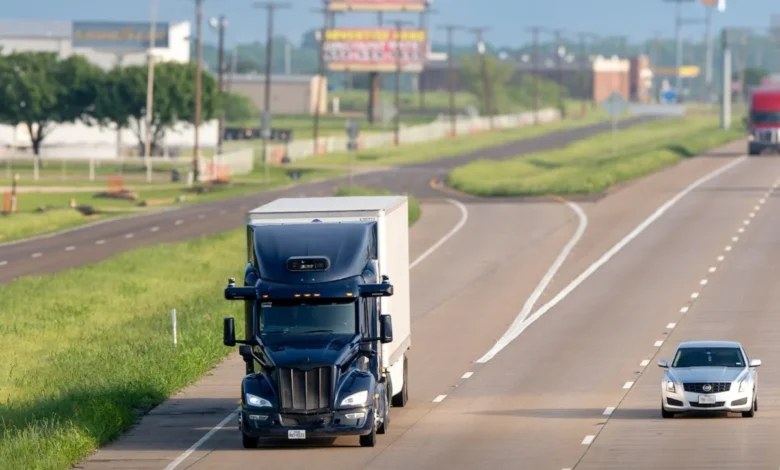
The autonomous trucking landscape is bracing for a significant shift as Aurora Innovation, a leading developer of self-driving technology, unveiled a bold strategic roadmap during its recent annual analyst and investor day. The company, which has been steadily refining its "Aurora Horizon" platform, announced its intention to scale its fleet to over 30,000 autonomous trucks by the conclusion of 2030. This projection, which targets $5 billion in annual revenue, represents a monumental leap from the company’s current operational footprint. As of the end of 2026, Aurora expects to be operating just 200 driverless trucks with a projected annual revenue run rate of approximately $80 million.
While the ambition behind this target is undeniable, the immediate market reaction has been one of caution. Following the presentation on September 23, 2026, Aurora’s stock experienced a notable decline, closing down 12.42% to $5.29 on the following Monday. This disconnect between the company’s internal growth narrative and the market’s valuation suggests that investors remain unconvinced of the feasibility of such a rapid transition from a niche proof-of-concept model to a dominant industry player.
The Financial and Operational Pivot
At the heart of Aurora’s strategy is a fundamental change in its business model. Currently, the company operates under a "Transportation-as-a-Service" (TaaS) framework. In this setup, Aurora retains ownership and operational control of its autonomous trucks, charging customers—which include logistics stalwarts such as Werner, Hirschbach, McLane, and Detmar Logistics—a fee of roughly $2 per mile. This rate is intentionally competitive, designed to mirror the pricing structures of traditional, human-operated carrier services, thereby lowering the barrier to entry for prospective partners.
However, the company’s leadership views this as a transitional phase, limited to a fleet size of roughly 500 vehicles. The long-term scalability of the business depends on moving toward a "Driver-as-a-Service" (DaaS) model, which is slated to become the company’s primary revenue driver starting in 2027.
Under the DaaS model, the financial burden of capital expenditure shifts away from Aurora. Customers will assume ownership of the trucks and handle the costs associated with maintenance and traditional operations. In exchange, Aurora will license its self-driving technology through a subscription fee, projected to be approximately $0.85 per mile. By offloading the hardware assets from its balance sheet, Aurora aims to achieve a leaner, more scalable operation, which is critical for reaching its gross margin goals. The company anticipates achieving breakeven gross margins on a run-rate basis by the first half of 2027, provided it successfully manages the deployment of its first 500 units.
Strategic Partnerships and Hardware Evolution
Scaling to 30,000 units requires more than just a change in business model; it necessitates a sophisticated manufacturing and supply chain strategy. Aurora is pinning much of its operational future on its third-generation hardware suite, expected to debut in late 2027.
Crucial to this deployment is the company’s partnership with Aumovio, formerly known as Continental. Aumovio is not merely serving as a contract manufacturer; the firm is actively financing the production of the autonomous hardware kits. This arrangement is particularly advantageous for Aurora, as it alleviates significant capital pressures during the critical scaling phase. Furthermore, Aumovio is tasked with the lifecycle management of these kits, including maintenance, repairs, and servicing, which allows Aurora to focus its internal resources on software refinement and algorithmic safety.
Industry Context and Competitive Landscape
The logistical hurdles Aurora faces are emblematic of the broader autonomous vehicle (AV) industry. The transition from testing to mass deployment is notoriously capital-intensive. Analysts often point to the "valley of death"—the period between successful technical proof-of-concept and profitable, high-volume production—as the primary challenge for firms like Aurora, Kodiak Robotics, and Gatik.
CFO David Maday remains defiant in the face of skepticism, contextualizing the 30,000-truck target against the backdrop of the massive North American freight market. He noted that the four major truck manufacturers collectively produce between 250,000 and 300,000 new vehicles annually. "While 30,000 kind of feels like a lot in the autonomy space, in terms of trucks relative to the overall market, it’s actually pretty small," Maday stated. By capturing roughly 10% of the annual production capacity of the major OEMs, Aurora believes its goals are grounded in reality rather than mere aspiration.
The Path to 2030: A Chronology of Growth
Aurora’s growth trajectory is designed to accelerate exponentially after 2027. The company’s internal planning reflects the following milestones:
- 2026: Finalization of the TaaS pilot programs; total fleet size maintained at approximately 200 driverless units.
- 2027: Transition to the DaaS model; deployment of third-generation Aumovio-manufactured hardware; target for breakeven gross margins.
- 2028: Optimization of cost structures and expansion of service areas beyond the current southern U.S. corridors.
- 2030: Achievement of 30,000 active units and attainment of $5 billion in annual revenue.
Broader Implications and Future Outlook
The success of this roadmap carries significant implications for the American supply chain. Autonomous trucking is widely viewed as a potential solution to the chronic driver shortage and the rising costs associated with labor and fuel efficiency. If Aurora can successfully prove the reliability of its hardware at scale, it could trigger a broader industry trend toward the automation of long-haul freight corridors.
Furthermore, Aurora has confirmed that its ambitions extend beyond the trucking sector. While current resources are heavily focused on logistics, management has indicated that the "robotaxi" market remains a long-term goal. The logic is that once the core "Aurora Driver" software reaches a high level of maturity and the unit economics become favorable, the underlying technology can be ported to passenger-carrying vehicles.
However, the path forward is not without risks. Regulatory hurdles, public perception of road safety, and potential technical bottlenecks in edge-case driving scenarios remain as persistent challenges. For investors, the primary concern remains the "burn rate"—the speed at which the company consumes cash while waiting for the scale of its operations to catch up to its revenue projections.
Ultimately, Aurora’s investor day was a declaration of confidence in the maturity of its technology. The transition from a research-and-development-heavy organization to a revenue-generating commercial entity is the most difficult phase for any deep-tech company. Whether Aurora can meet the aggressive timeline set by its leadership will likely depend on the seamless integration of Aumovio’s manufacturing prowess with its own software ecosystem, as well as the continued willingness of the capital markets to fund its journey toward the $5 billion milestone. As the company moves toward 2027, the industry will be watching closely to see if the "unlock" in scalability manifests as promised.