Panasonic Lumix SHX1 Redefines Modular Cinema Production Through Full-Frame Box Camera Innovation

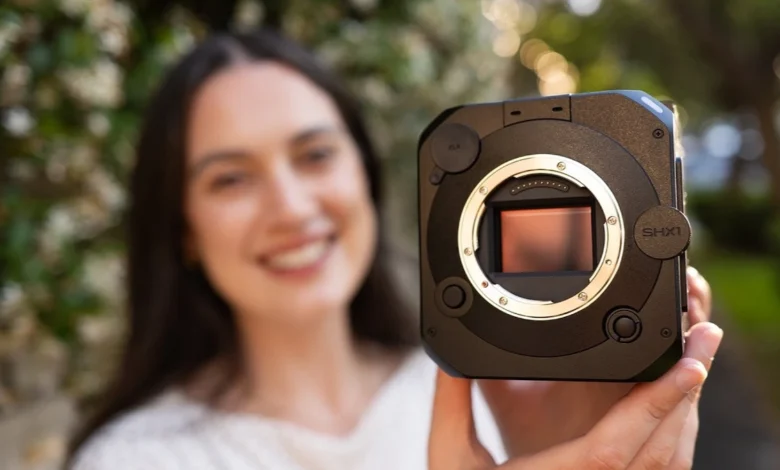
The landscape of professional videography is undergoing a structural shift as manufacturers move away from traditional mirrorless ergonomics toward dedicated, modular box-style camera systems. Panasonic’s latest offering, the Lumix SHX1, represents a significant entry into this category, blending a 24-megapixel full-frame, partially stacked sensor with an array of features specifically engineered for the high-pressure environment of commercial and broadcast production. By stripping away the constraints of a traditional camera body and prioritizing rig-centric functionality—such as native 32-bit audio support, ProRes internal recording, and specialized connectivity—Panasonic is attempting to bridge the gap between compact mirrorless convenience and large-scale cinema rigging.
Engineering the Modular Workflow
The development of the SHX1 addresses a growing friction point among professional videographers: the "rigging tax." Many creators currently utilize hybrid mirrorless cameras like the Lumix S1II, which necessitates a substantial aftermarket ecosystem of cages, plates, external audio adapters, and power management systems to be production-ready. The SHX1 effectively reverses this paradigm, arriving as a base unit designed to be built upon from the ground up.
Weighing in at approximately 984 grams, the SHX1 occupies a unique physical space. Unlike traditional cameras, its control scheme is shifted to the left-hand side, featuring a top-mounted tilt-and-flip screen that prioritizes visibility in a rigged configuration. By utilizing a Micro V-mount battery system, the unit eliminates the need for bulky external power plates, contributing to an overall weight reduction of roughly 350 grams compared to a similarly equipped S1II setup. However, this shift toward a dedicated box form factor comes with specific compromises, most notably the absence of weather-sealing and the removal of the integrated electronic viewfinder and hot shoe, signaling that the device is intended for controlled environments rather than run-and-gun photography.
Sensor Performance and Image Fidelity
At the heart of the SHX1 lies the same 24-megapixel partially stacked full-frame sensor found in the Lumix S1II, ensuring a high level of color science consistency across the Panasonic ecosystem. Despite the shared architecture, the SHX1 introduces distinct refinements aimed at cinema-grade acquisition. The inclusion of an optical low-pass filter serves to mitigate the moiré patterns that have occasionally challenged users of the S1II.
The SHX1 further distinguishes itself through its high-bitrate recording capabilities. The implementation of 3.8K open-gate recording in ProRes offers a substantial advantage for modern social-first content creators, providing the vertical resolution necessary for social media crops without sacrificing horizontal field of view. For more demanding productions, the camera supports external recording of Blackmagic RAW via SSD, with open-gate resolution scaling up to 6K at 24 frames per second.
Real-world testing, conducted by industry professionals including Julia Trotti and her production team, indicates that the SHX1 exhibits superior low-light performance compared to its hybrid sibling. This is attributed to optimized image processing pipelines that allow for cleaner, more detailed results at higher ISO settings. Furthermore, in thermal stress tests conducted at ambient temperatures exceeding 35°C (95°F), the SHX1 demonstrated a resilience that reportedly surpasses the S1II, confirming its viability for long-form, uninterrupted event coverage.
Operational Challenges and Tactical Feedback
While the technical specifications are robust, the SHX1 has faced scrutiny regarding its tactile interface. Early field reports suggest that the scroll wheels and button configurations lack the distinct physical feedback required for rapid, blind operation. Professional videographers accustomed to the responsive, tactile feedback of traditional cameras noted a tendency to overshoot menu settings, and a consensus emerged suggesting that a dedicated joystick would have been a more intuitive solution for menu navigation than the current rear-dial setup.
Panasonic has acknowledged these early ergonomic concerns, which are often addressed through subsequent firmware iterations. The decision to omit internal Neutral Density (ND) filters remains a point of debate. While some professionals view the lack of internal NDs as a significant omission, others argue it is a necessary trade-off to maintain the camera’s compact footprint. In response to this, Panasonic has confirmed it is collaborating with manufacturers like Tilta to develop an electronic ND matte box system, which will allow for remote aperture and density control directly through the camera’s interface, effectively digitizing the traditional filtration workflow.
Connectivity and Audio Integration
The SHX1 is designed as a centerpiece for professional sound acquisition. Audio is routed through a dedicated, detachable XLR unit that attaches via USB-C, facilitating two channels of 32-bit float audio. When combined with the internal 3.5mm input, the system can support up to four channels of 32-bit audio simultaneously, providing a safety net against digital clipping in unpredictable live environments.
Connectivity remains a priority for broadcast applications. The camera offers independently configurable HDMI and SDI outputs. This allows a technician to send a "clean" 10-bit feed to an external recorder while simultaneously outputting a feed with overlays and status information to a secondary monitor. Timecode synchronization—a critical requirement for multi-camera shoots—is supported via a dedicated BNC port or through integration with Atomos UltraSync BLUE, ensuring frame-accurate alignment across professional sound and video devices.
Strategic Market Implications
The emergence of the SHX1 suggests a strategic bifurcation in Panasonic’s product roadmap. The Lumix S1II remains the superior choice for the "hybrid" shooter—someone who requires both high-end video performance and the ability to capture high-resolution stills in a weather-sealed body. Conversely, the SHX1 is a niche tool, tailored for broadcast studios, permanent installations, and specialized commercial productions where the primary output is video.
The industry impact of this launch is twofold. First, it forces a conversation about the necessity of the "mirrorless" form factor for professional cinema work. By demonstrating that a dedicated box camera can offer improved weight distribution, better thermal management, and a more streamlined rigging process, Panasonic is challenging the dominance of traditional DSLR-shaped bodies in professional video. Second, it highlights the increasing importance of 32-bit float audio and RAW recording formats as standard requirements rather than luxury features.
As productions shift toward increasingly complex digital workflows, the SHX1 serves as a bridge between high-end cinema cameras and the accessible, high-performance world of mirrorless technology. While it lacks the versatility of a traditional camera, its ability to integrate into existing production ecosystems—paired with the familiarity of the S1II sensor and the consistency of V-Log color science—makes it a compelling option for those who have outgrown the limitations of a standard mirrorless rig.
Ultimately, the SHX1 is not a replacement for the S1II, but rather an expansion of the user’s toolkit. For production houses that already rely on the Lumix system, the SHX1 provides a logical, lightweight, and highly capable "A-cam" that excels in the areas where mirrorless cameras are traditionally weakest: long-duration reliability, complex audio routing, and seamless integration into professional rigging. As firmware updates address the initial tactile critiques, the SHX1 is positioned to become a standard component in the modern professional’s video production kit.