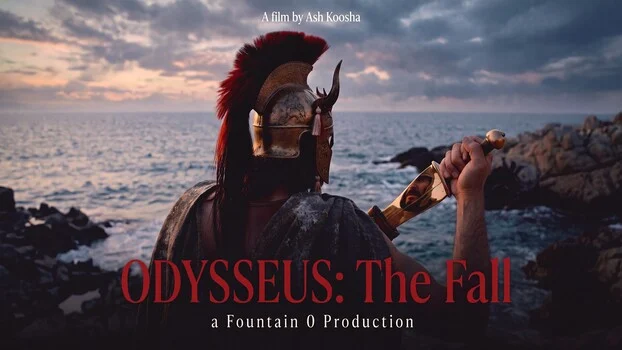
The cinematic landscape is experiencing a seismic shift, a clash of titans where a monumental Hollywood production, Christopher Nolan’s "The Odyssey," shot on the colossal IMAX 70mm format and boasting a reported $250 million budget, finds itself juxtaposed against an emergent AI-driven narrative, "Odysseus: The Fall." This AI-generated film, a 135-minute epic conceived and largely executed by a single individual over a mere three months with a budget in the mid-five figures, emerged just three days prior to Nolan’s theatrical debut, heralding a new, and perhaps unsettling, era in filmmaking.
The Genesis of Two Odysseys
Christopher Nolan’s "The Odyssey" arrives in theaters today, a culmination of years of meticulous planning and a significant investment in capturing a legendary tale with unparalleled visual fidelity. The decision to shoot entirely on IMAX 70mm, a format renowned for its immersive quality and breathtaking detail, underscores a commitment to a traditional, tactile filmmaking experience. The sheer scale of this endeavor, from the logistical challenges of deploying the largest film cameras ever built to remote locations to the extensive post-production required for such a grand vision, speaks to a dedication to cinematic artistry as it has long been understood.
In stark contrast, "Odysseus: The Fall" represents a radical departure from conventional filmmaking. Developed by Fountain 0, a London-based entity that proudly identifies as a leading AI movie studio, and helmed by director Ash Koosha, this production leverages artificial intelligence to reimagine the epic journey of Odysseus. Koosha has personally lent his likeness to the titular hero, a choice that blurs the lines between creator and character. The film further incorporates twelve human likenesses sourced from individuals within Koosha’s personal network, all rendered through the advanced capabilities of Kling, an AI rendering engine. The ambition extends to its runtime, mirroring the duration of a conventional feature film, and its distribution model: instead of gracing the silver screen, "Odysseus: The Fall" is slated for a digital rental at $9.99 on Fountain 0’s proprietary platform later this summer.
A Tale of Two Receptions
The immediate public and critical reception to "Odysseus: The Fall" has been, as might be anticipated, largely polarizing and, for the most part, negative. Early reactions, as evidenced by online commentary, have ranged from dismissive epithets like "rancid slop" and "AI parasite" to more detailed critiques. The familiar criticisms leveled against early AI-generated content are readily apparent: stilted dialogue that lacks natural cadence, character faces devoid of emotional resonance or "interior life," and an overall aesthetic that feels more like a description of a film rather than an actual cinematic experience. These criticisms echo a broader concern within the creative industries about the capacity of AI to replicate the nuanced emotional depth and authentic human connection that are hallmarks of compelling storytelling.
The Visionary Behind the Machine: Ash Koosha’s Argument
Ash Koosha, the driving force behind "Odysseus: The Fall," presents a defense of his work that transcends the sensationalism of the AI versus human debate. His perspective is not one of replacing human artistry, but rather of democratizing the creative process. Koosha argues that AI "is a threat to nothing except distance, the distance between a person with a story and the means to tell it." He firmly believes that "a tool has never made a film worth watching. A person with something urgent to say has made every one of them, and that won’t change." This statement suggests a philosophical stance that AI is an enabler, a powerful brush in the hands of a visionary, rather than an autonomous creator.
Furthermore, Koosha has expressed a hope that Nolan’s "The Odyssey" will be a success, even suggesting that his AI-generated version might act as a catalyst, driving audiences to seek out the more traditional cinematic rendition. This conciliatory approach counters the narrative of AI as a direct competitor aiming to supplant human endeavors. Koosha’s previous work, a feature film created for approximately $2,000 that achieved the distinction of being the first fully AI-generated film to screen at the Tribeca Film Festival, lends credence to his persistent exploration of AI in filmmaking, making it difficult to dismiss his current project as merely a headline-grabbing stunt.
The Uncomfortable Comparison and the Future of Storytelling
The very act of placing these two "Odyssey" films side-by-side, an invitation implicitly extended by Fountain 0’s marketing, compels a deeper examination of the evolution of filmmaking. Nolan’s "The Odyssey" is a testament to the physical labor and collaborative artistry inherent in traditional cinema. Its existence is rooted in the tangible: crews hauling massive cameras to real locations, interacting with real people, and capturing genuine human expressions. This commitment to the physical reality of filmmaking is, for many, the primary draw.
Conversely, "Odysseus: The Fall" is the product of digital creation, born from algorithms and extensive data processing, a process that can be executed by a single individual from a computer. The stark contrast between these origins raises profound questions about the future of storytelling and the value audiences place on different forms of creation.
The current public outcry, with its emphasis on the perceived inferiority of the AI version, is understandable. The film, by most accounts, is not good. However, the more pertinent and unsettling question lies beyond its immediate quality. It is about the trajectory of this technology. What happens when the next AI-generated film is not outright bad, but merely mediocre? And what is the implication when such a production can be realized at a fraction of the cost, with minimal human resources?
Supporting Data and Industry Context
The film industry has been grappling with the implications of artificial intelligence for several years. Generative AI technologies, capable of creating text, images, music, and now video, have advanced at an unprecedented pace. Major studios and production companies are actively exploring AI for various aspects of filmmaking, including scriptwriting assistance, concept art generation, visual effects enhancement, and even synthetic actor creation.
The Writers Guild of America (WGA) and SAG-AFTRA, the unions representing film and television writers and actors, respectively, have voiced significant concerns regarding AI’s potential to devalue human labor. Their recent labor disputes highlighted demands for protections against AI being used to replace writers and actors, or to generate scripts and performances without fair compensation or credit. The agreements reached in these disputes, while offering some immediate safeguards, represent a temporary truce in an ongoing negotiation about AI’s role in creative industries.
The economic disparity between Nolan’s "The Odyssey" and "Odysseus: The Fall" is staggering. A $250 million budget allows for extensive location shooting, elaborate set designs, a large cast and crew, and the utilization of cutting-edge, often prohibitively expensive, filmmaking technology like IMAX 70mm cameras. This level of investment is typical for major studio blockbusters aiming for broad commercial appeal and critical acclaim. In contrast, a mid-five-figure budget for an AI film suggests that the primary costs are related to computing power, software licenses, and the creator’s time. This drastic reduction in production costs could democratize filmmaking to an extent, enabling individuals with compelling stories but limited financial resources to bring their visions to life. However, it also poses a significant challenge to the established economic models of the film industry, which rely on substantial upfront investments and box office returns.
Broader Impact and Implications
The emergence of "Odysseus: The Fall" is not just about a single film; it’s a harbinger of potential disruptions. If AI can churn out narratives of feature length at minimal cost, the landscape of content creation could be fundamentally altered. This raises questions about intellectual property, authorship, and the very definition of art.
The ability to generate content rapidly and inexpensively could lead to an explosion of niche and personalized entertainment. Streaming services might leverage AI to create tailored content for individual subscribers, blurring the lines between curated and machine-generated media. Independent filmmakers, traditionally constrained by financial limitations, could find new avenues to express their creativity.
However, the concerns about authenticity, originality, and the erosion of human craftsmanship are valid and require careful consideration. The "texture of something described rather than filmed" is a critique that speaks to a deeper artistic concern: the absence of lived experience, human intuition, and the serendipitous moments that often elevate filmmaking from mere execution to genuine art.
The comparison between Nolan’s meticulously crafted, physically realized epic and Koosha’s digitally synthesized narrative serves as a crucial benchmark. As AI technology continues to evolve, the line between human-made and machine-made content will likely become increasingly blurred. The critical challenge for the industry, audiences, and creators alike will be to navigate this evolving terrain, discerning not just the quality of the output, but the underlying processes and the values they represent. The true test will be when AI-generated content moves beyond the realm of the overtly flawed and begins to compete in the space of mediocrity, a scenario that presents a far more complex and perhaps existential challenge to the future of cinematic art.