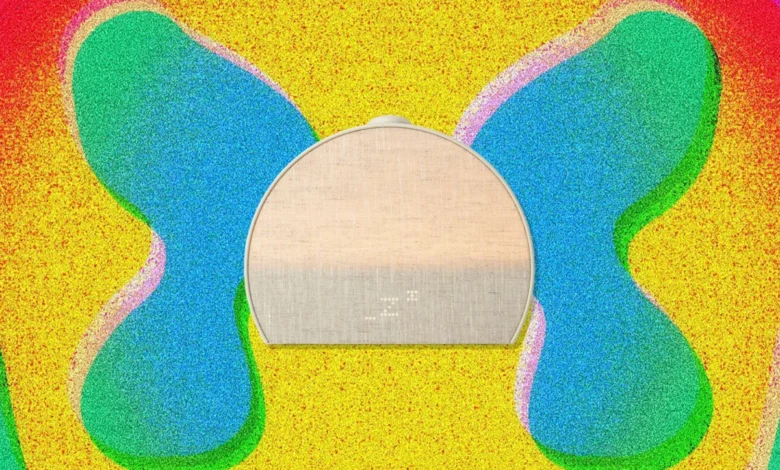
If you are still relying on the jarring, high-frequency "Radar" tone of an iPhone alarm to begin your day, you are likely part of a demographic currently seeking a more physiological approach to morning transitions. The Hatch Sleep Clock, a multifaceted bedside device, has emerged as a significant player in the consumer sleep technology market. By integrating a sunrise alarm, ambient light, sound machine, and contactless motion sensing, the device attempts to synthesize the fragmented world of sleep hygiene tools into a single, cohesive unit. As retailers finalize their strategies for the 2026 holiday shopping season, the Hatch Sleep Clock has officially joined the early-access Black Friday discount lineup, marking its first significant price reduction since hitting the market.
From November 19 through November 20, the device is available for $188, a 25 percent reduction from its $250 retail price. This positioning places the hardware at a price point only slightly higher than the $170 Hatch Restore 3, creating a strategic value proposition for consumers weighing the benefits of basic sound-and-light therapy against the inclusion of passive sleep monitoring technology.
The Evolution of the Smart Bedroom
The rise of the "smart bedroom" is not a new phenomenon, but it is currently undergoing a shift toward passive, non-intrusive monitoring. Historically, sleep tracking was confined to medical-grade polysomnography (PSG) in clinical settings. The 2010s saw the democratization of this data through wrist-worn wearables, such as smartwatches and fitness bands. However, these devices often present a "burden of wearability"—a documented phenomenon where users experience discomfort or anxiety related to charging and wearing hardware to bed.
The Hatch Sleep Clock addresses this by utilizing contactless sensor technology. By employing internal motion sensors that track respiratory patterns and physical movement throughout the night, the device provides a baseline of sleep metrics without requiring the user to wear a ring or a watch. For the data-conscious consumer who occasionally forgets to charge their wearables or finds them disruptive to their physical comfort, this passive approach offers a secondary, lower-friction data stream.
Chronology of the 2026 Holiday Sales Cycle
The announcement of this deal coincides with a broader trend in the retail industry: the "Black Friday Creep." Over the last decade, major retailers—led by Amazon, Target, and Walmart—have shifted away from the singular, high-intensity shopping event of the Friday following Thanksgiving. Instead, the season has expanded into a multi-week promotional window.
- Early November 2026: Retailers begin releasing "early access" deals to mitigate supply chain pressure and capture consumer spending before the traditional peak.
- November 19-20, 2026: The specific promotional window for the Hatch Sleep Clock, designed to test market elasticity before the primary Thanksgiving weekend push.
- Late November 2026: The traditional Black Friday and Cyber Monday surge, where price parity is expected to be maintained or matched across major digital storefronts.
This compressed timeline reflects an industry-wide effort to manage inventory levels and maximize the duration of consumer engagement. By offering the Sleep Clock at a reduced rate nearly a week before the official holiday, Hatch is attempting to secure "top-of-funnel" awareness among consumers who are currently finalizing their shopping lists.
Technical Performance and Data Accuracy
While the device offers a robust suite of features, it is important to contextualize its performance metrics relative to gold-standard clinical benchmarks. In empirical testing, the Hatch Sleep Clock demonstrates strong alignment with wearable devices regarding total sleep duration. However, the granularity of its sleep-stage analysis—specifically the distinction between light, deep, and REM sleep—shows occasional variance when compared against high-end smart rings and medical-grade sensors.

One of the primary differentiators for the Hatch ecosystem is its lack of reliance on complex physiological metrics. Unlike a pulse oximeter or an electrocardiogram-equipped watch, the Hatch does not track heart rate variability (HRV) or blood oxygen saturation (SpO2). While this limits its utility for users tracking athletic recovery or potential sleep apnea symptoms, it simplifies the data output. The resulting reports are designed for the average consumer, focusing on duration, latency (the time it takes to fall asleep), and wake-up times.
The device also avoids the privacy concerns often associated with modern home automation. Because it does not utilize cameras or microphones for its tracking, it mitigates the common "privacy-by-design" concerns that often deter consumers from introducing new sensors into the bedroom.
Strategic Implications for the Consumer
For the consumer, the decision to invest in the Hatch Sleep Clock involves balancing the utility of a multi-purpose tool against the drawbacks of proprietary ecosystem requirements. The device offers a high degree of integration: it functions as a visual cue for circadian rhythm management via its sunrise light, a cognitive-behavioral aid via its soundscapes, and a passive tracker.
However, the "Hatch+ subscription" model—priced at $6 per month—remains a critical point of analysis. While the core functionality of the alarm and basic sleep reports are accessible without a subscription, the expanded audio library is gated behind this recurring fee. This reflects a broader industry transition toward "Hardware-as-a-Service," where the value of a physical object is increasingly tethered to the continuous software updates and content delivery provided by the manufacturer.
Market Context and Future Outlook
The broader sleep technology market is projected to reach unprecedented valuation by 2030, driven by an increasing societal focus on wellness and the long-term health implications of sleep deprivation. Organizations such as the National Sleep Foundation have long emphasized the importance of sleep consistency and the reduction of blue light exposure before bedtime—principles that form the foundation of the Hatch design philosophy.
From a manufacturing perspective, the challenge for companies like Hatch is to maintain a balance between aesthetic appeal and technical performance. The requirement for specific placement—the device must be positioned to "see" the sleeper without being obstructed by nightstand clutter—highlights the limitations of current non-contact sensing technology. Users with disorganized or smaller bedside surfaces may find that the device’s accuracy is compromised by the physical environment, a factor often overlooked in promotional marketing.
Conclusion
As the retail landscape moves through the 2026 Black Friday season, the Hatch Sleep Clock stands out as an example of a product attempting to solve the "friction" of modern sleep tracking. It is not designed to replace clinical monitoring or high-intensity athletic recovery tracking. Instead, it serves as a lifestyle intervention tool for the general population.
For those who have struggled with the abrupt nature of traditional alarm clocks and wish to gain a passive understanding of their sleep duration, the current $188 price point represents a competitive entry into the category. By prioritizing the user experience—specifically the transition from wakefulness to sleep—Hatch has successfully carved out a niche that balances the convenience of a traditional alarm clock with the insights of the modern quantified-self movement. As with all holiday purchases, consumers are encouraged to assess whether the specific, non-contact features of this device align with their long-term health objectives, or if a more specialized, wearable solution better meets their specific physiological monitoring needs.