A Significant Mid-Cycle Update
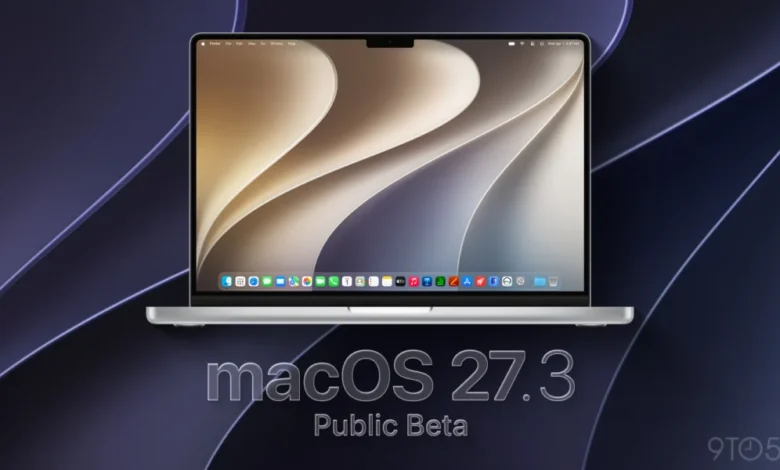
While the preceding macOS 27.2 update focused primarily on security patches and minor maintenance, macOS 27.3 is positioned as the most substantial iteration since the initial launch of the macOS 27 platform. The release serves as a bridge between foundational OS architecture and advanced AI-driven productivity, reflecting Apple’s ongoing strategy to integrate generative intelligence deeper into the Mac ecosystem.
The current public beta build aligns with the developer version, ensuring that those who opt-in for testing receive the same feature set and performance optimizations that engineers are currently validating. This synchronization is critical for maintaining stability ahead of the official public release, which is slated for next month.
Chronology of the macOS 27.3 Development Cycle
The development cycle for macOS 27.3 has been characterized by a rapid, iterative approach. The timeline reflects Apple’s intent to expedite the delivery of features requested by both the developer community and enterprise users:
- Late October 2026: Initial public announcement of the 27.3 roadmap, highlighting the expansion of Siri AI language support.
- Early November 2026: Deployment of macOS 27.3 Beta 1, which introduced major UI changes to Safari, including vertical tabs and adaptive dark mode, alongside native Markdown rendering.
- Mid-November 2026: Release of Beta 2 to developers, adding granular privacy controls for Full Disk Access and enabling Apple Intelligence for users in China.
- Late November 2026: Rollout of the public beta 2, inviting a wider user base to stress-test the system and provide telemetry data for the final build.
Core Feature Enhancements and Privacy Controls
The latest beta brings several high-impact features that alter the daily workflow for power users. Central to the update are new privacy controls governing "Full Disk Access" and automation permissions. These tools provide users with a more granular view of which applications have permission to interact with sensitive system files and automated scripts, addressing long-standing requests from privacy advocates.

Furthermore, the integration of native Markdown rendering within Quick Look significantly improves the experience for developers and writers who rely on plain-text documentation. This allows for instant previewing of formatted files without the need for third-party plugins or heavy text editors, streamlining the review process for technical workflows.
The Expansion of Apple Intelligence
One of the most anticipated aspects of macOS 27.3 is the expansion of Siri AI. Apple has focused on increasing the assistant’s "app-awareness," allowing it to execute complex, multi-step commands within the native Apple suite. Users can now utilize Siri to manage folder structures, sort Photos, and manipulate Reminders with higher semantic accuracy than previous iterations.
Geographically, the update is notable for bringing Apple Intelligence to the Chinese market, a move that requires navigating distinct regulatory and technological frameworks. By extending these capabilities to Macs and iPads in the region, Apple is standardizing its AI experience across its most critical hardware demographics. Additionally, the inclusion of language support for Norwegian, Turkish, Vietnamese, and Traditional Chinese underscores the company’s commitment to broadening the accessibility of its AI features globally.
Developer Tools and Ecosystem Impact
Apple has simultaneously opened new avenues for third-party developers through the introduction of Markdown-based instructions for Siri AI skills. By allowing developers to define app capabilities using standardized markup, Apple is reducing the friction required to build custom integrations. This is expected to foster a new generation of Siri-enabled applications, moving beyond basic "on/off" commands toward more sophisticated, context-aware interactions.
The implications for the developer ecosystem are twofold: first, it reduces the barrier to entry for creating complex AI-assisted workflows; second, it forces a shift in how software interfaces are designed. As Siri AI gains the ability to manipulate app-specific data, the demand for clear, machine-readable app documentation will likely increase.

Analysis of Systemic Implications
The release of macOS 27.3 signals a maturation of Apple’s "Golden Gate" software philosophy, which prioritizes seamless continuity between mobile and desktop environments. The addition of Live Activities support—a feature previously reserved for iOS—brings real-time data tracking to the Mac desktop. This allows users to monitor ongoing events, such as shipping status, sports scores, or timer countdowns, directly from the Notification Center or the desktop, reducing the need to toggle between active windows.
From a security standpoint, the introduction of additional checks for iCloud links is a proactive measure. As phishing and malicious file distribution continue to evolve, Apple’s decision to perform server-side checks for potentially harmful content on shared links demonstrates an increasing focus on "platform-level" security. While this has drawn some scrutiny regarding the privacy-versus-security trade-off, Apple maintains that these checks are performed using privacy-preserving techniques that do not compromise the end-to-end encryption of the user’s personal data.
Future Outlook and User Participation
The transition to public beta 2 indicates that the software is nearing the "Release Candidate" stage. Apple’s request for user feedback via the Feedback Assistant app is a standard but essential part of the pre-release process. By aggregating telemetry from a diverse hardware pool—ranging from the latest M-series MacBook Pros to older silicon-based models—Apple can calibrate the resource consumption of the new AI features, ensuring that the final release does not negatively impact battery life or system performance on aging hardware.
For those interested in participating, Apple has maintained a low barrier to entry via the beta.apple.com portal. However, users are advised to perform a full Time Machine backup before installation. As with any beta software, there is a risk of instability, particularly regarding third-party software compatibility.
Broader Market Context
The rapid iteration of macOS 27.3 coincides with a broader industry trend toward AI-integrated operating systems. With competitors like Microsoft and Google aggressively pushing AI features into their respective desktop and web platforms, Apple’s strategy with macOS 27.3 is to emphasize the "quality of integration" over the "breadth of capabilities." By embedding intelligence directly into system-level functions like File Management and Safari, rather than relying solely on cloud-based chatbots, Apple is positioning the Mac as a more reliable, private, and efficient tool for professional and creative work.

As the industry moves into 2027, the success of these features will likely serve as a blueprint for the next major macOS release. The current build, 26C5047e, is a testament to the company’s focus on tightening the loop between user feedback and system performance, ensuring that the "Golden Gate" period of macOS remains competitive in an increasingly AI-centric landscape.
As the official release date approaches, the tech community will continue to monitor how these new Siri AI capabilities perform in real-world scenarios, particularly regarding latency and accuracy. For now, the public beta offers a preview of a more intelligent, connected, and secure Mac experience, providing a glimpse into how Apple intends to bridge the gap between human intent and machine execution in the years to come.
Related posts: