SpaceX completes the O3b mPower satellite constellation with final Falcon 9 mission


In a significant milestone for global enterprise connectivity, SpaceX successfully launched the final three satellites for the O3b mPower constellation this past Sunday. The mission, which lifted off from Cape Canaveral at 2:49 p.m. Eastern time, marks the conclusion of a decade-long infrastructure project spearheaded by SES. By delivering the F11, F12, and F13 satellites into medium Earth orbit (MEO), the mission completes a sophisticated network designed to provide high-throughput, low-latency broadband to governments, cruise lines, and telecommunications providers worldwide.
The launch utilized a veteran Falcon 9 booster on its 29th flight, underscoring the reliability of SpaceX’s launch services. The mission profile—which included a successful landing on the droneship A Shortfall of Gravitas—represents the 661st successful Falcon booster recovery, further cementing the vehicle’s role as the workhorse of the modern space economy.
Understanding the MEO Advantage
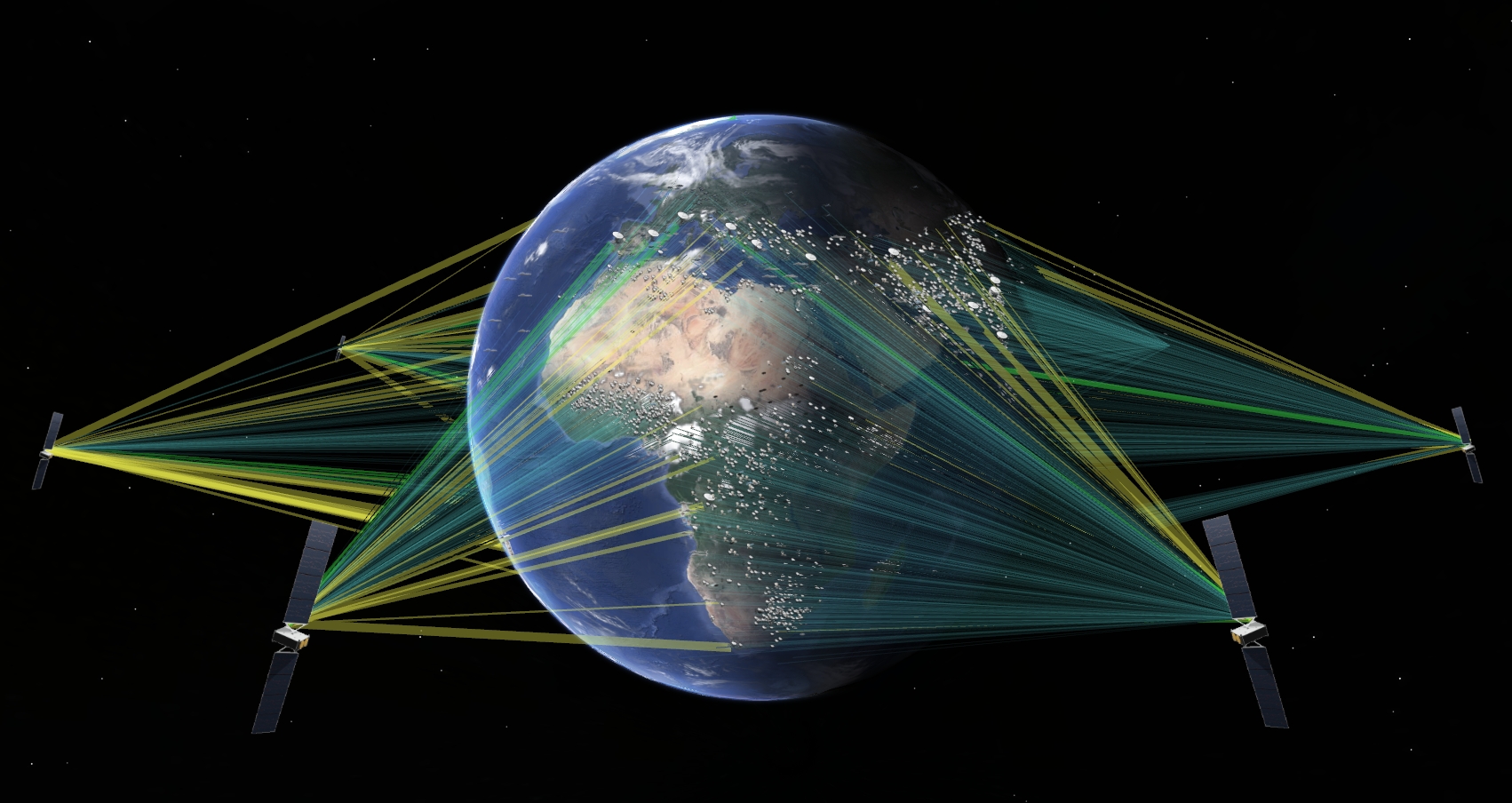
While the consumer market is dominated by the visibility of SpaceX’s own Starlink constellation, the O3b mPower network operates in an entirely different orbital regime. Positioned at approximately 5,000 miles (8,000 kilometers) above the Earth, these satellites sit in Medium Earth Orbit. This altitude is a strategic middle ground: it is significantly lower than the 22,000-mile altitude required for traditional geostationary (GEO) satellites, yet high enough to provide expansive coverage with a fraction of the hardware required for a Low Earth Orbit (LEO) constellation.
The efficiency of this architecture is profound. Whereas LEO constellations like Starlink require thousands of satellites to maintain a consistent global shell, SES has achieved a robust, high-performance network with just 13 spacecraft. This reduced constellation size allows for a more centralized management of data traffic, which is critical for enterprise-grade services that demand guaranteed throughput rather than best-effort connectivity.
A Chronology of Strategic Deployment
The partnership between SES and SpaceX, originally formalized over ten years ago, has been defined by long-term strategic planning. The O3b mPower project was conceived to address the growing "digital divide" in maritime, aviation, and remote energy operations.
The deployment timeline saw steady progress, with the initial satellites providing the foundation for the network’s specialized broadband services. Throughout 2023 and 2024, the integration of the network matured, leading to a landmark 2023 agreement that allowed maritime operators—specifically cruise lines—to utilize a hybrid model. This setup allows ships to leverage Starlink’s high-volume, low-latency consumer speeds for passenger internet, while simultaneously tapping into O3b mPower’s dedicated, high-capacity circuits for mission-critical ship operations and backhaul.
With the successful deployment of the final trio of satellites this Sunday, the network is now fully operational. This completion marks the transition of the project from the construction phase into a fully optimized operational phase, allowing SES to scale its service offerings to global enterprise customers without the need for further orbital expansion.
Divergent Paths: Starlink vs. O3b mPower
Industry analysts have noted that while both SpaceX and SES are satellite broadband providers, their business models are distinct and largely complementary. Starlink is engineered for volume. Its architecture is optimized for millions of individual consumers, mobile homes, and small businesses. It is a mass-market solution that prioritizes availability and ubiquity.

Conversely, O3b mPower functions as a "fiber-in-the-sky" solution. It is designed for clients who require consistent, committed information rates (CIR). Government agencies, offshore energy operators managing remote oil rigs, and telecom companies looking to connect isolated regions to the global internet backbone are the primary beneficiaries of this network. The pricing and provisioning of O3b mPower are closer to a dedicated enterprise circuit than a standard residential internet subscription, reflecting the high-availability requirements of these sectors.
Operational Context and SpaceX’s Manifest
The completion of the O3b mPower constellation serves as a reminder of SpaceX’s unique position in the aerospace market. Despite maintaining a frenetic pace with its own Starlink program—which surpassed the 11,000-satellite milestone in August 2026—the company remains a vital launch provider for third-party commercial and government missions.
The Falcon 9 vehicle used in this flight had an extensive service history, having supported two human-rated Axiom missions and the launch of the European Space Agency’s Euclid telescope. The ability of the SpaceX flight manifest to accommodate both its own internal massive infrastructure build-out and the specific, high-precision needs of a legacy satellite operator like SES is a testament to the maturation of the commercial space industry.

The Broader Implications for Global Connectivity
The completion of this 13-satellite network signifies a stabilization of the global satellite broadband landscape. With the network now fully active, SES is expected to increase its focus on market penetration within the government and defense sectors, as well as high-end maritime and aeronautical markets.
The implications for international telecommunications are also significant. By providing high-capacity backhaul, the O3b mPower network can effectively "extend" the reach of terrestrial fiber-optic networks to the most remote corners of the globe. This is expected to stabilize telecommunications infrastructure in developing nations, where the cost of laying physical fiber-optic cables remains prohibitively expensive due to geography.
Furthermore, the synergy between MEO and LEO networks is likely to become the new standard for the industry. As companies continue to navigate the demands of a hyper-connected global economy, the ability to switch between high-capacity dedicated circuits and high-speed, mass-market LEO services will be a key differentiator for large-scale operations.

Looking Ahead
As SpaceX continues to iterate on its launch cadence and orbital deployment strategies, the successful conclusion of the O3b mPower mission serves as a benchmark for commercial satellite deployment. For SES, the focus now shifts entirely to capacity management and client onboarding, ensuring that the finished constellation reaches its maximum potential in terms of data throughput and reliability.
For the wider satellite industry, this mission reinforces the validity of the MEO model as a primary component of the future internet architecture. While LEO constellations have grabbed the headlines, the specialized, high-capacity nature of MEO ensures that there is a viable, high-performance path for the enterprise-grade connectivity that will underpin the global digital infrastructure for the next decade. As of mid-September 2026, the sky has become a slightly more crowded, but significantly more connected, environment.