Apple records historic global smartphone revenue in Q3 2026 despite market headwinds

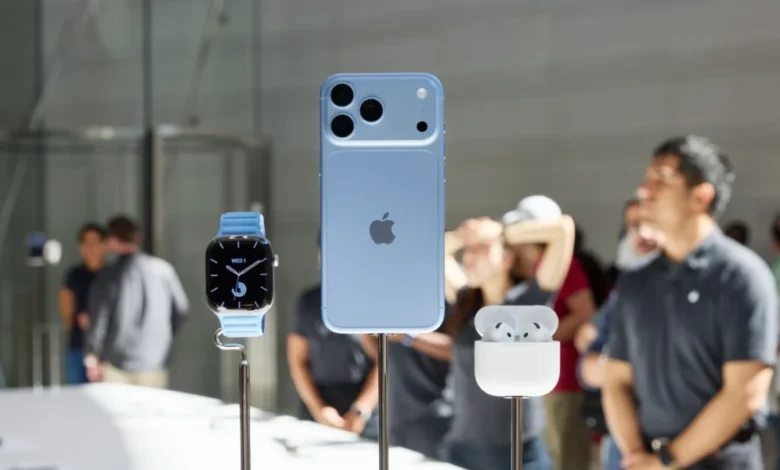
Apple has officially reached a new pinnacle in its financial history, securing its highest-ever global smartphone revenue for a third calendar quarter. According to the latest data released by industry analysts at Counterpoint Research, the technology giant’s ability to command premium pricing has effectively insulated it from the broader stagnation currently affecting the global handset market. While the smartphone industry as a whole has faced a period of sluggish shipment growth and consumer fatigue, Apple’s strategic pivot toward high-end hardware and aggressive pricing models has allowed it to capture a disproportionate share of total industry revenue.
This milestone arrives at a time when the global smartphone landscape is undergoing a significant transformation. The reliance on mid-range and budget-friendly devices is being superseded by a clear consumer preference for high-end flagship products. As manufacturing costs—specifically those related to memory components and advanced semiconductors—continue to climb, Apple’s success in passing these costs onto the consumer without sacrificing volume demonstrates a level of brand loyalty and market dominance that few competitors can currently replicate.
The Financial Breakdown: A Quarter of Records
The data provided by Counterpoint Research for the third quarter of 2026 reveals a stark contrast between Apple and its peers. While Apple claimed the lion’s share of global revenue, its closest competitor, Samsung, accounted for 19% of the total, followed by Xiaomi at 6%, OPPO at 5%, and vivo at 4%.

Perhaps most indicative of Apple’s current market strategy is the Average Selling Price (ASP) of the iPhone. During the third quarter, the ASP climbed to an all-time record of $1,031, representing a staggering 19% increase year-over-year. This surge is not merely a result of inflationary pressure; it is a direct outcome of Apple’s current product lineup architecture. By prioritizing the iPhone 18 Pro series and intentionally omitting a standard, lower-cost "base" model from the initial launch phase, Apple has successfully engineered a higher entry point for its ecosystem.
Chronology of the Q3 2026 Launch Strategy
To understand how Apple achieved these figures, one must look at the specific timing and composition of their recent hardware rollout. The third quarter of 2026 was defined by a calculated departure from historical release patterns:
- Early September 2026: Apple announced the iPhone 18 Pro and Pro Max. Notably absent from this event was the base-model iPhone 18, which was held back, forcing consumers looking for an upgrade to choose between older inventory or the more expensive Pro-tier hardware.
- Mid-September 2026: Concurrent with the launch of the new Pro devices, Apple implemented a subtle but widespread price adjustment across its legacy models. This move, while risky in a price-sensitive market, proved effective as Apple’s customer base showed little resistance to the price hike.
- Late September 2026: As the quarter drew to a close, initial sales data began to indicate that the "Pro-first" strategy was yielding significantly higher margins per unit sold, setting the stage for the record-breaking revenue figures confirmed in the Q3 report.
Expert Analysis: Resilience Amidst Market Stagnation
Tarun Pathak, Research Director at Counterpoint Research, provided critical context regarding the macroeconomic factors influencing these results. "Apple remained the most resilient major brand in Q3 2026, with shipments nearly flat year-over-year," Pathak noted. This statement is vital to understanding the current climate: while Apple is not necessarily selling significantly more phones than it did in the previous year, it is generating significantly more value from every individual transaction.
The ability to absorb rising memory costs is a hallmark of Apple’s supply chain efficiency and pricing power. In an industry where most manufacturers operate on razor-thin margins to maintain market share, Apple has successfully repositioned the smartphone as a luxury asset rather than a commodity. By effectively decoupling its revenue growth from unit shipment growth, Apple has shielded itself from the cooling demand that has plagued the lower and mid-tier sectors of the market.

Competitive Dynamics and Market Share
While Apple dominated the revenue charts, the shipment volume landscape remains more contested. Samsung continues to lead in total unit shipments, capturing 22% of the global market compared to Apple’s 21%. However, the gap is closing. Historically, Samsung has relied on a broad portfolio—ranging from entry-level Galaxy A-series devices to the premium S and Z series—to maintain its volume lead. The narrowing of this gap suggests that the market is shifting toward Apple’s premium-centric model.
If this trend continues, the industry may see a permanent shift where volume, previously the primary metric of success, becomes secondary to the "premiumization" of the user base. As the smartphone market reaches saturation in developed economies, the growth strategy for all major players is shifting toward increasing the lifetime value of existing users rather than acquiring new ones through low-margin hardware.
Broader Implications for the Tech Industry
The success of the iPhone 18 Pro strategy carries several implications for the broader technology sector:
- Component Cost Sensitivity: The electronics supply chain is currently dealing with increased costs for advanced silicon and high-capacity storage. Apple’s success proves that in the premium segment, these costs can be passed directly to the consumer. Manufacturers who lack Apple’s brand power may struggle to do the same, potentially leading to a consolidation of the market where only the top-tier brands remain profitable.
- Product Segmentation: The "Pro-first" launch strategy is likely to be mimicked by other manufacturers. By delaying the release of entry-level models, companies can capture the "early adopter" revenue from their most loyal and affluent customers before diluting the market with lower-margin products.
- The End of the "Budget Flagship" Era: As ASPs continue to climb, the definition of a "standard" smartphone is shifting. The $1,000 price point, once considered the ceiling for flagship devices, is now becoming the baseline for a premium experience. This may further widen the digital divide, as high-end features like advanced AI integration, specialized camera optics, and high-performance silicon become exclusive to the high-price tier.
Future Outlook: Can the Trend Sustain?
Looking toward the remainder of the 2026 fiscal year and into 2027, the question remains whether Apple can sustain this growth. While the current results are impressive, they are predicated on a loyal customer base willing to pay a premium. Economic fluctuations, potential regulatory scrutiny regarding pricing, and the rapid evolution of mobile AI may all play a role in the coming quarters.

However, for the third quarter of 2026, the numbers are unequivocal. Apple has successfully navigated a complex global environment by focusing on what it does best: leveraging high-end engineering to justify a premium price point. By prioritizing revenue quality over sheer shipment volume, the company has effectively redefined the metrics of success for the smartphone era.
As the industry moves into the final quarter of the year, investors and analysts will be watching to see if this trend holds. If the current trajectory continues, Apple is well-positioned to cement its status as the most profitable entity in the history of the consumer mobile market, proving that in a mature market, brand power and pricing architecture are far more valuable than simple market share. For consumers, the message is clear: the era of the high-priced, high-performance smartphone is not ending—it is only just beginning.