The Canon RF 35mm f/1.8 IS STM Macro Lens: An Accessible Gateway to Versatile Macro and Standard Photography

Canon, a titan in the imaging industry, boasts a comprehensive and highly regarded portfolio of cameras and lenses. Among these, the L-series lenses have consistently set a benchmark for professional-grade optics, earning an impressive reputation for their optical excellence and robust build quality. However, when it comes to the specialized field of macro photography, the options within Canon’s lineup have historically been more limited, often pointing towards higher-tier, more expensive solutions. This presents a challenge for photographers seeking to explore the intricate world of close-up imagery without a substantial investment. Today, we delve into a lens that has garnered significant admiration for its ability to bridge this gap, offering exceptional value and versatility: the Canon RF 35mm f/1.8 IS STM Macro.
Unveiling a Compact Powerhouse: Design and Specifications
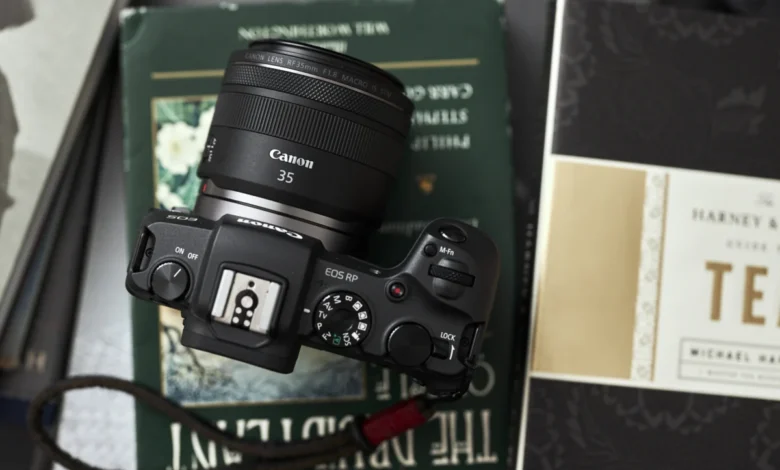
The Canon RF 35mm f/1.8 IS STM Macro lens distinguishes itself not only through its optical performance but also its thoughtful design and accessibility. Priced attractively, this lens delivers remarkably impressive results that belie its cost. Optically, it is constructed with 11 elements arranged in 9 groups, a configuration designed to optimize image quality and minimize aberrations. A key feature for macro capabilities is its impressively close focusing distance of just 0.56 feet (approximately 0.17 meters), allowing photographers to get remarkably near their subjects.
Beyond its optical prowess, the lens is remarkably compact and lightweight, weighing a mere 309 grams. This portability makes it an ideal companion for extended shooting sessions, whether navigating bustling city streets or exploring natural landscapes. The lens features a 9-blade aperture diaphragm, contributing to pleasing out-of-focus areas (bokeh) and offering greater control over depth of field. Its physical dimensions and light weight contribute to a comfortable shooting experience, particularly when mounted on Canon’s lighter mirrorless bodies, such as the EOS RP.
Autofocus Performance: A Tale of Two Scenarios
In terms of autofocus (AF) performance, the Canon RF 35mm f/1.8 Macro generally performs admirably, especially in its primary role as a standard 35mm lens. During testing on the Canon EOS RP, the lens demonstrated a surprising synergy with the camera body, delivering swift and accurate focusing for a wide range of photographic applications. This makes it a capable tool for everyday photography, excelling in genres such as street photography, where quick subject acquisition is paramount, and product photography, where precise framing is crucial.
However, when venturing into true macro territory, where magnifications approach 1:1 or greater, the reliance on autofocus can become more challenging. The inherent nature of macro subjects, which are often small, fast-moving, and demanding of precise framing, coupled with the critical role of lighting, necessitates a more deliberate approach. In these scenarios, photographers will find themselves increasingly relying on manual focus. This shift is not a reflection of the lens’s failure but rather an acknowledgment of the intricacies of extreme close-up photography. The limited depth of field at macro magnifications requires meticulous control, often best achieved through precise manual adjustments.
Image Quality: Beyond Expectations for its Class
The image quality produced by the Canon RF 35mm f/1.8 IS STM Macro is a significant draw. While it may not carry the prestigious L-series designation, it consistently delivers images that are impressive, particularly considering its price point. Designed with a target audience of amateur and enthusiast photographers in mind, the 35mm lens offers a delightful combination of characteristics. It produces pleasingly smooth and creamy bokeh, which can transform backgrounds into artistic blurs, enhancing subject isolation. The color rendition is also noteworthy, rendering vibrant and accurate tones that capture the essence of the scene.
Sharpness is generally good, providing sufficient detail for most applications. However, to achieve peak sharpness, especially in challenging lighting conditions or when pixel-peeping, the judicious use of flash or additional lighting becomes beneficial. This is a common consideration in macro photography, where maximizing detail and clarity is often a primary objective.
The lens’s ability to focus extremely close plays a pivotal role in its bokeh characteristics. As noted in previous reviews, the smooth and creamy bokeh is a standout feature. This allows photographers to isolate subjects with remarkable effectiveness, transforming everyday objects into compelling visual narratives. For instance, capturing intricate details of food items, like the delicate textures of Korean BBQ or the intricate folds of a dumpling, can be elevated by the lens’s close-focusing capability and the resulting background blur. The quality of this bokeh is so appealing that many photographers may find themselves consistently shooting wide open, at f/1.8, to maximize this effect. This is a testament to the lens’s ability to create aesthetically pleasing images without the need for extensive aperture adjustments.
Ergonomics and Features: Enhancing the User Experience
Beyond its optical and image quality attributes, the Canon RF 35mm f/1.8 IS STM Macro is designed for user-friendliness and practical application. A significant advantage is the inclusion of in-lens image stabilization (IS). This feature is invaluable, particularly in low-light situations or when shooting at slower shutter speeds. The ability to confidently shoot at speeds as slow as 1/40th of a second without introducing camera shake significantly expands the lens’s usability in dimly lit environments or when attempting handheld macro shots.
While the lens does not possess weather sealing, a feature typically reserved for higher-end L-series optics, its build quality is generally robust. The focus rings move smoothly and with a satisfying tactile feel, contributing to a positive user experience. Furthermore, the inclusion of an additional control ring on the lens barrel is a thoughtful addition. This customizable ring can be programmed to adjust various camera settings, such as ISO, shutter speed, or aperture, allowing for quick and intuitive adjustments without needing to navigate through camera menus. This enhances the speed and efficiency of the shooting process, enabling photographers to react more readily to changing photographic opportunities.
Market Position and Value Proposition
The Canon RF 35mm f/1.8 IS STM Macro lens occupies a compelling niche in the market, offering an exceptional blend of capabilities at an accessible price point. Typically priced under $500, it represents a significant value proposition for photographers seeking to expand their creative horizons into macro photography or simply seeking a versatile and high-quality 35mm prime lens.
Its appeal extends to a broad spectrum of users, from beginners looking to explore their photographic potential to more experienced enthusiasts seeking a compact and capable prime lens. The lens’s ability to perform well in both standard shooting scenarios and specialized macro applications makes it a highly adaptable tool.
It is important to acknowledge that, given its price point, the lens is positioned as an "entry-level" or "budget-friendly" option within the broader context of Canon’s RF lens lineup. However, to frame it solely as a "cheap lens" would be a disservice to its capabilities. For its cost, the Canon RF 35mm f/1.8 IS STM Macro consistently punches above its weight, delivering performance and features that are often found in more expensive lenses. It democratizes access to macro photography and provides a gateway for photographers to experiment and develop their skills without a prohibitive financial barrier.
Broader Implications and Future Outlook
The introduction and continued success of lenses like the Canon RF 35mm f/1.8 IS STM Macro have significant implications for the photography market. They demonstrate a clear demand for versatile, high-quality optics that cater to a wider range of budgets. This trend encourages manufacturers to develop more accessible lenses that do not compromise unduly on essential performance characteristics.
For Canon, this lens serves as a crucial component in its RF mount ecosystem, making the mirrorless platform more appealing to a broader audience. By offering compelling options at different price points, Canon can attract and retain a diverse user base, fostering a vibrant community of photographers utilizing its technology.
The future of accessible macro photography appears bright, with lenses like this paving the way for more photographers to explore the intricate details of the world around them. As camera technology continues to advance, and as manufacturers refine their optical designs and manufacturing processes, we can anticipate further innovations that will bring advanced photographic capabilities within reach of an even larger audience. The Canon RF 35mm f/1.8 IS STM Macro stands as a testament to this ongoing evolution, proving that exceptional photographic experiences do not always require an exorbitant investment.