Google DeepMind Unveils Gemini Omni 1.2 Flash: A Breakthrough in Cost-Effective, High-Fidelity Gener

ative Video Technology
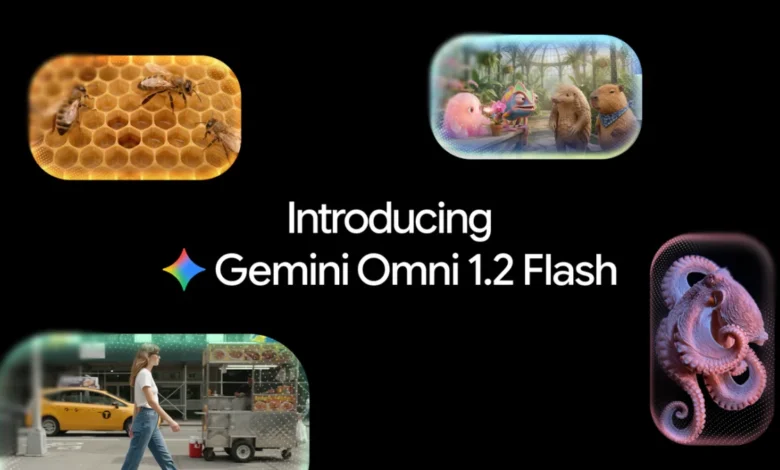
The landscape of artificial intelligence-driven video production underwent a significant shift today as Google DeepMind officially announced the commercial rollout of Gemini Omni 1.2 Flash. Available immediately across the Gemini API and Gemini for business platforms, the upgraded model introduces a suite of advanced native capabilities, including extended 15-second video clip generation, multi-turn conversational editing, and substantially improved reference adherence. Designed to bridge the gap between high-end cinematic quality and enterprise-grade efficiency, the new iteration arrives with a notable 30% reduction in cost compared to its predecessor, pricing 720p video generation at $0.07 per second.
The introduction of Gemini Omni 1.2 Flash marks a pivotal milestone in Google DeepMind’s ongoing roadmap to democratize sophisticated media creation tools for developers, creative agencies, and global enterprises alike. As artificial intelligence models transition from experimental novelties to core operational infrastructure, companies are increasingly demanding solutions that balance computational speed, visual consistency, and economic viability. By addressing key pain points in previous generations—such as visual morphing, high rendering costs, and rigid editing workflows—Google aims to cement its competitive position within the rapidly expanding generative video ecosystem.
Chronology and Development Path of the Gemini Omni Architecture
The deployment of Gemini Omni 1.2 Flash is the latest step in a methodical rollout strategy that began with the foundational releases of the Omni product family. Following the initial market introduction of Gemini Omni 1.1, which capped native clip generation at 10 seconds and introduced early multi-modal referencing, engineering teams at Google DeepMind focused heavily on resolving user feedback regarding temporal consistency and user editing flexibility.
Throughout the development cycle of version 1.2, engineers prioritized structural enhancements that would allow users to maintain character, object, and environmental fidelity over longer durations. By refining the model’s underlying neural architecture and training methodologies, Google successfully extended the maximum single-generation length to 15 seconds while offering granular, one-second increments ranging from 3 to 15 seconds. This architectural refinement enables content creators to produce fully realized social media advertisements, product explainer videos, and narrative sequences in a single, cohesive generation pass without experiencing the abrupt stylistic shifts that historically plagued AI-generated video.
Core Technical Enhancements and Economic Efficiencies
At the heart of Gemini Omni 1.2 Flash are several technical breakthroughs aimed at optimizing both workflow efficiency and visual output quality. According to technical specifications provided by Google DeepMind Product Manager Anish Nangia, the model’s pricing structure has been aggressively adjusted to $0.07 per second for 720p output, undercutting the previous pricing model by nearly a third.
To further lower the barrier to entry and reduce unnecessary computational expenditure, the new framework supports a tiered workflow approach. Developers and creators can initially draft concepts at lower resolutions, such as 360p or 720p, utilize targeted follow-up edits to rectify specific details, and subsequently upscale the finalized assets to 1080p or 4K resolution. This methodology minimizes the need to re-render entire clips from scratch when minor adjustments are required.

Furthermore, the integration of multi-turn conversational editing fundamentally transforms how creators interact with the model. Rather than writing entirely new prompts to modify a scene, users can refine existing clips iteratively through conversational commands. For instance, a creator can seamlessly alter background environments—transitioning from a studio setting to an outdoor landscape—or modify ambient lighting and weather conditions while preserving the core performance, camera framing, and reflection physics of the subjects within the frame.
Advanced Reference Adherence and Cinematic Control
Maintaining visual continuity across extended camera movements and multi-shot sequences has historically been one of the most stubborn challenges in generative video. Gemini Omni 1.2 Flash introduces enhanced reference adherence mechanisms that allow systems to ingest a diverse array of inputs, including static character images, product photography, style references, short motion clips of up to three seconds, and audio cues.
The model ensures that critical details—such as facial features, garment drape, packaging typography, and brand-specific color palettes—remain consistent across varying camera angles and transitions. Demonstrations released by Google DeepMind showcase the model’s ability to execute complex virtual try-on sequences and intricate typographic motion graphics where elements are built sequentially, layer by layer, without experiencing visual drift.
In addition to object and character consistency, the model demonstrates significant improvements in spatial awareness and cinematic camera control. Creators can direct continuous, complex camera movements, such as sweeping first-person view (FPV) drone flights or dramatic orbital zoom-outs, with a marked reduction in unwanted jump cuts and spatial distortion. Complementing these visual advancements are updates to the model’s audio capabilities, featuring more natural-sounding dialogue generation, precise lip-sync conditioning, and distinct multi-speaker handling designed for integration across platforms like Google Vids and specialized enterprise tools.
Enterprise-Grade Security, Availability, and Industry Implications
As Gemini Omni 1.2 Flash transitions into general availability, Google has ensured that enterprise users are supported by robust cloud infrastructure. The platform is now fully accessible via the Gemini API and Gemini for business, with support for Provisioned Throughput to guarantee reliable performance for high-volume commercial deployments.
To address growing industry concerns surrounding content authenticity, provenance, and intellectual property protection, all video outputs generated by Gemini Omni 1.2 Flash are embedded with an imperceptible SynthID watermark. This cryptographic watermarking technology enables the automated detection of AI-generated media, providing a crucial layer of transparency for media organizations, brands, and regulatory bodies.
Industry analysts note that the general availability of Gemini Omni 1.2 Flash under Google Cloud’s secure infrastructure could accelerate the adoption of generative video tools across mainstream retail, marketing, and entertainment sectors. By lowering production costs and streamlining the iteration process, businesses can scale localized ad campaigns and virtual product showcases with unprecedented speed.
Looking forward, Google DeepMind indicates that development remains active on future iterations. Ongoing research efforts are targeted at further enhancing the model’s handling of rapid, complex physical dynamics and high-speed sports action. Nevertheless, with its current combination of extended clip length, conversational editing capabilities, and competitive enterprise pricing, Gemini Omni 1.2 Flash establishes a new performance benchmark for commercial generative video technology.