Tesla Adjusts Production Timelines for Cybercab and Semi Amid Strategic Pivot Toward AI and Robotics

In its second-quarter shareholder letter for 2026, Tesla Inc. announced a significant revision to its manufacturing roadmap, indicating that "volume production" for several of its most anticipated products—the Cybercab, the Tesla Semi, and the Megapack 3 energy-storage solution—is no longer expected within the 2026 calendar year. This development, revealed on Wednesday, marks a shift from the company’s January projections, which had placed these milestones within the current fiscal year. Furthermore, the company notably omitted previous language regarding the "volume production" of its Optimus humanoid robot, signaling a more cautious approach to the scaling of its next-generation robotics platform.
The announcement comes at a pivotal moment for the Austin-based manufacturer as it navigates a complex transition from a traditional electric vehicle (EV) producer to a diversified artificial intelligence and robotics conglomerate. While the company reported a robust increase in total revenue, the financial weight of this transition is becoming evident in its bottom line, characterized by shrinking net income and a substantial surge in capital expenditures.
Manufacturing Hurdles and the 4680 Cell Bottleneck
Central to the delays in scaling the Cybercab and the Tesla Semi is the ongoing challenge of battery production. Tesla confirmed that it is currently prioritizing the ramp-up of its proprietary 4680 battery cell. These larger, cylindrical cells are designed to offer higher energy density and lower production costs, serving as the foundational power source for Tesla’s heavier and more specialized vehicles.
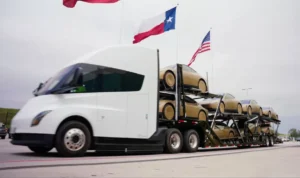
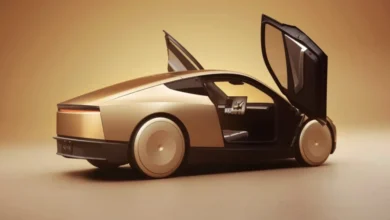
The Cybercab, a purpose-built autonomous vehicle designed for Tesla’s envisioned "Robotaxi" network, requires a highly efficient and cost-effective battery architecture to ensure the economic viability of a self-driving fleet. Similarly, the Tesla Semi, which aims to disrupt the long-haul trucking industry, relies heavily on the 4680 cells to achieve the range and payload capacity necessary for commercial logistics. Without achieving the requisite scale in battery manufacturing, the "volume production" of these vehicles remains out of reach.
While the company did not explicitly detail the causes for the delay of the Megapack 3—the latest iteration of its commercial-scale energy storage system—the postponement suggests that the company is reallocating engineering and production resources toward its most critical AI and automotive goals.
The Complexity of the Optimus Humanoid Robot
The removal of "volume production" targets for the Optimus robot reflects the immense technical difficulty associated with the project. CEO Elon Musk addressed these challenges during a Wednesday conference call, describing Optimus as the most difficult manufacturing endeavor in the company’s history.
"This is going to be the hardest product to scale manufacturing that we’ve ever made at Tesla, because everything on the robot is new," Musk stated. He highlighted that unlike vehicles, which share certain modular components and historical manufacturing blueprints, the humanoid robot requires the development of entirely new actuators, sensors, and control systems that have no direct precedent in mass production.
While Tesla began producing initial units of the Cybercab at its Gigafactory Texas earlier this year, the manufacturing lines for the Semi and Optimus are still in the build-out phase. The company’s strategy appears to be shifting toward perfecting the hardware and software integration in smaller batches before committing to the capital-intensive process of high-volume assembly.
Financial Performance: Revenue Growth vs. Margin Compression
Tesla’s Q2 2026 financial results present a dichotomy of strong sales growth and tightening profitability. The company reported total revenue of $28.2 billion, representing a 26% increase compared to the $22.5 billion generated in the second quarter of 2025. This also marked a sequential improvement from the $22.38 billion reported in Q1 2026.
However, this revenue growth was tempered by a 5% year-over-year decline in net income, which fell to $1.1 billion. The primary driver of this squeeze is the massive investment required to fuel Tesla’s AI ambitions. Operating expenses surged by 47% to $4.3 billion, and capital expenditures more than doubled. Consequently, Tesla reported a negative free cash flow of $1 billion for the quarter, a sharp reversal from the $1.44 billion in positive free cash flow seen in the previous quarter.
Chief Financial Officer Vaibhav Taneja had previously cautioned that the aggressive push to launch new products and develop AI infrastructure would lead to negative cash flow for the remainder of the year. The company’s operating income also took a significant hit, dropping 57% year-over-year to $398 million, down from $932 million in Q2 2025.
Automotive and Energy Sector Highlights
Despite the production delays for new models, Tesla’s core automotive business showed resilience. The company reported automotive revenue of $20.5 billion, up from $16.6 billion in the same period last year. Deliveries exceeded 480,000 vehicles in the second quarter, a jump of more than 120,000 units from the first quarter. This represents Tesla’s strongest sales performance since the third quarter of 2025.
The growth was largely fueled by international markets. Tesla noted record-breaking sales in several regions outside the United States, including South Korea, Australia, Colombia, Japan, Taiwan, Thailand, Portugal, the Philippines, Chile, Slovenia, and Lithuania. This global expansion has helped offset softening demand in some more mature EV markets.
The energy storage and solar division also emerged as a bright spot. Revenue from this segment grew 13% to $3.1 billion. As global power grids face increasing pressure from renewable energy integration, demand for Tesla’s storage solutions remains high, even as the company works through the transition to the Megapack 3.
Furthermore, the adoption of Tesla’s Full Self-Driving (FSD) (Supervised) software continues to accelerate. Subscriptions for the advanced driver-assistance system rose to 1.48 million, a 56% increase compared to the previous year. This recurring revenue stream is a critical component of Tesla’s long-term strategy to monetize its software stack and transition toward a service-based business model.
The Strategic Shift: From EV Maker to AI Powerhouse
The current trajectory of Tesla is defined by a "seminal" transition that began in mid-2025. The company is actively moving away from being solely a manufacturer of electric vehicles and toward becoming a leader in AI, robotics, and autonomous services.
To facilitate this, Tesla has made difficult operational choices. Earlier this year, the company ended production of its legacy flagship vehicles, the Model S sedan and Model X SUV, at its Fremont, California, factory. This move was designed to retool the facility and free up engineering bandwidth for the development of the Optimus robot and other high-priority AI projects.
Capital expenditure is projected to reach $25 billion in 2026, nearly three times the company’s historical average. This capital is being funneled into massive compute clusters required for training AI models, as well as the specialized manufacturing equipment needed for the Cybercab and Optimus.
Chronology of Key Developments
- January 2026: Tesla’s Q4 2025 report suggests volume production for Cybercab, Semi, and Megapack 3 will begin within the year.
- Spring 2026: Production of Model S and Model X ends at the Fremont factory to prioritize robotics and new platforms.
- April 2026: CFO Vaibhav Taneja warns of negative free cash flow due to high R&D and capital spending.
- July 2026: Q2 results reveal a 26% revenue increase but a 5% drop in net income.
- July 2026: Tesla officially removes the 2026 "volume production" timeline for Cybercab, Semi, and Megapack 3 in its shareholder update.
Broader Implications and Industry Analysis
Tesla’s decision to delay its newest products underscores the reality that the "easy" phase of EV manufacturing is over, and the "hard" phase of AI and robotics integration has begun. For investors, the results suggest a period of high volatility as the company "burns" cash to build its future.
The delay of the Tesla Semi is particularly impactful for the logistics industry, which has been waiting for a viable, mass-produced electric alternative to Class 8 diesel trucks. With volume production pushed back, competitors in the electric trucking space may find a temporary window to capture market share, though Tesla’s brand and existing charging infrastructure remain formidable barriers.
The postponement of the Cybercab also raises questions about the timeline for a truly autonomous "Robotaxi" network. While FSD subscriptions are rising, the hardware needed to support a steering-wheel-less fleet is not yet ready for the masses.
Ultimately, Tesla is betting its future on the idea that the value of a humanoid robot and an autonomous fleet will far outweigh the temporary financial strain of their development. As Elon Musk noted, the path to manufacturing these "new-to-the-world" products is fraught with difficulty, but it is a path the company has committed to with unprecedented levels of capital investment. The remainder of 2026 will likely be defined by how successfully Tesla can scale its 4680 cell production and whether it can maintain its lead in AI software while its hardware timelines shift.