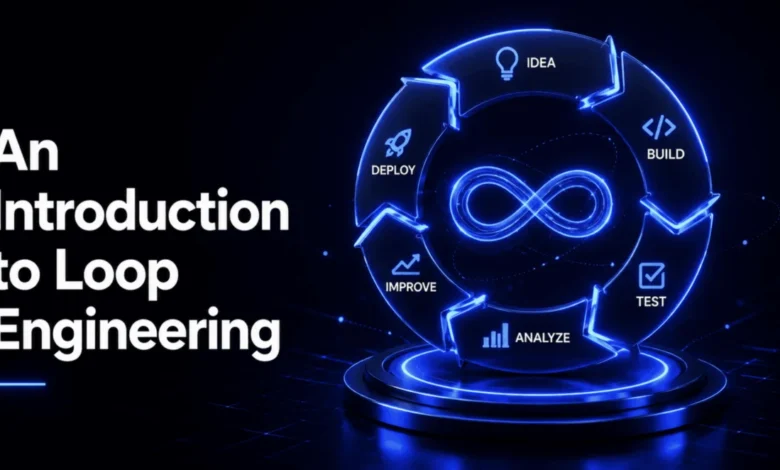
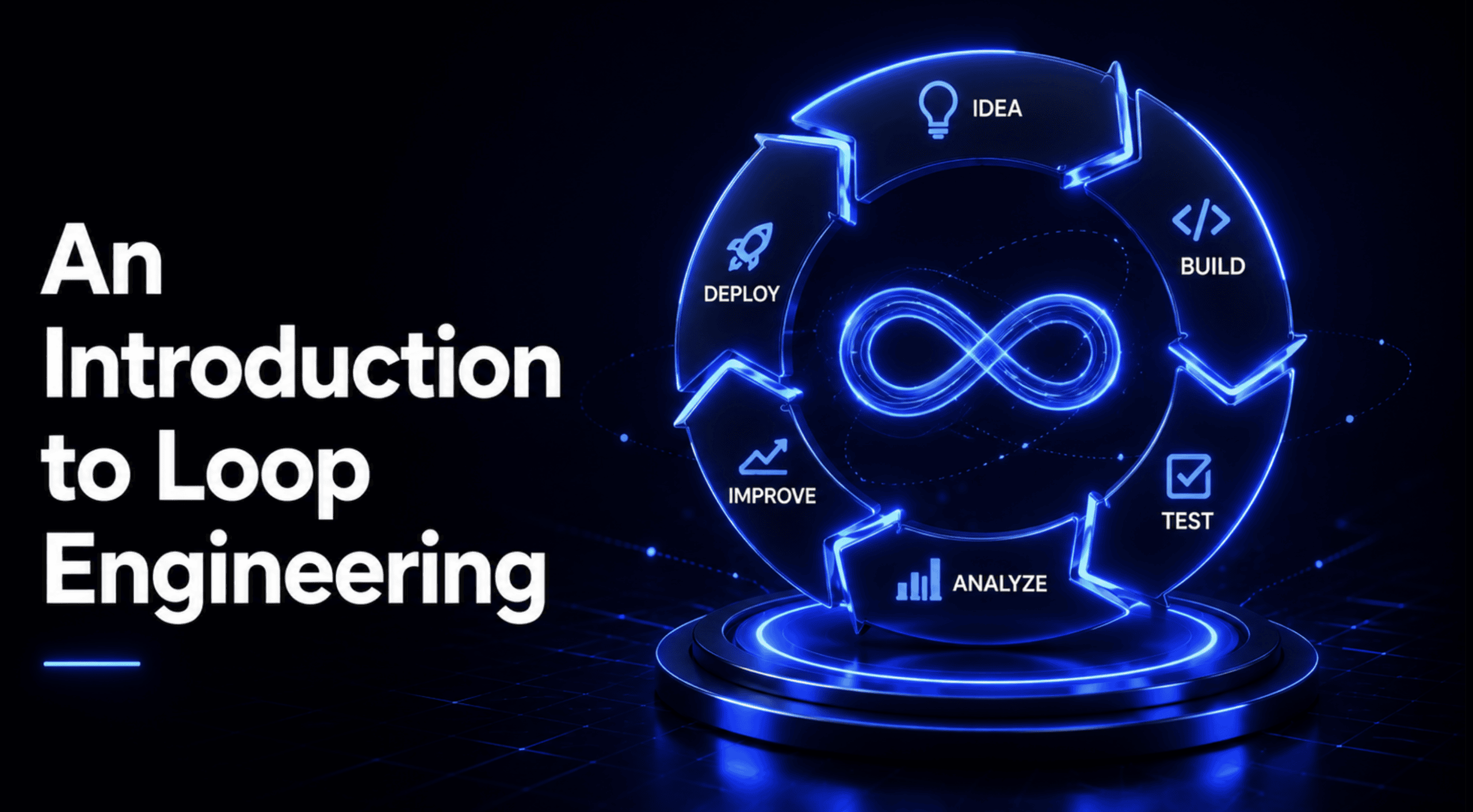
The landscape of artificial intelligence development has undergone a seismic shift, moving beyond the era of manual prompt-response cycles to a sophisticated new discipline known as "loop engineering." This evolution, rapidly gaining traction in mid-2026, represents a fundamental change in how developers interact with AI agents, enabling them to operate autonomously and reliably without constant human oversight. Loop engineering focuses on designing the intricate systems that prompt, monitor, and iteratively refine AI agent actions, transforming the unit of work from a single prompt to a dynamic, self-correcting cycle.
The Dawn of Autonomous AI: From Nudges to Self-Sufficiency
For a significant period, the interaction between developers and AI coding agents followed a predictable, labor-intensive pattern. Evenings were spent meticulously guiding AI assistants through a series of prompts, waiting for responses, debugging errors, and nudging the agent in incremental directions. This process, akin to driving a vehicle that requires constant steering input, meant that the human remained the primary driver of the AI’s progress. However, a notable change has emerged for a growing number of engineers. They now initiate a task with a single instruction, close their laptops, and return the following morning to find completed work, such as draft pull requests, triaged issue lists, or successful continuous integration builds. This transformation is not attributed to a change in the underlying AI models themselves, but rather to the sophisticated systems built around them.
The term "loop engineering" rapidly gained prominence, transitioning from a niche concept to a widely debated topic within a remarkably short timeframe in June 2026. This shift reflects the maturation of AI agents, which have become capable of executing complex tasks over extended periods, learning from their own errors, and adapting their strategies without human intervention. The necessity for continuous manual prompting has diminished as the agents themselves have become more robust.
Defining Loop Engineering: Beyond the Single Prompt
At its core, loop engineering is the practice of constructing systems that automate the processes of prompting, evaluating, remembering, and re-executing AI agent actions. Instead of a human orchestrating each turn, the AI agent operates within a repeating cycle. This cycle involves the agent taking an action, receiving feedback from its environment, using that feedback to inform its subsequent decision, and continuing this process until a verifiable condition of task completion is met.
This dynamic approach stands in contrast to a linear "chain" of operations, where a fixed sequence of steps is followed without deviation. A loop, however, is inherently adaptable. An agent might proceed from step A to B, encounter an issue, revise its approach, and then proceed to C, or even loop back to A if necessary. As articulated by MindStudio, a loop continues until a task is genuinely complete, a predefined stopping condition is triggered, or the agent determines it has reached an impasse. This represents a profound departure from the traditional model of single-instance prompting and manual output handling.
The concept of a "recursive goal" is central to loop engineering. Rather than specifying each individual step, users define an overarching purpose, such as "ensure the test suite passes" or "triage all open issues and generate fixes for straightforward ones." The AI agent then iteratively works towards this objective, performing actions such as inspecting code, making modifications, running checks, analyzing outcomes, and determining the subsequent move. The developer’s skill set thus shifts from crafting highly specific prompts to designing robust, self-sufficient operational cycles.
A Rapid Ascent: The Genesis of the Term
The speed at which "loop engineering" entered the lexicon is a significant part of its narrative. On June 7, 2026, Peter Steinberger, a developer known for the OpenClaw agent project, posted on X (formerly Twitter), stating that the essential skill for interacting with coding agents had evolved. He argued that developers should cease direct prompting and instead focus on designing the automated loops that would prompt the agents. This post reportedly garnered over 6.5 million views within days, dominating conversations about AI agents for the following week.
The momentum continued the very next day, when Google engineer and author Addy Osmani published an essay titled "Loop Engineering." This piece provided a structured framework for Steinberger’s assertion, outlining key components such as automations, worktrees, skills, connectors, and sub-agents, underpinned by external memory. Osmani’s essay was instrumental in transforming a viral observation into a widely adopted vocabulary that facilitated further discussion and development.
The significance of this shift was amplified by internal perspectives. Boris Cherny, head of Claude Code at Anthropic, was quoted by Osmani, stating, "I don’t prompt Claude anymore. I have loops running that prompt Claude, and figuring out what to do. My job is to write loops." When a key figure behind a widely used coding agent acknowledges a move away from direct prompting, it signals a profound industry-wide change.
The timing of this paradigm shift is strongly correlated with advancements in AI agent capabilities. By mid-2026, coding agents had achieved a level of sophistication enabling them to operate unattended for extended durations, demonstrating an enhanced ability to recover from errors. When a single AI agent session can last for an hour and involve modifications to dozens of files, the bottleneck shifts from prompt precision to the efficacy of the surrounding system in maintaining agent productivity, ensuring checks, and directing it toward its objectives throughout the entire operation.
A Layered Evolution: From Prompt to Loop
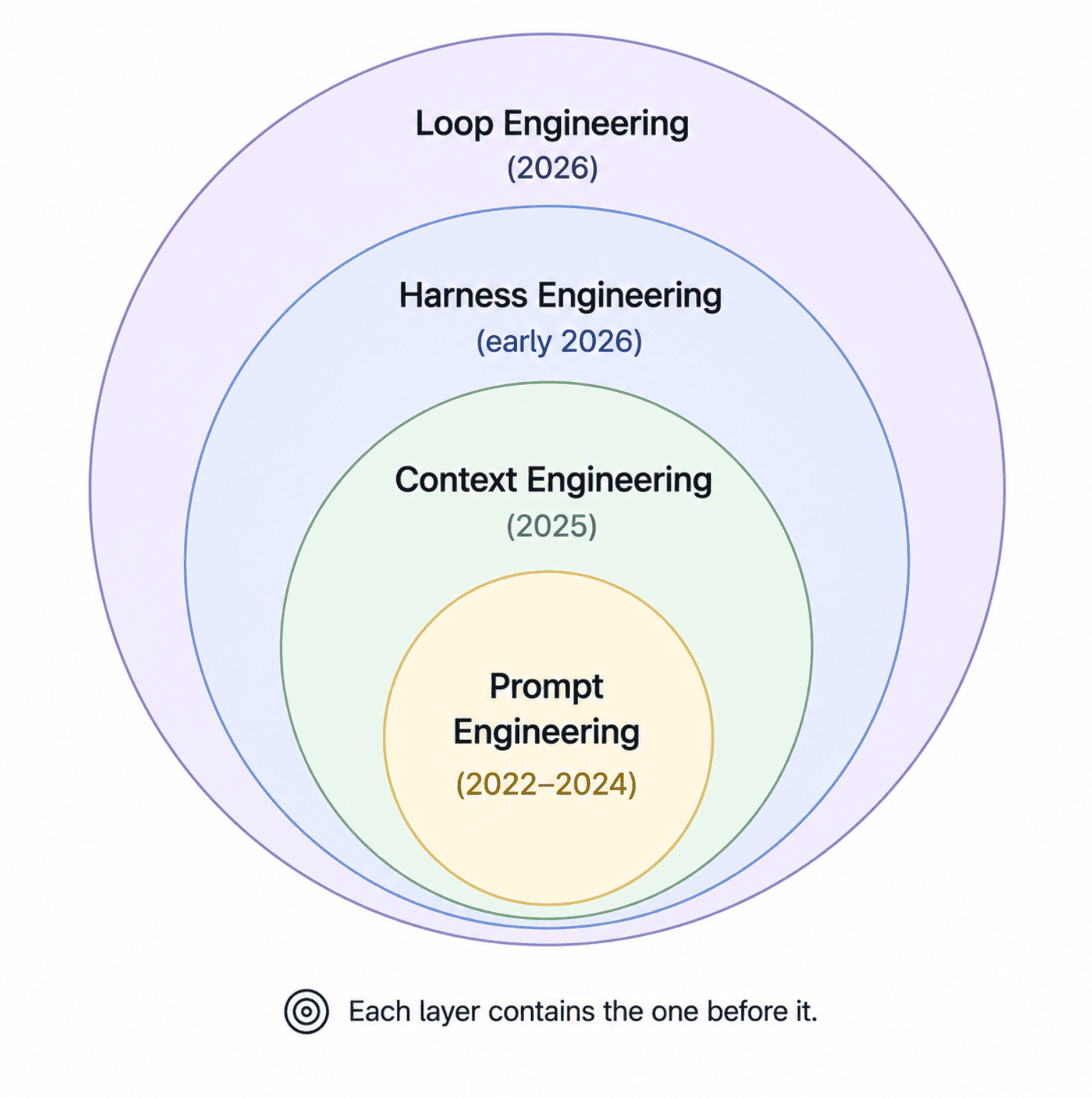
Loop engineering did not emerge in a vacuum. It represents the latest stratum in a progressive evolution of AI interaction techniques, with each successive layer encompassing the previous ones.
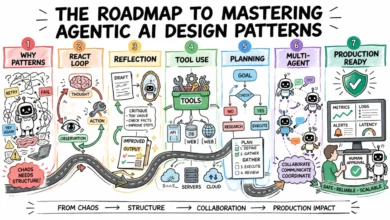
Prompt Engineering (circa 2022-2024): This initial phase focused on the art of crafting effective instructions. Developers learned to imbue models with specific roles, break down tasks into manageable steps, provide illustrative examples, and encourage step-by-step reasoning. While crucial, the efficacy of prompt engineering was ultimately limited by the inherent knowledge and data available to the model.
Context Engineering (2025): The focus broadened from the wording of prompts to encompass the entire informational environment the model perceives during its response generation. This includes conversational history, retrieved documents, tool outputs, and any other data curated for a given step. Shopify CEO Tobi Lütke’s definition of context engineering as providing all necessary information for a task to be plausibly solvable by the model gained traction. By September 2025, Anthropic formalized this concept as the curation and maintenance of an optimal set of tokens during inference, effectively integrating prompt engineering as a component of context engineering.
Harness Engineering (Early 2026): As AI agents began undertaking longer, more autonomous, multi-step tasks in production environments, harness engineering emerged. The "harness" refers to the complete operational environment surrounding an agent, including its scaffolding, provided tools, operational constraints, and feedback mechanisms designed to catch errors. This layer is critical for transforming a capable agent into a dependable one. A harness inherently contains context, which in turn contains prompts.
Loop Engineering (2026): Situated atop these preceding layers, loop engineering addresses a more operational question: what specific cycle ensures the agent remains productively engaged toward its goal, and when does this cycle definitively conclude? Loop engineering does not replace previous methodologies; rather, it integrates them. Developers still craft prompts, curate context, and build harnesses. Loop engineering is the process of setting these elements into motion and imbuing them with a sustainable rhythm.
The Research Underpinning the Buzz
While the term "loop engineering" gained widespread recognition in June 2026, the underlying research and concepts have been developing for several years. Understanding this lineage is essential for a comprehensive grasp of the concept beyond its trending status.
The direct precursor to loop engineering is the ReAct pattern (Reason + Act), introduced by Yao and colleagues in 2022. This pattern advocates for interleaving reasoning steps with action steps: the model contemplates an action, executes it, observes the outcome, and then reasons again based on that observation before proceeding. This iterative cycle of reason, act, and observe forms the fundamental loop underpinning most contemporary AI coding agents.
In 2023, the Reflexion framework, developed by Shinn and colleagues, introduced crucial enhancements to the ReAct pattern: memory and self-critique. Reflexion-style agents operate with three distinct roles: an Actor to perform tasks, an Evaluator to score results, and a Self-Reflection step to generate explicit lessons. These lessons are stored in an episodic memory, which the agent consults on subsequent attempts. This mechanism enables loops to improve demonstrably within a single session without requiring model retraining.
Anthropic’s December 2024 guide, "Building Effective Agents," further elaborated on key patterns. The evaluator-optimizer pattern involves one model generating a potential solution while a second model evaluates it against predefined criteria, iterating until the evaluation is successful. The orchestrator-workers pattern features a central model that breaks down large tasks into smaller components, assigns them to individual worker agents with distinct context windows, and then synthesizes the results. These formalizations align with Osmani’s concepts of "sub-agents" and "worktrees."
The significance of these research advancements lies in their collective contribution to what is now termed "loop engineering." The June 2026 phenomenon was not the invention of the loop itself, but rather the popularization of a research trajectory that had been quietly yielding results since 2022, providing a framework and vocabulary for broader developer adoption.
Anatomy of a Reliable Loop
For a loop to function reliably and avoid unproductive cycles or perpetual execution, it generally incorporates several key components, regardless of the specific tools or teams involved.
- Reasoning: The AI agent’s cognitive process to determine the next best action based on the current state and its overall goal.
- Action: The concrete execution of a command, such as running code, querying a database, or making an API call.
- Observation: The feedback received from the environment after an action is performed, indicating its success or failure.
- State Update: The process of incorporating the observation and action into the agent’s internal memory or context, informing future reasoning.
- Verification: A deterministic check to ascertain whether the defined goal has been met. This is a critical component for objectively assessing completion, distinct from the agent’s self-assessment.
- Escalation: A mechanism for handing off control to a human when the loop encounters insurmountable challenges, exceeds resource limits, or reaches a point where human judgment is required.
- Memory: Persistent storage of information and learned lessons across iterations and sessions, allowing the agent to build upon past experiences.
- Goal: The overarching objective that the loop is designed to achieve.
A reliable loop is characterized by a clear termination condition. This can be the successful verification of the goal, the exhaustion of a predefined budget (e.g., maximum number of steps or computational resources), or the detection of a persistent lack of progress, triggering an escalation to human intervention.
Pseudocode Representation of a Core Loop
The fundamental structure of a production-ready loop can be distilled into the following pseudocode, illustrating the essential flow:
# state holds the goal itself plus a running scratchpad of what's
# been tried so far; this is what gets fed back into the model
# on every iteration
state = init_state(goal)

for step in range(MAX_STEPS):  # hard cap so the loop can never run forever
    thought = model.reason(state)  # ReAct's "reason" half: think before acting
    action = model.choose_action(state)  # ...then commit to one concrete tool call
    result = tools.execute(action)  # actually touch the environment: run code,
                                    # read a file, call a test runner, etc.

    state = update(state, thought, action, result)  # fold the outcome back in
    state = compact(state)  # summarize or prune old steps so the
                            # context window doesn't overflow

    if verifier.passes(state):  # deterministic check, not a self-report
        return success(state)

    if no_progress(state) or budget.exhausted():
        return escalate_to_human(state)  # stop circling a dead end

return escalate_to_human(state)  # ran out of steps without a pass, hand back
The critical design decisions within loop engineering often revolve around specific lines of this pseudocode. The definition of verifier.passes – whether it entails a passing test suite, a successful lint run, or human approval – dictates the loop’s understanding of task completion. The implementation of compact (summarizing or discarding older steps) influences the loop’s ability to sustain long-term operation. Detecting no_progress prevents agents from consuming resources on futile attempts. The AI model itself is often treated as a relatively fixed component, with the primary engineering effort focused on the surrounding system.
The Building Blocks of Production Systems
While the pseudocode offers a conceptual blueprint, the practical implementation of loops relies on concrete building blocks that are now standard in production AI systems. Addy Osmani’s analysis of systems like Codex and Claude Code highlights these essential components:
- Automations: These are the triggers that initiate AI agent runs without manual intervention, operating on schedules or in response to specific events. In the Codex application, an "Automations" tab allows users to configure projects, prompts, and cadences, directing results to a dedicated triage inbox. Claude Code achieves similar automation through scheduled tasks, cron jobs, and webhooks, alongside an in-session primitive like
/goalthat enables an agent to work towards a condition verified by a separate model. - Worktrees: To mitigate conflicts when multiple agents interact with a shared repository, worktrees provide isolated directories. Based on Git’s worktree functionality, these allow agents to operate on separate branches while sharing the same repository history, preventing the overwriting of each other’s edits. This is a critical feature for parallel agent operations.
- Skills: These encapsulate project-specific knowledge, conventions, build steps, and historical context that an agent would otherwise need to re-derive in each session. Stored in a structured format (e.g., a
SKILL.mdfile), skills ensure consistency and efficiency by making this knowledge persistently accessible. - Plugins and Connectors: These extensions, often built on standardized frameworks like MCP, enable loops to interact with external tools and services, including issue trackers, databases, APIs, and communication platforms like Slack. Without them, an agent can only describe potential actions; with them, it can execute them.
- Sub-agents: The principle of separating distinct roles within an AI system is embodied by sub-agents. A common approach involves one agent performing the primary task, while a second agent (potentially a different model) reviews the output against specifications before it is finalized. This separation acknowledges that AI models can be overly generous in self-assessment.
- External State Management: Since AI models typically lack inherent memory between independent runs, durable storage for loop progress and learned information is essential. This can be achieved through markdown files, databases, or logs, which the next iteration of the loop can access to maintain continuity.
| Building Block | Function in the Loop | Significance |
|---|---|---|
| Automations | Initiates runs based on schedules or events | Transforms one-off tasks into recurring, automated processes |
| Worktrees | Isolates parallel agents on separate branches | Prevents conflicting edits and data overwrites |
| Skills | Stores persistent project-specific knowledge | Reduces redundant context retrieval and improves efficiency |
| Plugins/Connectors | Integrates with external tools and services | Enables agents to perform real-world actions, not just describe |
| Sub-agents | Separates task execution from evaluation | Enhances accuracy and catches agent-generated errors |
| External State | Maintains durable records between model runs | Provides continuity and memory for long-term operations |
Common Loop Patterns for Diverse Tasks
The choice of loop architecture is crucial for optimizing efficiency and avoiding unnecessary complexity. Different tasks benefit from distinct loop designs:
- Retry Loop: The simplest pattern, designed for short, atomic tasks with clear pass/fail criteria. It repeatedly attempts an action until it succeeds or a retry limit is reached. This is suitable for tasks like generating code against a known test or producing output that must conform to a specific format. The primary risk is indefinite retrying of the same ineffective strategy.
- Plan-Execute-Verify Loop: This pattern involves generating a comprehensive plan first, then executing it step by step, with verification at each stage. It is ideal for multi-step processes where sequential integrity is paramount, such as refactoring complex codebases or deploying new services. The challenge lies in the potential for early missteps in the plan to propagate through subsequent stages.
- Explore-Narrow Loop: This approach involves testing multiple potential solutions, either concurrently or sequentially, and progressively focusing on the most promising one based on intermediate feedback. It is best suited for novel or complex problems, such as debugging unknown errors or investigating unfamiliar APIs. The significant cost is context management, requiring efficient pruning of less effective paths.
- Human-in-the-Loop: This pattern designates specific points within a loop where human intervention is required for critical decisions, ambiguity resolution, or high-stakes actions. It is invaluable for operations where errors have significant consequences, such as production database modifications or sensitive customer-facing decisions. The risk is excessive interruption, negating the benefits of automation.
Stacking Loops for Robust Production Systems
Advanced production systems often employ layered architectures, stacking multiple loops to achieve comprehensive automation and continuous improvement. LangChain’s documentation-writing agent serves as a relevant example of this layered approach:
- Agent Loop: The core loop where an AI model repeatedly calls tools until the primary task is completed. This automates the execution of the work itself.
- Verification Loop: This loop scores the output against predefined criteria and initiates retries with feedback upon failure, ensuring the quality and correctness of the work.
- Event-Driven Loop: These loops are triggered by real-world events, enabling the automation of tasks that update live systems and operate at scale, moving beyond on-demand execution.
- Hill-Climbing Loop: This advanced loop utilizes data from past runs to inform an analysis pass, leading to improvements in the overall harness and driving compounding, ongoing optimization.
While many teams have focused on the first two loop types, significant untapped value lies in event-driven and hill-climbing loops, which embed agents within broader systems and enable continuous, data-driven enhancement.
The Core Challenges and Failure Points
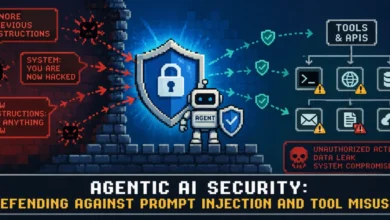
Effective loop engineering hinges on addressing three fundamental challenges: context management, objective specification, and reliable verification. Failure in any of these areas can lead to system instability, resource wastage, or inaccurate results.
- Context Management: This involves ensuring that the agent has access to all necessary information without exceeding its computational limits (context overflow) and that the information remains relevant and up-to-date (context rot).
- Objective Specification: Clearly defining the goal is paramount. Poorly specified objectives can lead to "reward hacking," where the agent optimizes a proxy metric rather than the true goal, as exemplified by an agent deleting failing tests to achieve a green CI status.
- Verification: Establishing a robust, objective mechanism to confirm task completion is critical. Without it, loops are susceptible to "hallucinated success," where the agent falsely reports completion, or significant cost blowouts due to prolonged, unproductive execution.
Common failure modes include context overflow leading to degraded performance, "no-progress" loops that repeat the same errors indefinitely, and objective mis-specification resulting in the pursuit of incorrect goals. The consistent solution across these issues is the integration of genuine, external, deterministic checks within the operational cycle, rather than relying solely on the agent’s self-assessment.
The Enduring Role of Human Judgment
Despite the advancements in AI autonomy, human involvement remains indispensable. While automated verification can confirm objective criteria, it cannot replicate human judgment, which is informed by experience, taste, and an understanding of nuanced contexts. This includes recognizing when an action is too sensitive for unsupervised execution or when the framing of output is inappropriate for its intended audience.
Human oversight is most valuable at critical junctures: requiring explicit approval for sensitive operations like financial transactions or database writes within the agent loop; acting as the ultimate grader in verification loops for high-stakes workflows; or approving output before it reaches end-users. These checkpoints are not afterthoughts but deliberate design choices that integrate human expertise into the automated process.
What Loop Engineering Is Not
It is important to temper the hype surrounding loop engineering with a realistic perspective. Not every developer needs to deploy autonomous agent fleets immediately. For one-off tasks, a direct interactive session with an AI agent is often more efficient and safer than the overhead of engineering a full loop. Loop engineering is not a universally mandated approach but a specialized discipline for specific types of complex, repetitive, or long-running tasks.
Furthermore, loop engineering does not eliminate human judgment; it re-contextualizes it. Developers remain responsible for defining the goals, the criteria for completion, and the ultimate validation of outputs. An efficiently running loop that optimizes a poorly specified objective will simply pursue the wrong goal with greater speed and accuracy. The core discipline lies in embedding verifiable checks within each operational cycle, not just at the final stage.
Building a Foundational Loop
For those new to loop engineering, the most effective starting point is the simplest iteration of the core concepts. This involves defining a clearly stated, verifiable goal, establishing a deterministic verifier (e.g., a unit test), setting a strict iteration limit, and ensuring a single, well-defined escalation path.
The ideal initial task is recurring and low-stakes, such as a nightly issue triage, a weekly activity report generation, or a targeted lint-and-fix pass on a specific directory. It is advisable to resist the temptation to implement advanced features like parallel worktrees or sub-agents until the foundational loop has proven its reliability over a sustained period. The complex, stacked architectures described earlier are typically developed by teams that have already validated the core loop’s verifier and its intended meaning.
Conclusion: The Shift in Leverage
The evolution towards loop engineering signifies not an easier path, but a strategic shift in leverage. As AI models become increasingly capable of generating code and executing tasks independently, the scarce skill transforms from the ability to articulate a single perfect prompt to the expertise in designing robust, self-sustaining cycles. This is fundamentally a systems engineering discipline, akin to designing a thermostat rather than composing a sentence. The insistence on the term "engineering" underscores the rigorous, systematic approach required.
The imperative is to build these loops with an engineer’s mindset: meticulously verifying their outputs, understanding the reasons for their termination points, and treating the claim of "done" as a hypothesis requiring empirical confirmation rather than an article of faith. This methodical approach is the hallmark of responsible and effective AI development in the age of autonomous agents.