Tesla finally moves to electrify trucking after a decade of work and delays

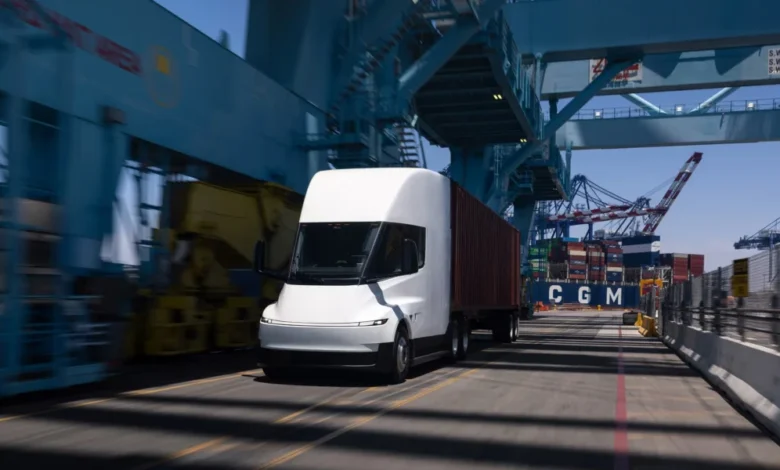
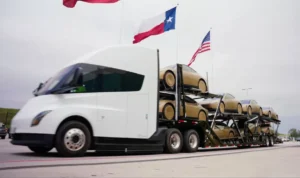
After nearly a decade of design iterations, supply chain hurdles, and industry skepticism, Tesla has officially commenced the delivery of its all-electric Semi truck. The rollout, confirmed at a dedicated event in Reno, Nevada, represents the company’s most significant expansion into the commercial transport sector to date. While the event showcased the production-ready vehicle to an audience of partners, employees, and industry influencers, the absence of CEO Elon Musk—who was attending a high-profile diplomatic engagement—highlighted a transition in Tesla’s corporate leadership focus toward broader automation and artificial intelligence objectives.
A Timeline of Development and Delay
The journey of the Tesla Semi has been characterized by ambition tempered by the realities of large-scale manufacturing. First unveiled in 2017 with a promise to disrupt the diesel-dominated trucking industry, the vehicle was originally slated for a 2019 production start. That timeline was repeatedly pushed back due to several compounding factors:
- 2017: Initial unveiling of the Semi prototype, promising a 500-mile range and autonomous capabilities.
- 2019–2020: The global pandemic, combined with acute semiconductor shortages, stalled development timelines across the automotive sector.
- 2021: Tesla focused on scaling production of the Model 3 and Model Y, prioritizing passenger vehicle margins over the complex requirements of the Semi.
- 2022: Refinement phases concluded, focusing on weight reduction and drivetrain simplification, leading to the late-year delivery event.
During the Reno event, held at a dedicated facility adjacent to Tesla’s original Gigafactory, company executives Dan Priestley, head of the Semi program, and Lars Moravy, vice president of vehicle engineering, provided a detailed retrospective on why the project required such a prolonged gestation period. The engineering team acknowledged that earlier design choices, while visionary, were often overly complex.
Engineering Refinements and Practical Adjustments
The production version of the Semi incorporates significant departures from the 2017 concept. Engineers successfully reduced the vehicle’s curb weight by approximately 1,000 pounds, a critical improvement for fleet operators who prioritize payload capacity. Furthermore, the drivetrain underwent a simplification process; engineers transitioned from a system utilizing three distinct oils in the drive axle to a single-oil solution. Moravy noted that the previous design was “super bespoke” and inherently frustrating, reflecting a broader trend of the company learning to balance innovation with manufacturing scalability.
Perhaps the most significant admission of design evolution involved the windows. The original prototype featured fixed, pop-out windows that proved impractical for real-world logistical tasks, such as interacting with toll booths, badge readers, or warehouse gate security. Priestley addressed this during the presentation, stating, “We fully admit we were wrong about the windows,” confirming that the production model now features standard roll-down functionality. This acknowledgment served as a microcosm for the company’s shift toward listening to pilot customer feedback to ensure the vehicle serves the needs of professional drivers rather than merely acting as a technology showcase.
Performance Data and Economic Viability
Tesla’s pitch to fleet operators centers on the "Total Cost of Ownership" (TCO) argument. By moving away from diesel, operators stand to gain from lower fuel costs—specifically electricity versus volatile diesel prices—and reduced maintenance requirements due to the simplicity of an electric drivetrain.
The most capable version of the Semi is projected to achieve a range of 500 miles on a single charge, depending on load, at a price point rumored to be just under $300,000 before federal and state incentives. To support this, Tesla is deploying a network of "megawatt chargers" capable of rapidly replenishing the massive battery packs. During the demonstration, executives showcased a truck charging from 3% to 60% in roughly 30 minutes, a speed necessary to align with the demanding schedules of long-haul logistics.
From an environmental standpoint, the impact of such a vehicle is significant. Heavy-duty trucks account for approximately 16% of total road-transport emissions despite representing only 1% of the total vehicle population. By electrifying this segment, Tesla aims to address one of the most carbon-intensive sectors of the global supply chain.
Challenging the Industry Doubters
For years, the feasibility of an electric heavy-duty truck was met with significant resistance from industry analysts and high-profile figures. Most notably, in 2020, Bill Gates expressed doubt that battery-electric technology could ever be a practical solution for long-haul trucking due to the inherent weight and size of the battery packs required to move heavy loads over long distances.
Tesla’s engineers took a direct, albeit veiled, approach to this criticism during the event. Priestley and Moravy emphasized the "compounding effect" of efficiency; by obsessively refining every component—from motor design to aerodynamics—Tesla was able to reduce the total battery size required to achieve the 500-mile target. This creates a virtuous cycle: higher efficiency leads to smaller batteries, which reduces weight, which in turn improves efficiency and lowers costs. Moravy remarked on the "naysayers" and "well-known names" who deemed the project impossible, emphasizing that such skepticism has served as a primary motivator for the engineering team.
Strategic Shifts and Corporate Positioning
The launch of the Semi occurs at a transitional moment for Tesla. While the company’s revenue remains heavily tethered to the sales of the Model 3 and Model Y, Elon Musk has increasingly reframed Tesla’s mission as being fundamentally about robotics, AI, and long-term sustainability. The shift from "accelerating the world’s transition to sustainable energy" to "building a world of amazing abundance" signals a move toward a broader, more diversified technological future.
However, the Semi represents a tangible return to the company’s roots in transport. Despite the move toward AI, the logistical requirements of trucking are inherently physical. The production facility in Reno is designed to reach a capacity of 50,000 units per year, with the potential to create roughly 3,000 jobs in the local economy. This scale of manufacturing is essential if Tesla intends to impact the massive freight industry, where fleet reliability and uptime are the primary metrics for success.
Future Implications and Challenges
While the delivery of the first trucks is a milestone, the road ahead remains complex. A primary hurdle, according to industry insiders, is the availability of heavy-duty charging infrastructure. While Tesla is building its own charging network, widespread adoption of the Semi will require massive investments in grid capacity and public charging stations capable of delivering megawatt-level power.
Additionally, the Semi is currently missing several promised features, including the sophisticated autonomous driving capabilities that have become a hallmark of the Tesla brand. Musk, in a pre-taped segment, noted that these features would be added in the "near future," but did not provide a concrete roadmap. For fleet managers, the absence of these features means the truck is currently being evaluated primarily on its performance as a traditional commercial vehicle rather than an autonomous freight solution.
Ultimately, the Tesla Semi’s entry into the market is a high-stakes test of the company’s ability to move from consumer vehicle production to industrial-grade manufacturing. If Tesla can maintain the promised reliability, lower the total cost of ownership as projected, and scale its production to meet demand, it may well catalyze a significant shift in the trucking industry. The success of the Semi will not be measured by the hype of an event in Reno, but by the performance of these vehicles on the highway over the coming millions of miles, under the scrutiny of an industry that prioritizes data and durability above all else.