Google DeepMind Announces Agentic Video Understanding for Gemini Models to Slash Costs and Boost Accuracy

Google DeepMind has officially rolled out its next-generation agentic video understanding capabilities across its latest lineup of multimodal artificial intelligence models, including Gemini 3.7 Flash, Gemini 3.6 Flash, and Gemini 3.5 Flash-Lite. Spearheaded by Senior Product Manager Rohan Doshi and Research Director Mario Lučić, this new architectural paradigm fundamentally changes how artificial intelligence models process moving images. By combining core reasoning with native video tools, the technology cuts token consumption by up to 88%, reduces processing costs by up to 66%, and boosts overall analytical accuracy by up to 7%.
The release marks a significant milestone in computer vision and artificial intelligence engineering. Traditionally, video analysis models have relied on "static" processing pipelines. In these conventional setups, a video is ingested at a fixed, uniform frame-per-second (FPS) rate—typically defaulting to one frame per second, regardless of whether the visual content features a static landscape or a high-speed, dynamic action sequence. This rigid framework forces software developers and enterprise clients into a difficult compromise: they must either absorb exorbitant token costs to capture every minor detail or implement aggressive frame-dropping techniques that frequently sacrifice critical contextual information.
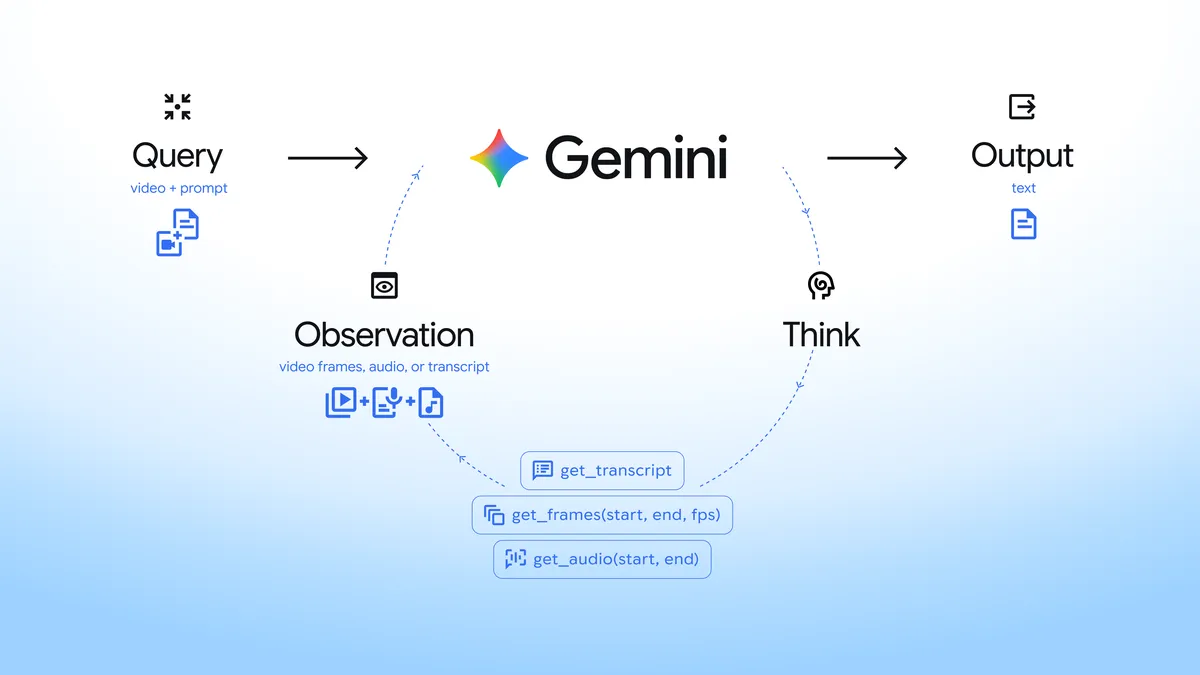
With the introduction of agentic video understanding, Google DeepMind has dismantled this bottleneck. The new models are empowered to take an active, goal-directed role in determining what to watch, at what speed, and through which specific modality—whether analyzing visual frames, processing audio tracks, or parsing written transcripts. Rather than blindly processing an entire multi-hour file, the AI operates within an autonomous loop, invoking internal software tools to dynamically search, scan, and inspect targeted segments on demand.
The Technological Evolution: From Static Ingestion to Agentic Loops
The conceptual framework behind agentic video understanding builds upon Google’s earlier success with agentic vision, a technology that seamlessly integrated code execution with the native image-understanding capabilities of the Gemini 3 Flash architecture. Expanding this methodology to video streams required bridging advanced logical reasoning with precise temporal localization.
Under the new system, when a user submits a complex query regarding a video asset—such as a 90-minute university lecture, a 10-minute technical tutorial, or a multi-hour security recording—the model does not immediately read every single frame. Instead, it formulates a retrieval strategy. It can rapidly scan audio transcripts to locate specific keywords, jump directly to precise timestamps for visual inspection, and dynamically adjust its frame rate to capture fast-paced movements or subtle anomalies with microscopic precision.
This capability unlocks advanced video processing functionalities that were previously cumbersome or economically unviable to scale, including sub-second moment retrieval, precise anomaly detection, accurate action counting, and complex needle-in-a-haystack data searches within long-form digital media.
Benchmarks and Performance Metrics
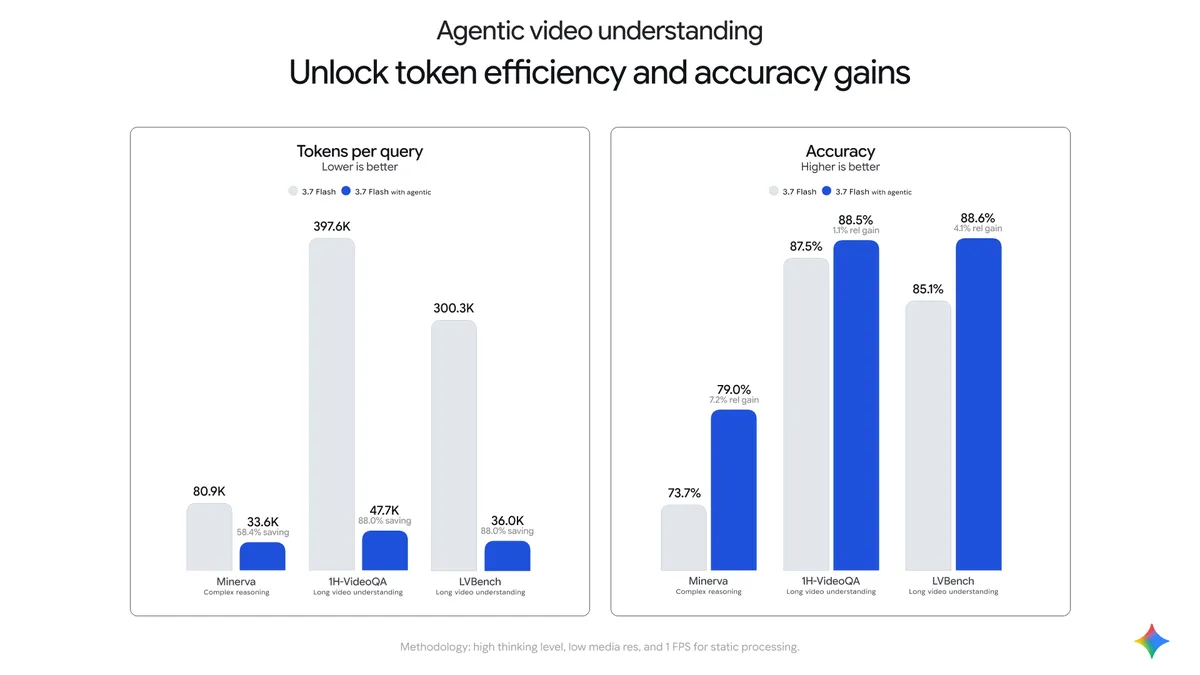
Rigorous testing across standard video analysis benchmarks, such as LongVideoBench, has demonstrated the profound efficiency gains of the new architecture. When benchmarked against traditional static ingestion methods, the Gemini models equipped with agentic video understanding achieved a reduction in token consumption of up to 88 percent. Furthermore, operational costs per query plummeted by as much as 66 percent, all while driving a measurable performance improvement of up to 7 percent in analytical accuracy.
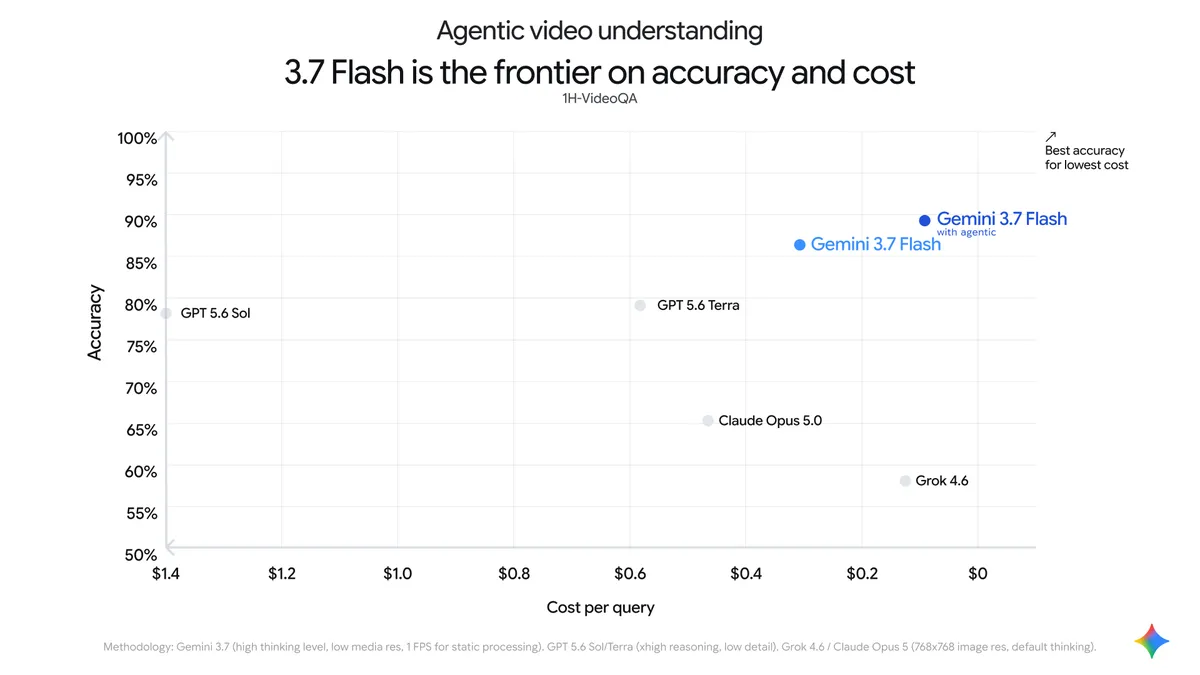
According to Google DeepMind’s evaluation metrics, these performance enhancements are universally present across all three supported models. However, Gemini 3.7 Flash with agentic understanding delivers the highest overall quality and the optimal balance between operational expenditure and predictive precision. This positions the model firmly at the accuracy-to-cost Pareto frontier for enterprise-grade video comprehension.
Availability, Ecosystem Integration, and Developer Access
The agentic video understanding feature is available immediately to developers and enterprise clients. It can be accessed via the Gemini API within Google AI Studio and the Gemini Enterprise Agent Platform. Crucially, Google has structured the pricing model to utilize standard Gemini API token rates, imposing no additional feature surcharges for activating the agentic processing mode.
To implement the feature, developers simply need to configure their API call parameters to designate the video processing style as "agentic." For example, developers querying a YouTube video link can execute the following Python code snippet using the official Google GenAI SDK:
from google import genai

client = genai.Client()

interaction = client.interactions.create(
    model="gemini-3.7-flash",
    input=[

            "type": "video",
            "uri": "https://youtu.be/7Z5Vy9JBANs",
            "processing": "agentic"
        ,

            "type": "text",
            "text": "What are the 3 most important announcements in this keynote?",
        ,
    ],
)

print(interaction.output_text)
Beyond direct API access for developers, Google has announced plans to integrate these efficiency and quality upgrades directly into consumer-facing products. The technology will soon roll out across the consumer Gemini application for users interacting with Flash and Flash-Lite models. Moreover, in the coming months, agentic video understanding will serve as the technological engine behind YouTube’s "Ask YouTube" feature on the video watch page, enabling the platform to deliver smarter, highly contextual answers grounded directly in the visual and auditory elements of video content.
Early Industry Reactions and Ecosystem Impact
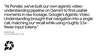
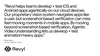
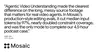
Ahead of the public launch, several early-access partners and enterprise innovators tested the agentic video framework across diverse operational workflows. Companies specializing in digital media intelligence, synthetic voice generation, and video synthesis—such as Ponder, Revyl, Mosaic, and Resemble.AI—reported substantial performance improvements. These platforms noted that the ability to selectively query massive video datasets without paying a heavy token penalty significantly accelerates product development cycles and reduces cloud infrastructure expenditure.
The collaborative effort behind this technological breakthrough was led by a specialized research and engineering team at Google DeepMind, with key contributions acknowledged from Sergi Caelles, Filip Pavetić, Ahmet Iscen, Suhas Yogin, and the broader Agentic Vision team.
Economic and Strategic Implications for the Artificial Intelligence Industry
The release of agentic video understanding arrives at a critical juncture for the artificial intelligence sector. As generative models become increasingly multimodal, processing high-bandwidth data types like video has historically represented one of the most computationally expensive challenges for cloud providers and enterprise consumers alike.
By shifting from passive, brute-force data ingestion to active, intelligent retrieval, Google DeepMind has introduced a paradigm shift that mirrors human cognitive strategies: rather than memorizing an entire film frame-by-frame, the model acts as an active investigator, scanning indices, listening to dialogues, and focusing exclusively on relevant visual evidence.
This development is expected to democratize advanced video analytics for smaller startups and independent developers who were previously priced out of long-form video processing. By simultaneously lowering costs, reducing computational waste, and improving analytical precision, Google’s latest update reinforces its competitive positioning in the enterprise AI market and sets a new benchmark for multimodal model efficiency.