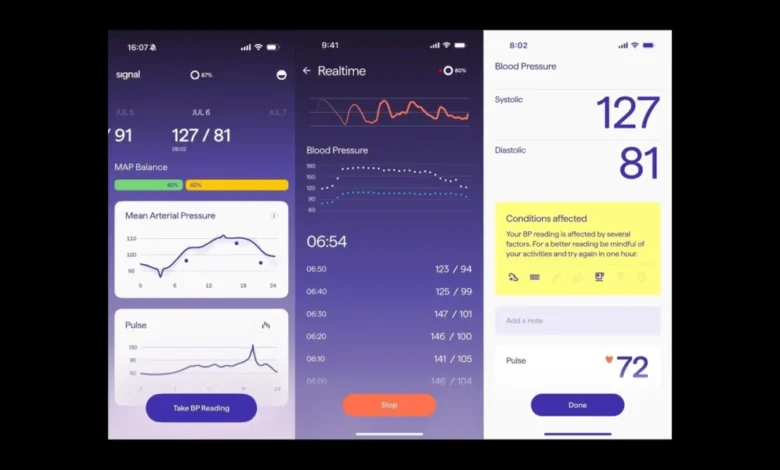
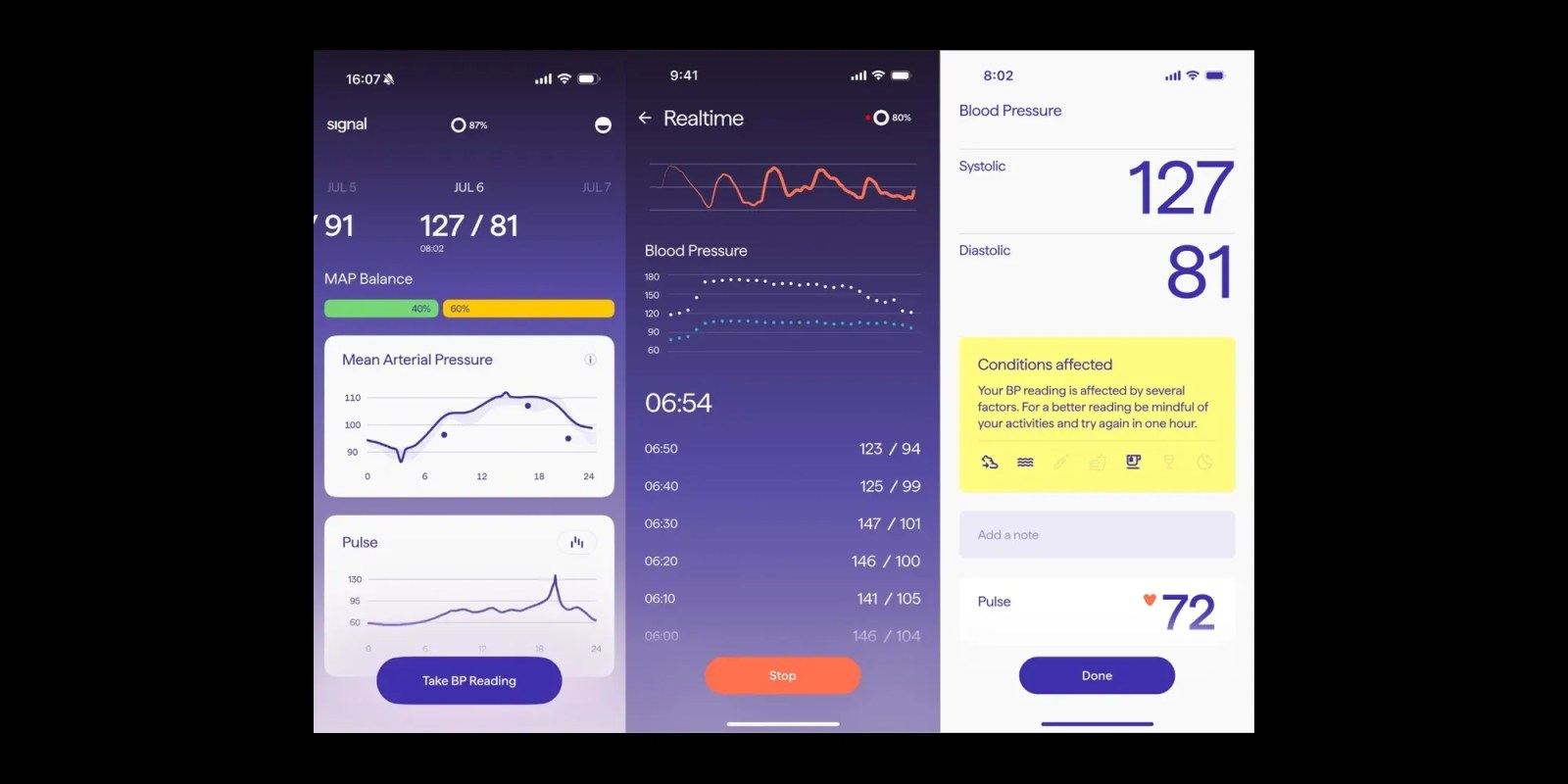
The landscape of personal health monitoring is undergoing a transformative shift with the imminent arrival of the Signal Ring, a smart wearable poised to revolutionize how individuals track their blood pressure. While existing devices like the Apple Watch offer alerts for potential hypertension and other smart rings provide readings contingent on regular calibration with traditional cuff monitors, the Signal Ring distinguishes itself with the bold claim of delivering accurate, full blood pressure measurements—systolic and diastolic—without any need for external calibration. This ambitious proposition, reportedly validated by a trial involving thousands of participants, marks a significant leap forward in accessible, non-invasive health diagnostics, as illustrated by its companion iPhone application visible in promotional materials.
The profound significance of this innovation becomes clear when considering the pervasive threat of hypertension, often dubbed "the silent killer." Hypertension, or abnormally high blood pressure, presents one of the most pressing global health challenges. It rarely exhibits noticeable symptoms in its early stages, quietly inflicting severe and often irreversible damage to arteries, the heart, and the brain. The insidious nature of the condition means it frequently goes undiagnosed until it culminates in catastrophic health events such as heart attacks, strokes, kidney disease, or even dementia. According to the World Health Organization (WHO), an estimated 1.28 billion adults aged 30-79 years worldwide have hypertension, and a staggering 46% of adults with hypertension are unaware that they have the condition. This lack of awareness underscores the critical need for more accessible and continuous monitoring solutions beyond sporadic clinic visits or home cuff measurements.
While home blood pressure cuffs are readily available and recommended for regular monitoring, their use requires a conscious effort and specific timing, often failing to capture fluctuations throughout the day or night. The ideal scenario, long envisioned by healthcare professionals and technology enthusiasts alike, involves fully automatic, continuous monitoring integrated seamlessly into a device already worn by the individual. This is the promise that the Signal Ring aims to fulfill.
The Evolution of Wearable Blood Pressure Monitoring
The journey towards non-invasive blood pressure monitoring through wearables has been gradual, marked by incremental advancements and persistent challenges. Early smartwatches and fitness trackers primarily focused on heart rate, step counting, and sleep patterns. The integration of more sophisticated physiological measurements, such as electrocardiogram (ECG) capabilities and blood oxygen saturation (SpO2), paved the way for more comprehensive health insights.

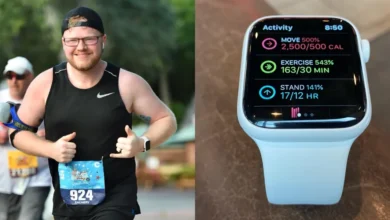
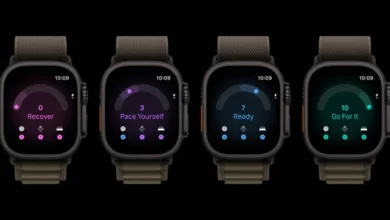
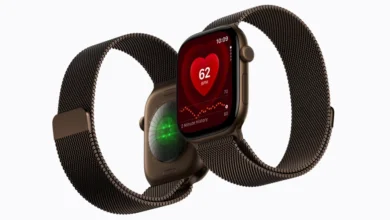
Apple, a dominant force in the wearable tech market, has progressively enhanced the health capabilities of its Apple Watch. With the introduction of watchOS 26, five specific Apple Watch models gained the ability to monitor blood pressure. However, these capabilities are limited. Instead of providing precise systolic and diastolic readings, the Apple Watch focuses on detecting signs of potential hypertension and issuing alerts to the user. This approach, while valuable for raising awareness and prompting further medical consultation, does not offer the granular, actionable data that many users and clinicians desire for proactive management. Similarly, other prominent smart rings, like the Oura Ring, also operate within these limitations, typically providing insights into overall cardiovascular health without direct blood pressure figures.
A segment of fitness devices does offer actual blood pressure readings, but these devices invariably require regular calibration against a medical-grade blood pressure cuff. This necessity arises from the complex nature of measuring blood pressure non-invasively, often relying on technologies like photoplethysmography (PPG) and pulse transit time (PTT). These methods infer blood pressure from changes in blood volume and flow detected by optical sensors. However, individual physiological variations, sensor placement, and movement artifacts necessitate periodic calibration to maintain accuracy, thereby introducing a layer of inconvenience that detracts from the vision of truly seamless, autonomous monitoring.
Introducing the Signal Ring: A New Frontier in Precision
Against this backdrop of existing solutions and their inherent limitations, the Vital Signals startup emerges with its flagship product, the Signal Ring. The company asserts that its smart ring can measure blood pressure with an accuracy comparable to traditional arm cuffs, critically, without requiring any calibration. This claim, if widely validated and approved by regulatory bodies, represents a paradigm shift in wearable health technology.
The impetus behind Vital Signals is deeply personal for its CEO, Tom Moss. As reported by Bloomberg, Moss founded the company after experiencing a near-fatal episode stemming from undiagnosed hypertension. This personal health scare provided a powerful motivation to develop a solution that could empower individuals with better, more accessible knowledge of their blood pressure. "Fundamentally, there’s almost no real way for you to truly know your blood pressure as a consumer, and it’s kind of crazy," Moss stated, reflecting on the critical gap in consumer health tools. Prior to Vital Signals, Moss held positions at notable tech firms such as drone manufacturer Skydio Inc. and hardware manufacturers Razer Inc. and Nextbit Systems, bringing a wealth of experience in product development and innovation to the health tech sector.
The Signal Ring is scheduled to go on pre-sale later today, with deliveries anticipated in October. Priced at $399, the device aims for accessibility by foregoing a subscription model, a common revenue stream for many smart wearables. Its companion application, which is visually represented in promotional materials, promises to display both live blood pressure readings and provide long-term tracking capabilities, offering users a comprehensive overview of their cardiovascular health trends.
Technological Underpinnings and Validation Claims
While the proprietary technology underpinning the Signal Ring’s calibration-free accuracy remains largely undisclosed, it likely leverages advanced optical sensors, sophisticated algorithms, and potentially machine learning models trained on vast datasets of physiological data. The challenge in non-invasive blood pressure measurement lies in accurately translating signals from optical sensors (which detect blood volume changes) into reliable pressure readings, a process typically complicated by individual differences in vascular stiffness, skin tone, and sensor placement. The Signal Ring’s claim of overcoming the calibration hurdle suggests a significant breakthrough in these areas, perhaps through novel sensor designs, more robust data processing, or a combination thereof.
The credibility of such a claim hinges heavily on rigorous clinical validation. Vital Signals asserts that clinical trials involving thousands of participants have demonstrated the Signal Ring’s ability to produce accurate blood pressure readings. This is a crucial step towards establishing trust and paving the way for regulatory approvals. For instance, the Oura Ring, despite its popularity, has not yet received clearance from the US Food and Drug Administration (FDA) for its blood pressure monitoring capabilities, highlighting the stringent requirements for medical device certification. The Signal Ring’s path to widespread adoption will undoubtedly involve securing such clearances in key markets to validate its medical claims and instill confidence among healthcare providers and consumers.
Market Positioning and Target Demographics
Interestingly, Tom Moss is not positioning the Signal Ring as a device for every consumer. He acknowledges the strengths of general-purpose smart wearables like the Oura Ring and Apple Watch for younger, less-at-risk individuals or those confident in their existing blood pressure health. Instead, Moss explicitly targets a specific demographic: older individuals and those who have been advised by their doctors that they are at risk of hypertension. This focused strategy suggests a recognition of the Signal Ring’s specialist capabilities, implying that while it excels in blood pressure monitoring, it might not offer the same breadth of general fitness or sleep tracking features as its more broadly-focused competitors.
This strategic segmentation highlights a growing trend in the wearable tech market, where devices are increasingly specializing to cater to specific health needs rather than aiming for a one-size-fits-all approach. By concentrating on a critical health metric for a vulnerable population, Vital Signals aims to carve out a distinct and vital niche.

Broader Implications for Preventative Healthcare
The introduction of a calibration-free, accurate blood pressure monitoring ring carries profound implications for preventative healthcare.
- Early Detection and Intervention: Continuous, effortless monitoring can significantly increase the chances of early hypertension detection. This allows for timely lifestyle modifications, medication, and clinical intervention, potentially averting severe cardiovascular events.
- Empowered Self-Management: Individuals with diagnosed hypertension can gain unprecedented insights into their condition, observing how lifestyle choices, stress, diet, and medication affect their blood pressure in real-time. This empowers them to take a more active role in managing their health.
- Enhanced Doctor-Patient Collaboration: Healthcare providers can leverage the longitudinal data collected by the Signal Ring to make more informed diagnostic and treatment decisions. Instead of relying on intermittent readings, doctors can access a rich tapestry of blood pressure trends, identifying patterns that might otherwise go unnoticed.
- Reduced Healthcare Burden: By facilitating early detection and better management, such devices could contribute to a reduction in the incidence of costly and debilitating cardiovascular diseases, potentially easing the strain on healthcare systems globally.
- Democratization of Health Data: Making such sophisticated monitoring accessible and easy to use democratizes access to vital health information, especially for populations that might face barriers to regular clinical check-ups.
Challenges and Future Outlook
Despite its promising claims, the Signal Ring faces several challenges.
- Regulatory Scrutiny: Obtaining FDA clearance (or equivalent international certifications like the CE Mark in Europe) is paramount for medical devices. This process is rigorous and can be time-consuming, but essential for gaining clinical acceptance and consumer trust.
- Accuracy in Real-World Conditions: Clinical trials are conducted under controlled environments. The true test will be the device’s consistent accuracy across a diverse user base, varying activities, and environmental conditions in everyday life.
- User Adoption and Education: While the concept is appealing, widespread adoption will depend on ease of use, comfort, and effective communication of its benefits. Users will also need to understand how to interpret the data and when to seek medical advice.
- Data Privacy and Security: As with any health-tracking device, robust measures for data privacy and security will be critical to protect sensitive user information.
- Competition: The wearable health tech market is highly competitive, with established players constantly innovating. The Signal Ring will need to maintain its competitive edge and potentially expand its feature set over time.
The Signal Ring represents a compelling vision for the future of personal health monitoring. By addressing the critical need for calibration-free, accurate blood pressure measurement, it stands to make a substantial impact on the detection and management of hypertension. Its focused approach on at-risk populations, combined with a commitment to providing actionable data without subscription fees, positions it as a significant contender in the evolving landscape of health wearables. As the device moves from pre-sale to market, its performance, user reception, and regulatory journey will be closely watched, potentially heralding a new era where the "silent killer" of hypertension can be monitored and managed with unprecedented ease and precision.