Google Introduces Gemini 3.8 Live and Gemini 3.8 Live Extended Thinking to Revolutionize Voice-Driven AI Interactions

Google has officially launched its most advanced live dialogue models to date: Gemini 3.8 Live and Gemini 3.8 Live Extended Thinking. Unveiled by the company’s engineering and technical teams, including Principal Engineer Tom Ouyang and Technical Staff member Malini Jaganathan on behalf of the Gemini Audio Team, these new iterations mark a significant leap forward in near real-time artificial intelligence reasoning, voice agent execution, and multimodal user collaboration. Designed to bridge the gap between human conversation and machine processing, the models aim to make interacting with AI via voice feel more intuitive, fluid, and contextually aware than ever before.
The rollout spans across consumer-facing touchpoints—such as the Gemini app, Google Workspace, and Google Search—as well as robust application programming interfaces (APIs) built explicitly for enterprise developers and large-scale voice agent deployment. By emphasizing parallel reasoning and background task execution, the Gemini 3.8 family addresses some of the most persistent bottlenecks in conversational AI, allowing users to delegate multifaceted workflows without interrupting the natural rhythm of speech.
Groundbreaking Benchmarks and Performance Metrics
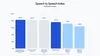
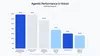
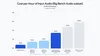
In the rapidly evolving landscape of speech-to-speech models, quantitative benchmarks serve as a critical measure of capability. According to evaluations from Artificial Analysis, Gemini 3.8 Live Extended Thinking has captured the number one overall position on the Speech to Speech Quality Index, securing an impressive score of 82.6. Furthermore, the model has demonstrated industry-leading performance in complex, agentic task completion, achieving 68.6% on the Iota-Voice benchmark and 35.1% on Sierra’s Iota-Voice-banking benchmark. Its deep reasoning prowess is further underscored by a 97.7% score on Big Bench Audio, all while maintaining a highly competitive cost-to-performance ratio when weighed against other frontier models in the sector.
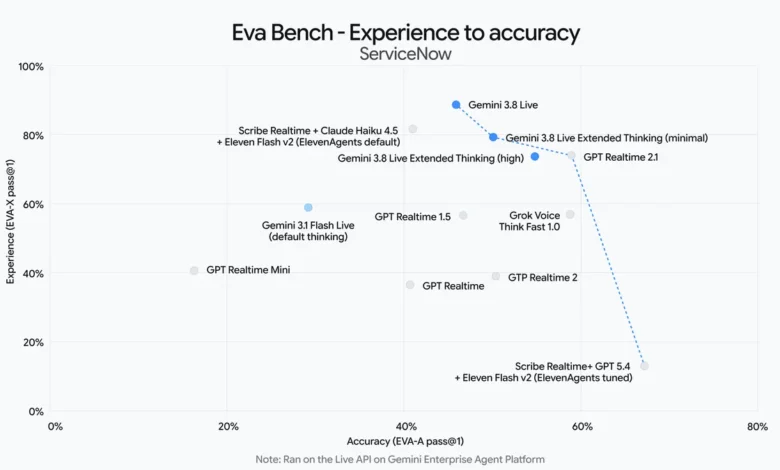
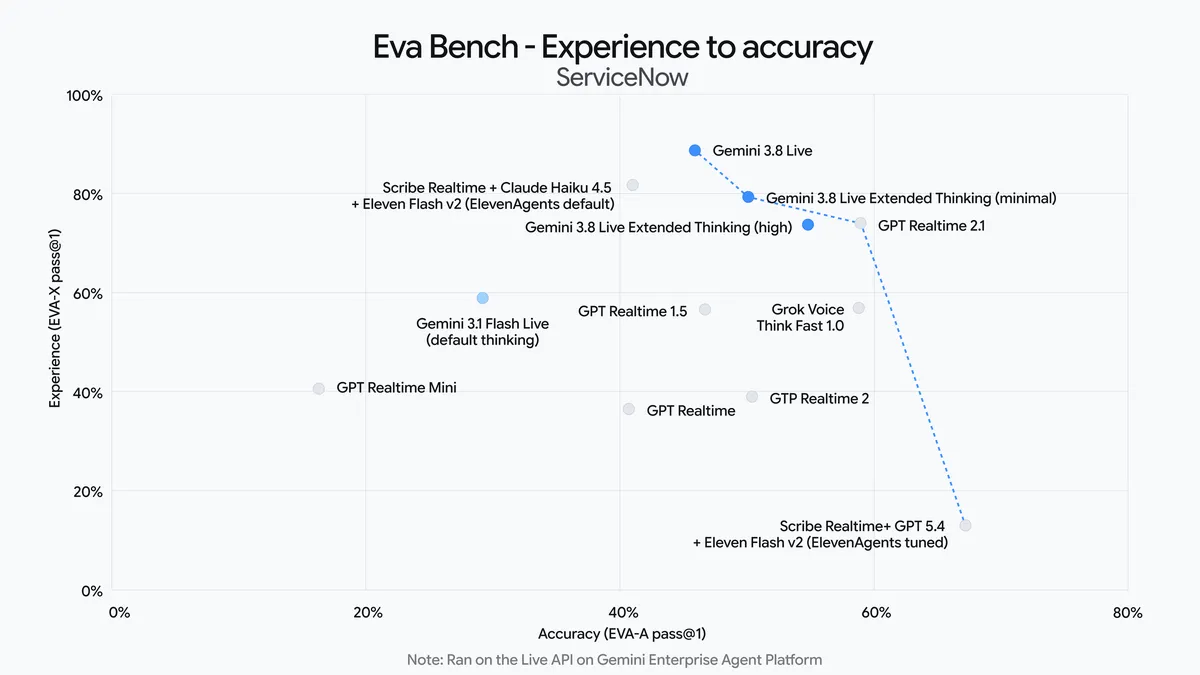
Meanwhile, Gemini 3.8 Live has earned substantial acclaim from users, securing second place in the fiercely contested Speech Agent Arena on Artificial Analysis. Developers and enterprise clients gain access to a highly responsive model that balances low latency with cost-effective scalability. Additionally, when evaluated on ServiceNow’s EVA-Bench—a rigorous testing framework for conversational voice agents—the Gemini 3.8 models successfully push the Pareto Frontier for complex enterprise workflows, striking an optimal balance between high task accuracy and natural conversational quality.

Multimodal Context and Simultaneous Reasoning
A defining characteristic of the Gemini 3.8 architecture is its capacity for near real-time multimodal processing. Gemini 3.8 Live can interpret visual inputs on the fly, seamlessly weaving visual context into ongoing voice dialogues. Whether a user is conducting employee onboarding through live visual Q&A or playing a game of chess by transmitting real-time board states, the AI processes the information instantly to deliver contextually relevant guidance.
Language adaptability has also been radically improved. The system dynamically detects and shifts between 97 supported languages mid-conversation, removing traditional linguistic barriers in international and multilingual environments. Moreover, the model features asynchronous tool execution: it can trigger backend API calls and execute external software tools while continuing the conversation uninterrupted. Users can hear immediate verbal acknowledgments of their requests—such as a natural placeholder phrase—while the system processes multi-step tasks in the background and narrates progress milestones as they occur.
Gemini 3.8 Live Extended Thinking elevates this capability even further for scenarios demanding deep cognitive processing. It enables the AI to reason and speak simultaneously. For software developers and technical professionals, this manifests in advanced use cases such as translating raw UI sketches and verbal feedback directly into functional React components, coordinating complex multi-step travel or service bookings, or generating comprehensive business plans and marketing strategies entirely through spoken collaboration.

Deep Integration Across Google Ecosystems
Google is actively integrating these advanced live models across its flagship product suites to redefine daily productivity. Within Google Workspace, tools such as Docs Live, Gmail Live, and Keep Live allow professionals to draft documents, manage email threads to achieve inbox zero, and sort through notes using conversational voice commands.

In Google Search, Search Live introduces real-time, step-by-step troubleshooting assistance, allowing users to talk through technical or mechanical problems and receive immediate, spoken guidance. Within the standalone Gemini app, features like the Daily Brief enable users to manage their schedules, delegate to-do lists, and converse with the assistant as though they were speaking to a human executive assistant.

Ecosystem Partnerships and Enterprise Adoption
To maximize the reach of these models, Google has made Gemini 3.8 Live and Extended Thinking available through the Gemini Live API. A broad coalition of developer platforms—including Agora, Fishjam, LangChain, LiveKit, Pipecat, Vercel, and Vision Agents—has integrated support for the new models. These platforms handle the intricate underlying infrastructure required for real-time media streaming, empowering developers to focus exclusively on crafting superior user experiences.
Enterprise leaders across diverse industries have expressed strong enthusiasm for the launch. Organizations such as Salesforce, Genspark, Lumeris, Lenskart, and 11Sight have highlighted the models’ exceptional latency reductions, conversational fluidity, and advanced tool-calling capabilities as key drivers for improving customer service automation and enterprise efficiency.

Commitment to Transparency and Responsible AI
As generative audio technologies advance, addressing public concerns regarding deepfakes and misinformation remains a top priority for Google. To safeguard the integrity of digital media, all audio output generated by Gemini 3.8 Live and Extended Thinking incorporates SynthID watermarking technology. This imperceptible digital watermark is woven directly into the audio signal, allowing automated systems to reliably detect AI-generated speech. Google has also published comprehensive model cards detailing its safety evaluations, ethical considerations, and risk mitigation strategies, reinforcing the company’s commitment to responsible AI development as these tools deploy globally.