Factorial Energy Forms Strategic Supply Chain Coalition to Accelerate All-Solid-State EV Battery Commercialization

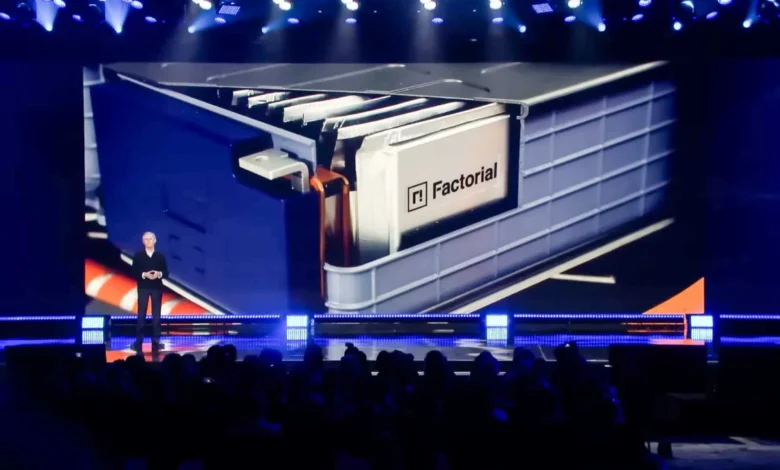
The electric vehicle industry has long chased the holy grail of battery technology: the all-solid-state battery. Promising vastly superior energy density, drastically reduced charging times, and the elimination of the fire risks associated with traditional liquid electrolytes, solid-state cells have frequently been heralded as the definitive turning point for mass electric vehicle adoption. However, despite decades of laboratory research and billions of dollars in private and public investment, commercialization has been perpetually delayed by stubborn manufacturing hurdles and scaling complexities.
In an effort to circumvent these historic roadblocks, Massachusetts-based battery startup Factorial Energy has announced a collaborative paradigm shift. Rather than attempting to develop and manufacture every component of the next-generation battery in-house—a vertically integrated approach that has strained even the most well-capitalized automakers and energy firms—Factorial is spearheading a specialized supply chain coalition. By forging targeted partnerships with world leaders in anodes, cathodes, solid electrolytes, and advanced production tooling, the company aims to fast-track the deployment of its proprietary solid-state technology into the global automotive market.
The cornerstone of this coalition strategy is a newly inked joint development agreement with Japanese materials firm Mitsui Kinzoku. Under the partnership, Factorial will integrate Mitsui Kinzoku’s advanced solid electrolytes into its next-generation cells, a move company executives say is vital to unlocking the high-temperature thermal stability and exceptional performance required for commercial viability.
The Technological Leap: Beyond Conventional Lithium-Ion
To understand the magnitude of Factorial’s undertaking, one must examine the fundamental limitations of contemporary energy storage. Traditional lithium-ion batteries rely on liquid organic chemical electrolytes to facilitate the movement of charge-carrying lithium ions between the anode and the cathode. While these liquid systems have steadily improved in cost and energy capacity over the years, they remain inherently combustible under extreme thermal duress or physical damage. Furthermore, conventional cells are approaching their theoretical limits regarding energy density, restricting the range and weight efficiency of electric vehicles.
All-solid-state batteries completely replace the volatile liquid solvent with a solid material, such as a sulfide, oxide, or polymer-based electrolyte. This structural change fundamentally alters the safety profile of the battery, eliminating thermal runaway risks while enabling the use of high-capacity lithium-metal anodes.
Factorial’s product roadmap is divided into two distinct technological tiers: the FEST (Factorial Electrolyte System Technology) semi-solid-state battery and the Solstice all-solid-state cell.
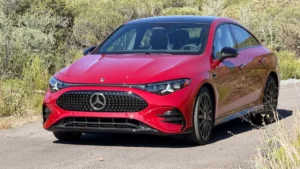
The FEST semi-solid-state battery employs a proprietary gel-like electrolyte paired with an anode-free lithium-metal design. Delivering an energy density of up to 375 watt-hours per kilogram (Wh/kg), the semi-solid cell is already mature enough for real-world testing. Factorial has supplied these test units to major global automotive partners, where they have been integrated into prototype platforms like the Mercedes-Benz EQS and the Dodge Charger Daytona EV. In independent real-world evaluations, prototype vehicles equipped with Factorial’s semi-solid technology have demonstrated staggering driving ranges exceeding 700 miles on a single charge.
Building upon the foundation of its semi-solid chemistry, the Solstice all-solid-state cell targets an even higher energy density of up to 450 Wh/kg—roughly double the capacity of standard commercial lithium-ion cells found in EVs today. However, manufacturing these cells at scale requires specialized materials and pristine processing environments that no single battery startup can manage alone.
Assembling the Supply Chain Coalition
Factorial CEO Siyu Huang has been vocal about the necessity of a collaborative framework, noting that the traditional go-it-alone methodology used by legacy battery manufacturers is ill-suited to the complex materials science of solid-state systems.

"We’re driving a very strong coalition among all of the supply chain," Huang stated during an interview. "There are still significant technical challenges to unlock. It’s very important for us to go beyond the existing mindset and framework for lithium-ion and focus on a technology that goes beyond."
The Mitsui Kinzoku agreement is just one link in a rapidly expanding chain of international alliances designed to secure every stage of production:
- Posco Future M: Factorial is collaborating with the Korean materials specialist to source and optimize high-grade anode and cathode components.
- SK On: An ongoing strategic collaboration focuses on scaling manufacturing processes to meet anticipated North American volume demands.
- Volkswagen Group (PowerCo) and Hyundai Motor Group: Factorial has secured formal joint development agreements with these automotive giants, embedding its technology directly into the development pipelines of some of the world’s largest vehicle manufacturers.
- Phil Energy: A memorandum of understanding with the Korean manufacturing equipment supplier targets the creation of advanced tooling specifically engineered for solid-state assembly lines.
Huang noted that these agreements position the company securely for major volume production across both North American and European automotive markets.
Commercialization Timeline and Market Entry
While competitors continue to debate the merits of vertical integration versus outsourced manufacturing, Factorial is steadily carving out a path toward commercial implementation. The company officially transitioned to public markets via a Nasdaq listing in June, providing additional financial runway to support its ambitious scaling schedule.
Commercial rollout is set to occur in stages. The semi-solid FEST technology is effectively ready for commercialization, with initial production allocations secured. Karma Automotive is slated to become the first manufacturer to introduce a production electric vehicle equipped with Factorial’s semi-solid-state battery, with a target market launch set for 2028.
Beyond the passenger car market, Factorial is diversifying its commercial footprint. This past summer, the company secured its first commercial aerospace purchase order, supplying advanced battery cells for high-performance unmanned aerial drones. Huang indicated that broader adoption by large automotive original equipment manufacturers (OEMs) will follow sequentially, dictated by individual automaker validation cycles and vehicle platform readiness.
The Global Solid-State Race
Factorial is far from alone in the high-stakes global race to commercialize solid-state energy storage. The competitive landscape is populated by a mix of well-funded startups and multinational conglomerates, each pursuing distinct technical pathways.
In the United States, competitors such as QuantumScape in California and Solid Power in Colorado are pursuing their own respective solid-state architectures, backed by major automotive investments from Volkswagen and Ford. Meanwhile, Illinois-based Pure Lithium is targeting novel graphite-free lithium-metal chemistries to reduce reliance on foreign supply chains. Internationally, automotive titan Toyota continues to invest heavily in its proprietary solid-state portfolio, while Taiwan-based ProLogium and dominant Chinese battery manufacturers like CATL and BYD are advancing rapidly through their own pilot production lines.
Whether Factorial’s coalition-based model—leveraging best-in-class partners across electrolytes, anodes, cathodes, and manufacturing equipment—will outperform the heavily vertically integrated strategies of industry goliaths remains one of the defining questions of the next decade of electrification.
What is certain, however, is that the era of isolated laboratory breakthroughs has passed. As Huang emphasized, the transition to next-generation energy storage will not be achieved by any single enterprise operating in a vacuum, but rather by the cohesive synergy of an entire global industrial supply chain.