BYD Unveils the ETT 44 Electric Semi-Truck at IAA Transportation 2026 to Challenge Tesla in Europe

The commercial vehicle sector is currently undergoing one of the most profound transformations in its history, shifting away from internal combustion engines toward zero-emission alternatives. At the forefront of this industrial evolution is the IAA Transportation 2026 show in Hanover, Germany, an event traditionally used by global automotive giants to showcase the future of logistics and heavy-duty transport. While attention has frequently centered on American market entrants such as Tesla, Chinese manufacturing titan BYD has used the Hanover stage to make a definitive statement regarding its ambitions in the European heavy-duty commercial market.
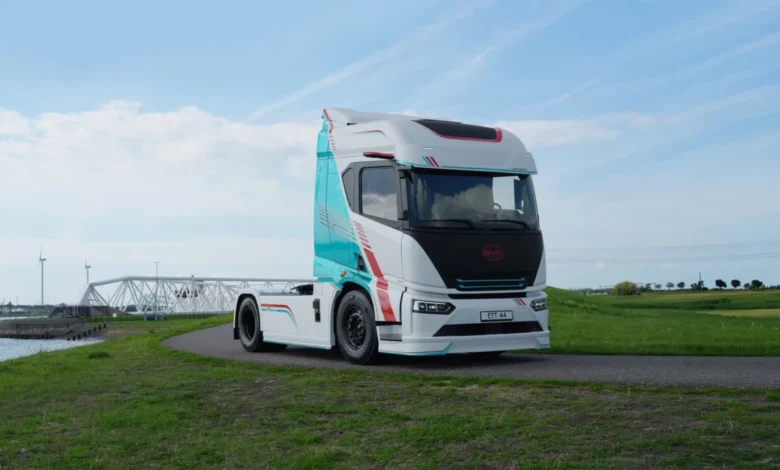
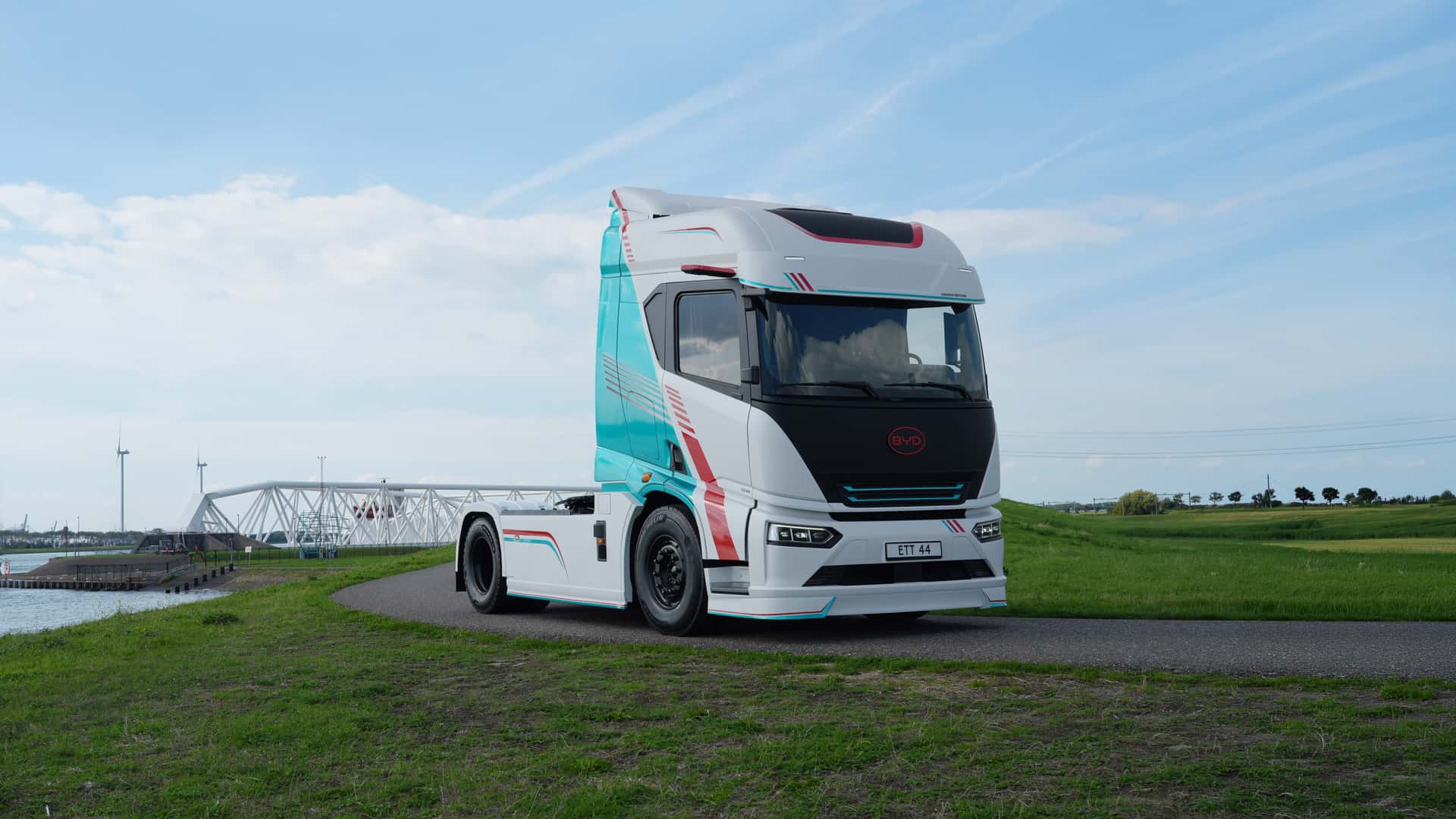
Unveiled to industry leaders, fleet operators, and media representatives, the BYD ETT 44 represents the company’s flagship vision for electric long-haul trucking. Although its exterior design adopts a traditional, utilitarian aesthetic rather than the futuristic, aerodynamic curves popularized by the Tesla Semi, the engineering beneath the surface introduces advanced capabilities designed to upend the established norms of European freight transport.
Core Engineering and Powertrain Specifications
At the technical core of the BYD ETT 44 4X2 is the company’s proprietary Ultra-safe Blade Battery technology. Utilizing a Lithium Iron Phosphate (LFP) chemistry renowned for its thermal stability, structural integrity, and longevity, the vehicle packs an immense 651 kWh battery pack. This substantial energy storage system is engineered to feed a robust 732-horsepower electric motor, capable of delivering a peak output of 1,000 horsepower under heavy load demands.
Heavy-duty commercial trucking imposes unique operational constraints, chief among them being the necessity for minimal downtime. To address this, BYD has equipped the ETT 44 with compatibility for Megawatt Charging System (MCS) stations, enabling ultra-fast "Flash Charging" capabilities. According to the manufacturer’s official specifications, utilizing an MCS charger allows the commercial truck to replenish its state-of-charge (SOC) from 20% to 80% in under 20 minutes.
When fully charged, the ETT 44 is rated for an estimated range of 372 miles. Furthermore, a standard 20% to 80% fast-charging session is projected to restore approximately 248 miles of operating range. These performance figures are achieved despite the vehicle carrying a substantial unladen weight of 24,140 pounds. BYD has also confirmed plans to introduce a subsequent 6X2 variant, though range figures for this heavier configuration remain unreleased.
Capacity and Comparative Metrics
One of the most compelling aspects of the ETT 44 launch is its payload and gross vehicle weight ratings. The commercial work truck boasts a maximum gross vehicle combination weight (GVCW) of 44 tonnes—equivalent to roughly 97,000 pounds. This rating places the BYD entry ahead of key competitors, outperforming the European-specification Tesla Semi by four tonnes, or approximately 8,818 pounds.
For fleet operators calculating the economic viability of electric logistics, gross weight capacity directly correlates with cargo efficiency. The ability to haul a heavier legal limit without sacrificing powertrain performance offers a distinct competitive advantage in jurisdictions governed by strict European Union weight distribution laws.
To bolster confidence among commercial buyers wary of the long-term degradation costs associated with heavy-duty electrification, BYD has introduced an industry-leading warranty for its Blade Battery. The company is backing the energy storage system with a 10-year or 1.2-million-kilometer (approx. 745,000-mile) warranty. This coverage significantly exceeds the standard six-to-eight-year warranties typically offered by legacy European electric truck manufacturers. By comparison, Tesla has yet to formally announce comprehensive warranty terms for the commercial battery packs deployed in its Semi.
Expanding the Commercial Ecosystem
The ETT 44 is not merely an isolated product introduction; it serves as the anchor for a broader modular commercial vehicle platform. BYD has confirmed that the foundational architecture underpinning the semi-truck will be scaled across a diverse portfolio of heavy-duty applications. This includes rigid trucks, regional distribution vehicles, and yard tractors, allowing fleet operators to standardize their maintenance, charging infrastructure, and software ecosystems across varied operational tiers.
Inside the cabin, the ETT 44 balances utility with modern ergonomic requirements designed to reduce driver fatigue during long-haul interstate assignments. The vehicle features a high-roof sleeper cab configuration tailored for multi-day routes. To enhance the daily operational experience for professional drivers, the interior is equipped with a 12.8-inch infotainment display supporting both Apple CarPlay and Android Auto integration, reflecting the growing digitization of modern commercial cockpits.
Market Context and Competitive Landscape
The debut of the BYD ETT 44 at IAA Transportation 2026 intensifies an already competitive European electric truck market. BYD enters the arena alongside established domestic and international players, including Volvo, Mercedes-Benz, and Tesla.
The logistical landscape in Europe is shifting rapidly, underscored by massive fleet commitments. For instance, Swedish freight technology giant Einride recently finalized a major procurement agreement for 500 Tesla Semis, signaling that early adopters are actively locking in supply chains for zero-emission logistics. Consequently, while BYD’s technical specifications—particularly its charging speed, high gross weight capacity, and extended battery warranty—position it as a formidable challenger, it must navigate a market characterized by entrenched brand loyalties and rapidly expanding charging infrastructure networks.
Broader Implications for the Freight Industry
The introduction of heavy commercial electric vehicles with megawatt-charging capabilities marks a critical inflection point for continental infrastructure. As commercial manufacturers push battery capacities past the 600 kWh threshold and adopt standardized MCS protocols, the demand on the European grid to support high-power logistics corridors becomes increasingly urgent.
Industry analysts note that vehicles like the ETT 44 and its rivals will ultimately succeed or fail based on the parallel deployment of reliable, ultra-fast charging depots along primary trans-European transport networks. BYD’s aggressive warranty terms and high payload capacity signal that Chinese manufacturers are prepared to compete directly on total cost of ownership and operational durability—metrics that will ultimately dictate the pace of fleet electrification through the remainder of the decade.