The rapid evolution of large language models (LLMs) has primarily focused on generative capabilities—the ability to compose essays, write code, or engage in creative dialogue. However, a significant paradigm shift is currently underway in the field of artificial intelligence: the transition from generative models to specialized decision models. By utilizing frameworks like Unsloth, developers can now transform open-weight LLMs, such as Qwen3.5-4B, into highly efficient classifiers that prioritize structured, predictable outputs over verbose, token-by-token text generation. This article examines the technical implementation, the underlying shift in machine learning philosophy, and the broader implications for enterprise AI deployment.
The Shift Toward Deterministic AI
Traditional LLMs operate on a probabilistic framework where the goal is to predict the next token in a sequence. While this is effective for chat applications, it presents significant challenges for enterprise environments requiring high reliability, such as intent classification, routing, or automated content moderation. In these scenarios, a "long-form" answer is often a hindrance rather than a feature.
Decision models represent a move toward deterministic outcomes. By integrating a specialized decision head—a layer designed to score predefined categories—a model can process a user’s input and return a structured JSON response containing the most probable intent and a corresponding confidence score. Models like Jev, Laya, and Clef have popularized this approach, demonstrating that for specific tasks, a smaller, fine-tuned model can outperform larger, general-purpose models in both speed and accuracy.
Technical Implementation: The Unsloth Framework
The process of creating a decision model has been significantly streamlined by the Unsloth library. Unsloth provides optimized kernels that reduce memory consumption and accelerate training, making it possible to fine-tune complex models on consumer-grade hardware or accessible cloud platforms like Google Colab.
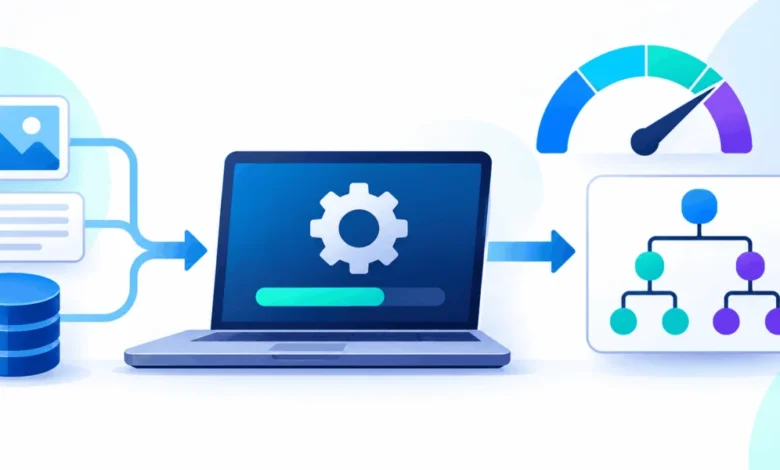
The technical workflow involves three primary phases: environment configuration, data transformation, and model fine-tuning.
Environment and Model Initialization
To begin, the practitioner must initialize a FastDecisionModel. Unlike standard transformer loaders, this specialized class patches the base model to enable a "decision head." Using Qwen3.5-4B, which offers a balance between parameter efficiency and linguistic capability, researchers apply 4-bit LoRA (Low-Rank Adaptation) to ensure that the training process remains within the VRAM limitations of GPUs like the NVIDIA Tesla T4. LoRA is critical here, as it allows the model to learn task-specific patterns while keeping the vast majority of the base parameters frozen, preventing catastrophic forgetting and minimizing computational overhead.
Dataset Structuring: The CLINC150 Benchmark
For this tutorial, the CLINC150 dataset serves as the foundational corpus. CLINC150 is a widely recognized benchmark in natural language processing, containing 150 distinct intent categories across domains such as banking, travel, and personal assistant tasks.
In a standard generative setting, this data might be used to train a chatbot. In a decision model setting, however, the data must be reformatted into a "Choice" schema. Each record is transformed to include:
- The state (the user’s natural language input).
- The questions (the set of possible intent labels).
- The gold (the ground-truth label).
This transformation is the most labor-intensive part of the pipeline. By isolating a subset of 10 intents—such as "calories," "payday," and "jump_start"—the model can be trained to master specific classification tasks without the noise of the entire 150-intent spectrum, effectively creating a high-performance classifier with a small footprint.
Chronology of the Fine-Tuning Process
The training process follows a strict, metrics-driven timeline. Initially, before any fine-tuning occurs, the model’s performance is evaluated to establish a baseline. Without training, a model’s ability to guess the correct intent among 10 options is typically near the level of random chance—roughly 10% to 18% accuracy.
- Phase 1: Pre-training Evaluation. The model is tested on the validation set. Metrics such as Expected Calibration Error (ECE) are recorded to quantify the gap between the model’s confidence and its actual accuracy.
- Phase 2: Targeted Fine-Tuning. Utilizing the
DecisionTrainerclass, the model undergoes approximately 60 training steps. With a batch size of 32 (8 per device with 4 gradient accumulation steps), the model converges rapidly. In experimental runs, the loss typically drops from over 2.0 to near 0.003 within less than an hour of training. - Phase 3: Post-Training Calibration. After the weights are updated, a second evaluation reveals accuracy improvements, often reaching 100% on the validation set for the selected intent subset.
- Phase 4: Held-out Test Evaluation. Finally, the model is tested against a completely unseen test partition of the dataset. This step is the "litmus test" for generalization, ensuring the model has learned the intent patterns rather than simply memorizing the training examples.
Data Analysis and Implications
The efficacy of this approach is evidenced by the shift in ECE. A high ECE indicates that a model is "overconfident"—it might claim a 99% probability of correctness while being wrong. Through calibration, the ECE in these tests has been reduced to near-zero, meaning that when the model reports a high confidence score, that score is highly correlated with the probability of the prediction being accurate.
This level of precision has profound implications for industries like fintech and customer support. For instance, in an automated banking system, a model that can distinguish between a "check balance" request and an "unauthorized transaction" report with near-perfect accuracy and a calibrated confidence score allows for safer, more automated handling of sensitive data. If the confidence score falls below a certain threshold, the system can automatically trigger a "human-in-the-loop" protocol, effectively managing risk.
Broader Impact on the AI Industry
The ability to turn an open-weight LLM into a decision model democratizes AI development. Previously, building highly accurate classifiers required proprietary enterprise software or extensive data science teams. Today, a single engineer with a standard cloud GPU can develop a bespoke classifier that rivals the performance of legacy intent-detection systems.
Furthermore, this modular approach—where an LLM is used as the base intelligence and a decision head provides the structure—allows for greater interoperability. Organizations can swap the base model as newer, more efficient iterations of Qwen or Llama are released, while maintaining the same decision-head logic. This "future-proofs" the application, ensuring that the classification layer remains state-of-the-art without requiring a complete system rebuild.
Conclusion and Future Outlook
The transition from generative AI to structured decision-making models is not merely a technical trend; it is a necessary evolution in the maturation of AI applications. As businesses move beyond the "proof-of-concept" stage of AI adoption, the demand for reliability, speed, and transparency will continue to eclipse the demand for raw generative power.
By leveraging frameworks like Unsloth and utilizing robust benchmarks like CLINC150, developers are well-positioned to build the next generation of intelligent, reliable, and cost-effective decision-making systems. As the industry continues to refine these methods, we can expect to see an increase in specialized, high-accuracy models that operate quietly in the background of our digital infrastructure, making complex decisions in milliseconds—with the precision and confidence that modern commerce requires. While this experiment focused on a small subset of intents, the methodology is scalable, paving the way for more sophisticated, production-grade applications that bring the power of LLMs into the realm of deterministic, high-stakes decision support.