When Gasoline Hits Seven Dollars a Gallon: Survey Data Reveals Hard Truths About EV Adoption and Consumer Resistance

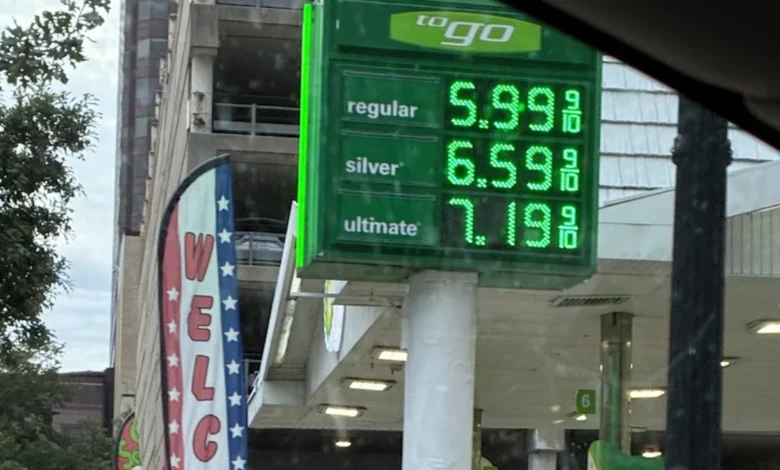
The landscape of American transportation is undergoing a profound structural test as retail fuel prices cross historic thresholds, bringing long-standing debates surrounding electric vehicle adoption into sharp focus. Recent market developments, highlighted by premium gasoline surging past seven dollars per gallon in major metropolitan areas such as Chicago, have revived urgent discussions regarding consumer habits, economic thresholds, and the psychological barriers preventing widespread transition to plug-in electric vehicles.
These rising figures arrive months after initial industry surveys sought to quantify the breaking point for the most dedicated internal combustion engine loyalists. While economic pressures continue to mount at fuel pumps nationwide, a comprehensive analysis of consumer sentiment, infrastructure realities, and energy independence offers critical insight into the future of modern mobility.
The Evolution of Fuel Pricing and Consumer Sentiments
![Survey rewind: how much pain at the pump will it take to switch to EV? [update]](https://electrek.co/wp-content/uploads/sites/3/2026/04/IMG_7201.jpg?quality=82&strip=all&w=1600)
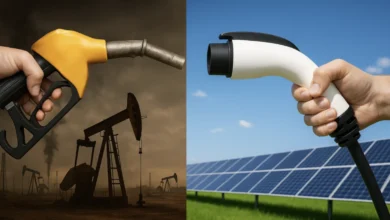
The trajectory of fuel costs throughout the year has transformed what was once considered a worst-case theoretical scenario into an everyday reality for millions of motorists. Earlier in the spring, automotive and energy sector publications launched sidebar questionnaires designed to gauge public perception regarding fuel price inflation. When posed with the query of how high gasoline or diesel prices would need to climb to convince dedicated opponents of electric vehicles to make the switch, the responses pointed toward deep-seated skepticism.
With more than 2,800 responses collected over a multi-day polling window, nearly half of the participants expressed doubt that any price point would prove high enough to alter the habits of the most entrenched fossil-fuel loyalists. At the time of the initial polling, regional averages sat well below the staggering figures observed later in the autumn. However, the subsequent jump past the seven-dollar mark for premium blends in high-cost-of-living urban centers has forced a reevaluation of these assumptions.
Market observers note that consumer response to commodity price shocks is rarely immediate. Vehicle ownership involves long-term financial commitments, and for many households, the utility of an existing, paid-off combustion vehicle outweighs the immediate pain of high refueling expenses. Consequently, sudden spikes at the pump often generate frustration rather than immediate behavioral shifts, as drivers wait to see whether pricing pressures are transient or permanent.
Comparative Global Perspectives on Fuel Taxation and Energy Costs
![Survey rewind: how much pain at the pump will it take to switch to EV? [update]](https://electrek.co/wp-content/uploads/sites/3/2026/04/ev-numbers.png?w=1024)
To contextualize the current economic environment in North America, market analysts frequently examine mature international markets where high fuel costs have been the norm for decades. In nations such as the Netherlands and other parts of Western Europe, heavy taxation on fossil fuels has driven equivalent pump prices well past eleven dollars per gallon for years.
Despite enduring these steep costs over extended periods, European transportation sectors have retained segments of the driving population that refuse to transition away from traditional combustion engines voluntarily. Observers point out that international comparisons illustrate a vital principle: high fuel prices alone do not guarantee a complete market transformation. Instead, they interact with a complex matrix of alternative vehicle availability, purchasing power, public transit alternatives, and regional utility rates.
Furthermore, economic analysts emphasize that the decision to purchase a vehicle is dictated heavily by total cost of ownership rather than a single variable like fuel expenditure. For a motorist driving limited annual mileage, the capital cost of acquiring a new or lightly used electric vehicle often outweighs the monthly savings realized at the pump, even when fuel prices reach unprecedented heights.
The Role of Home Energy Generation and Energy Dominance
![Survey rewind: how much pain at the pump will it take to switch to EV? [update]](https://electrek.co/wp-content/uploads/sites/3/2025/03/DES-1038_Electrek-Banners_EVs_0797c2.png)
While fuel inflation presents immediate financial challenges for traditional vehicle owners, the broader energy ecosystem introduces new variables into the cost-benefit analysis of transportation. The integration of residential solar photovoltaic systems and home energy storage batteries has fundamentally altered the financial equation for a subset of early adopters.
Advocates of decentralized energy systems argue that home-generated electricity provides a hedge against both petroleum market volatility and rising utility rates. By utilizing rooftop solar arrays to charge electric vehicles overnight, consumers effectively decouple their daily transportation expenses from global commodity markets. Proponents describe this dynamic as achieving personal energy independence, transforming the vehicle owner from a retail consumer at the mercy of fluctuating supply chains into a localized producer of motive power.
However, critics and cautious consumers raise valid counterpoints regarding the accessibility of these technologies. The upfront capital required to install comprehensive home solar and battery backup systems remains prohibitive for a significant portion of the population. Additionally, utility rate structures in various regions have begun shifting to accommodate the influx of distributed energy resources, sometimes introducing time-of-use fees or grid connection charges that complicate long-term financial forecasting.
Implications for the Automotive Industry and Infrastructure Development
![Survey rewind: how much pain at the pump will it take to switch to EV? [update]](https://electrek.co/wp-content/themes/ninetofive/dist/images/google-preferred-source-badge-dark.png)
The convergence of high fuel prices, evolving consumer preferences, and technological advancement carries significant implications for original equipment manufacturers and policymakers alike. Automakers are currently navigating a delicate transition phase, balancing ambitious electrification roadmaps against fluctuating consumer demand and regulatory shifts.
As dealerships manage inventory levels for both internal combustion vehicles and electrified alternatives, pricing strategies must adapt to economic realities. The pre-owned electric vehicle market has begun to expand, offering more accessible entry points for budget-conscious buyers who delayed adoption due to high initial MSRPs on brand-new models. Nevertheless, infrastructure readiness remains a critical bottleneck. Range anxiety, charger reliability, and the availability of overnight charging solutions for apartment dwellers and multi-family housing units continue to influence public hesitation.
Policy Implications and Future Market Outlook
Government agencies at both the state and federal levels face mounting pressure to address energy affordability while maintaining long-term carbon reduction targets. Incentive programs, tax credits for clean energy installations, and investments in public charging corridors are designed to smooth the transition for consumers hesitant to embrace new technologies.
![Survey rewind: how much pain at the pump will it take to switch to EV? [update]](https://electrek.co/wp-content/themes/ninetofive/dist/images/google-preferred-source-badge-light.png)
Economic forecasters suggest that the persistence of elevated fuel prices will likely accelerate fleet turnover over the medium to long term, provided that vehicle manufacturing costs stabilize and financing conditions become more favorable. As older, less efficient vehicles reach the end of their operational lifespans, the replacement cycle naturally favors more efficient hybrid and fully electric alternatives.
Ultimately, the debate sparked by seven-dollar gasoline extends beyond mere logistics; it touches upon fundamental consumer attitudes toward mobility, independence, and technological change. While a dedicated core of motorists may resist electrification regardless of market signals, the broader economic tide continues to reshape the American automotive landscape in ways that will define the industry for decades to come.