Joby Aviation Completes Historic 3,100-Mile Autonomous Flight Across the United States

In a landmark achievement for aerospace engineering and autonomous systems, Joby Aviation successfully completed a cross-country flight spanning more than 3,100 miles without a human pilot touching the controls at any point during the journey. This milestone, which the company describes as the first-ever autonomous flight of its kind across the United States, signals a massive shift in how aviation technology is being conceptualized, moving beyond the traditional pilot-in-the-loop paradigm toward fully automated, scalable aerial operations.
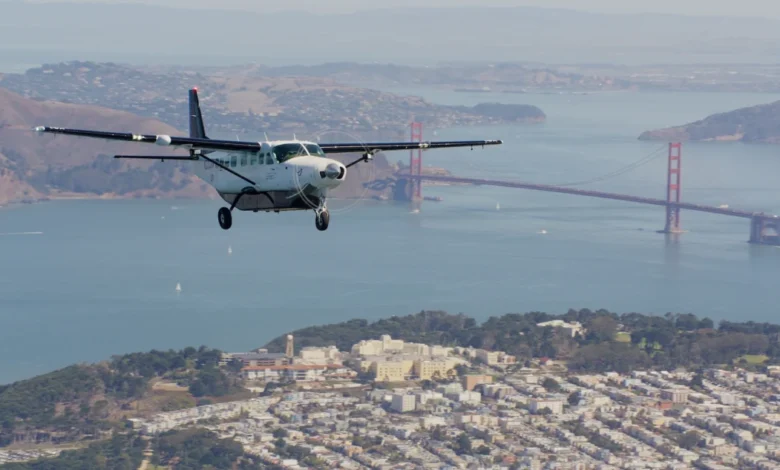
The flight utilized a modified Cessna Caravan, a proven workhorse in the aviation industry, retrofitted with Joby’s proprietary autonomy stack. Throughout the operation, the aircraft navigated complex airspace, handled taxiing, takeoff, and landing sequences, and managed cruise flight entirely through its internal software systems. While a safety pilot remained on board to comply with federal aviation regulations, Joby confirmed that the pilot did not intervene in the flight’s operation, leaving the aircraft to manage its own navigation and system responses from departure to arrival.
The flight path, which originated in the South and spanned the continental U.S., is only the first leg of a broader demonstration project. Over the next two weeks, the aircraft is scheduled to make a series of stops in major cities, including Louisville, Kentucky, and Salt Lake City, Utah, before returning to the West Coast. This transcontinental journey serves as a real-world stress test for Joby’s autonomy stack, proving that its software can operate reliably across diverse geographic environments, varying weather conditions, and shifting air traffic control requirements.
Technological Evolution and Strategic Diversification
For years, Joby Aviation has been synonymous with the electric vertical takeoff and landing (eVTOL) sector. The company’s primary objective has been the development and eventual commercial launch of an all-electric air taxi service designed to revolutionize urban mobility. However, this recent demonstration highlights a calculated strategic pivot: the company is no longer just an air taxi developer; it is an autonomy-focused aerospace firm.
The autonomy stack being tested is modular by design. Unlike flight control systems tied to a specific airframe, Joby’s stack is engineered to be retrofitted onto a wide range of conventional aircraft. This flexibility allows the company to explore diverse business-to-business and defense-related applications that exist outside the highly regulated, passenger-centric world of urban air mobility. By demonstrating that its software can successfully pilot a Cessna Caravan, Joby is essentially proving that its technology can scale to larger, more complex platforms, opening doors for autonomous medical transport, disaster response, and high-stakes defense logistics.
Strengthening Ties to the U.S. Defense Sector
The shift toward autonomous logistics is not happening in a vacuum. Joby has steadily cultivated a deep, multi-year relationship with the U.S. Department of Defense (DoD), positioning itself as a key supplier for the next generation of military aviation. This strategy was bolstered significantly in August when Joby acquired Resonant Sciences, an Ohio-based company specializing in radio frequency and sensor systems, for $500 million in cash and stock.
The acquisition of Resonant Sciences brought a wealth of expertise in sensor fusion, radar, and electromagnetic compatibility into Joby’s orbit—technologies that are essential for the safe and secure operation of autonomous aircraft in contested environments. This defense-focused unit within Joby is now working on a range of projects, including turbine-electric and hydrogen-electric propulsion systems, which, when paired with the company’s autonomy stack, could provide the military with a versatile fleet of unmanned, long-endurance logistics aircraft.
Furthermore, Joby’s work is supported by significant federal investment. A $17 million contract through AFWERX, the innovation arm of the U.S. Air Force, has been instrumental in the development of this autonomy stack. The project aims to integrate autonomous capability into conventional airframes, offering the DoD a cost-effective way to move cargo without exposing pilots to unnecessary risk in dangerous theaters of operation.
The L3Harris Partnership and Future Airframes
In addition to its internal developments, Joby has formed a strategic alliance with major defense contractor L3Harris Technologies. Announced in the summer of 2025, the partnership is focused on the collaborative development of a new class of aircraft. Specifically, the two companies are exploring the design of a gas-turbine hybrid vertical takeoff and landing aircraft capable of autonomous flight.
This initiative is particularly significant because it addresses the limitations of current battery-only systems. While battery technology is ideal for short-range urban air taxis, long-range defense missions require the energy density of liquid fuels. By combining hybrid propulsion with autonomous control, Joby and L3Harris aim to create an aircraft that can operate for extended periods, landing in austere locations where traditional runways are unavailable. This partnership effectively bridges the gap between Joby’s eVTOL roots and the rugged, high-performance requirements of modern defense aviation.
Implications for the Aviation Industry
The success of the 3,100-mile flight raises significant questions about the future of aviation regulation and the role of the pilot. As the industry moves toward "optionally piloted" or "remotely supervised" flight, the Federal Aviation Administration (FAA) and other global regulators are being forced to adapt their oversight frameworks.
Joby’s ability to perform this flight with remote supervision from both its California headquarters and Shaw Air Force Base in South Carolina illustrates a new model of flight operations. In this model, a single supervisor could potentially oversee multiple autonomous missions simultaneously, significantly reducing the labor costs associated with freight transport and logistics.
From an economic perspective, the ability to automate cargo flights on existing airframes—rather than waiting for the mass production of bespoke autonomous aircraft—could accelerate the adoption of autonomous logistics by years. Companies in the logistics and shipping sector are closely monitoring these developments, as the potential for autonomous, point-to-point freight transport could drastically lower the cost of moving time-sensitive goods across the country.
Analysis of Operational Challenges
Despite the excitement, the path to full-scale commercial autonomous aviation remains paved with challenges. Reliable autonomy requires more than just navigation software; it requires a robust, fail-safe infrastructure for air traffic management, cybersecurity, and emergency handling.
The aviation industry’s "detect and avoid" requirements are stringent. Any autonomous system must be able to identify and react to other aircraft, birds, and changing weather patterns with a level of precision that matches or exceeds human capability. Joby’s use of the Cessna Caravan for this demonstration is a strategic choice, as it uses a proven, reliable airframe that allows the company to isolate the performance of its software stack from the complexities of a prototype airframe.
As the company continues its cross-country tour, it will likely collect vast amounts of telemetry and operational data. This data will be vital for the next phase of its regulatory journey: proving to the FAA that its system can handle "edge cases"—unexpected events like system failures, severe weather, or loss of communication links—with zero human intervention.
Conclusion
Joby Aviation’s transcontinental flight stands as a milestone not just for the company, but for the entire aviation sector. By successfully navigating the complexities of U.S. airspace without direct human input, Joby has moved the goalposts for what is possible in the near term. As the company continues its work with the Department of Defense and progresses toward the certification of its urban air taxi, the dual-track strategy of focusing on both passenger transport and autonomous logistics appears increasingly viable.
Whether this technology will eventually eliminate the need for pilots in all sectors remains a subject of ongoing debate among aviation experts. However, the success of this flight demonstrates that the era of autonomous, long-range aerial operations has officially arrived, and companies like Joby Aviation are positioned at the forefront of this transformation. The next two weeks of travel will provide further evidence of the system’s durability, and the industry will be watching closely as the aircraft touches down in Louisville, Salt Lake City, and beyond, marking the next chapter in the history of flight.