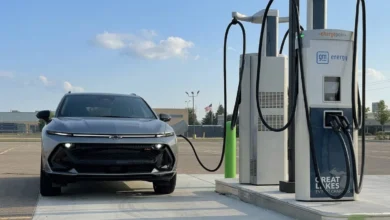
Mercedes-Benz CLA 350 4Matic Proves Its Long-Distance Chops with Exceptional Real-World Range and Rapid Charging Capabilities

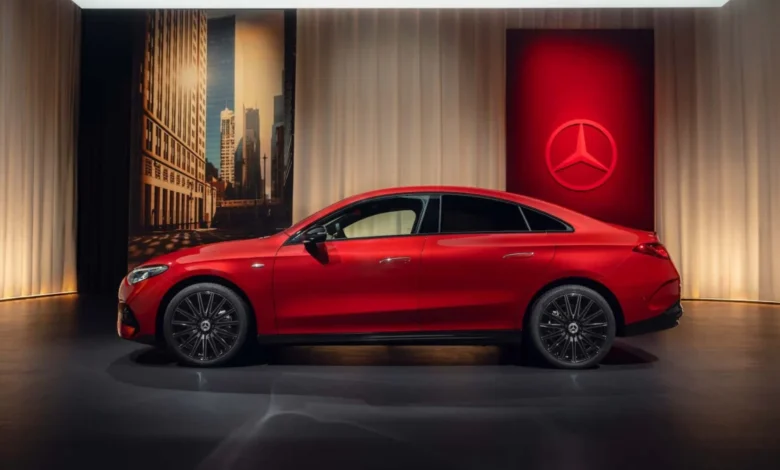
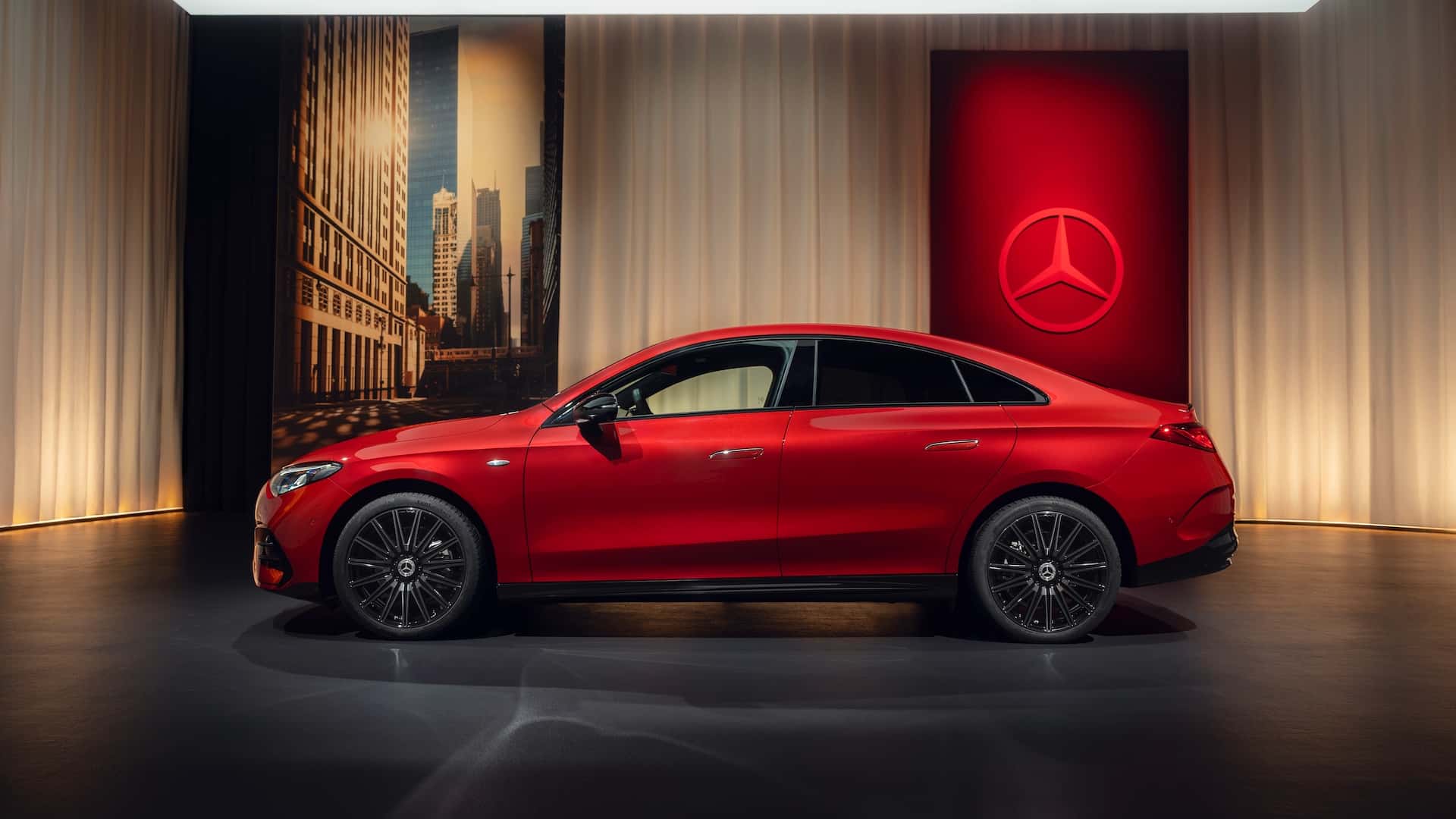
The modern electric vehicle landscape has reached a mature juncture where consumers no longer judge electric cars solely by their initial purchase price or their styling, but rather by their capacity to conquer long distances with minimal downtime. Recent comprehensive real-world testing of the Mercedes-Benz CLA 350 4Matic has revealed that the German automaker’s latest electric offering is not only capable of shattering official efficiency estimates, but it also boasts some of the most impressive charging performance metrics currently available in the North American market. Following a series of exhaustive evaluations conducted by automotive analysts, including Tom Moloughney of the State of Charge channel, the CLA has solidified its reputation as a formidable contender in the long-range electric vehicle segment, combining remarkable energy efficiency with lightning-fast replenishment capabilities at modern DC fast-charging stations.
Chronology of the Testing Process
The comprehensive evaluation of the Mercedes-Benz CLA 350 4Matic unfolded over a series of rigorous, real-world driving and charging tests designed to push the vehicle to its absolute limits. Initially, automotive testers focused on determining the vehicle’s highway endurance, subjecting the all-wheel-drive sedan to continuous high-speed driving at a steady 70 miles per hour until the battery reserves were completely exhausted. These initial evaluations demonstrated that the CLA could significantly surpass the United States Environmental Protection Agency’s official highway range figures, registering a staggering 385 miles of real-world driving distance on a single charge under favorable conditions.
Following these landmark range achievements, the testing protocol transitioned to an equally critical phase: assessing how efficiently the vehicle could recover its lost energy. To document this, testers drove the CLA down to approximately zero percent state-of-charge on two separate occasions. This established a baseline for deep-discharge recovery tracking. The subsequent recharging sessions were meticulously monitored from nearly empty to a full one-hundred percent capacity. To add empirical value to the experiment, the testers introduced a variable into the methodology: one charging session utilized the vehicle’s automated battery preconditioning system—which warms the battery pack to an optimal thermal window prior to arrival at a fast charger—while the other session was executed without any preconditioning whatsoever, relying entirely on ambient summer temperatures.
Comparative Analysis of Charging Infrastructure and Thermal Management
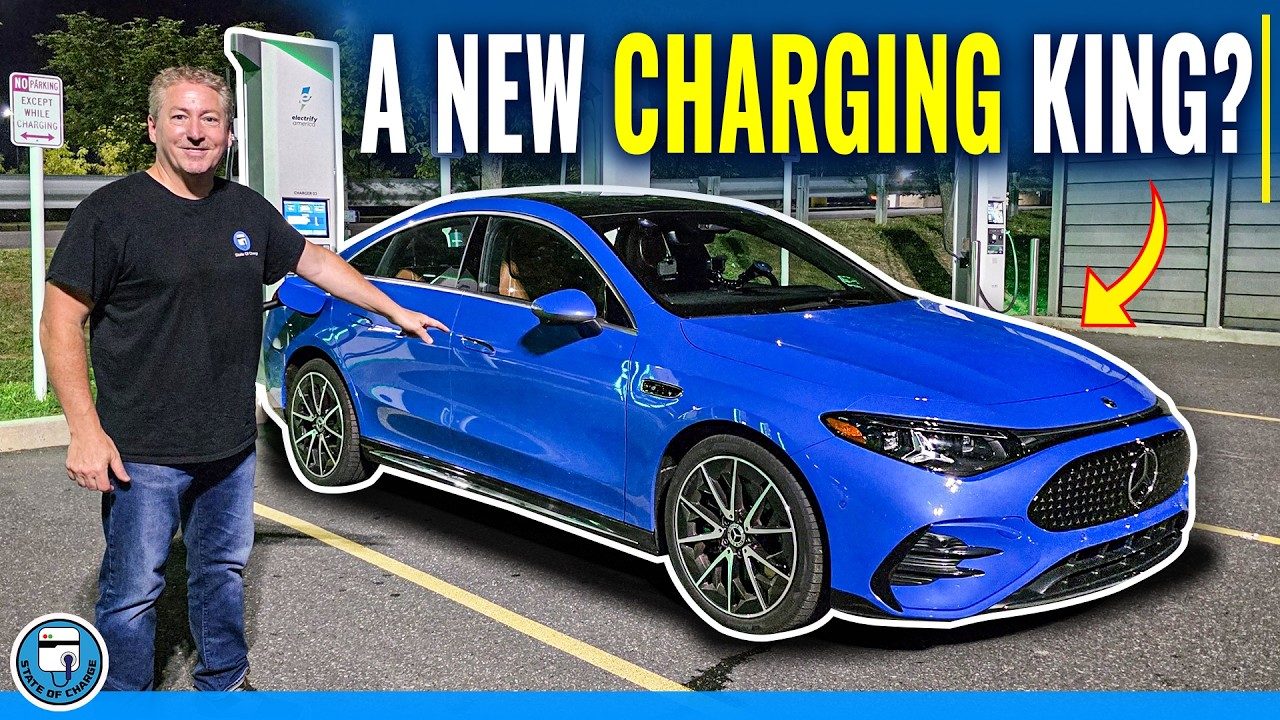
The comparative charging sessions provided unexpected insights into the behavior of the CLA’s advanced electrical architecture. The preconditioned charging test was conducted utilizing an ultra-high-power Ionna DC fast charger capable of delivering up to 400 kilowatts of electrical output. Conversely, the non-preconditioned charging session took place at a 350-kilowatt Electrify America charging station situated at a standard retail location.
Counter to conventional wisdom regarding electric vehicle thermal management, the two sessions yielded virtually identical results, with the non-preconditioned battery managing to charge at a marginally faster rate—maintaining a lead of approximately one percent throughout the duration of the power delivery curve. Industry experts noted that this phenomenon was largely attributable to the warm, stable ambient temperatures recorded during the summer testing window. Under such favorable environmental conditions, the vehicle’s thermal baseline was already well-suited for high-power acceptance without requiring active artificial pre-heating. Analysts emphasize, however, that while summer testing minimizes the observable benefits of preconditioning, the feature remains a vital tool for maintaining optimal charging speeds during colder winter months or sub-zero ambient conditions.
Detailed Breakdown of the Power Delivery Curve
A closer examination of the charging curve reveals how the Mercedes-Benz CLA manages high-voltage power intake across various stages of capacity restoration. In both evaluated sessions, the vehicle demonstrated an aggressive initial power acceptance, reaching its peak charging rate of approximately 350 kilowatts in less than sixty seconds after the plug was engaged.
As the energy stored within the battery increased, the charging power adjusted downward to protect the longevity of the cells. By the time the battery reached ten percent capacity, the power intake dipped just below the 300-kilowatt threshold. The deceleration of charging speeds continued in a predictable, well-managed trajectory: at twenty percent state-of-charge, the vehicle pulled power in the mid-200-kilowatt range, and by the thirty-percent mark, the intake leveled off at approximately 160 kilowatts.
Rather than focusing exclusively on the initial peak power figure—a metric frequently utilized in marketing materials but rarely sustained for long periods—automotive engineers evaluate the cumulative charging curve to determine true travel efficiency. The CLA’s performance across this curve translated into exceptionally brief stops at the charging pedestal. The vehicle reached a ten-percent state-of-charge in just two minutes and twenty-five seconds. By five and a half minutes, the battery indicator reflected a twenty-five percent charge. Ten minutes into the session, the vehicle approached forty percent capacity, and at the fifteen-minute mark, the CLA had successfully replenished fifty percent of its total energy reserve.
For long-distance travelers, these temporal milestones carry profound practical implications. Given the CLA’s real-world highway range of 385 miles, recovering half of the battery capacity in a quarter of an hour yields roughly 190 miles of driving range. Factoring in a standard roadside stop for refreshments and restroom facilities, motorists can seamlessly integrate these brief pauses into extended journeys without suffering significant time penalties.
Completion Times and Practical Usability
As the charging sessions progressed toward higher capacities, the power delivery remained remarkably robust. After twenty-five minutes connected to the grid, the CLA achieved a seventy-five percent state-of-charge while still drawing in excess of 150 kilowatts of power. The complete restoration from zero to one hundred percent required fifty-two minutes at the Electrify America installation and fifty-six minutes at the Ionna charging hub.
In everyday operational scenarios, however, few electric vehicle operators deplete their batteries entirely to zero or routinely wait for a complete one-hundred-percent replenishment, as charging speeds drop significantly in the upper deciles to preserve battery health. Official manufacturer specifications indicate that utilizing a standard fast-charging interval from ten percent to eighty percent requires approximately twenty-two minutes. Data gathered during the recent real-world testing sessions corroborated these claims closely, registering twenty-six minutes for the identical ten-to-eighty-percent span. This performance places the CLA firmly among the upper echelon of modern electric vehicles in terms of turnaround speed during cross-country transits.
Industry Standing and Broader Economic Implications
Reviewers tracking the broader market landscape have positioned the Mercedes-Benz CLA within the top five electric vehicles evaluated for charging efficiency and overall powertrain competence. When juxtaposed against its base manufacturer’s suggested retail price starting at $49,400, industry observers suggest that the vehicle offers a compelling value proposition within the luxury electric segment.
The convergence of extended driving range, high-voltage architecture capable of 350-kilowatt peaks, and stable thermal performance highlights a significant engineering achievement for Mercedes-Benz. As consumer adoption of electric vehicles continues to rely heavily on the alleviation of range anxiety and charging friction, models that demonstrate predictable charging curves and high real-world efficiency are expected to shape purchasing trends significantly. The data collected from these recent evaluations indicates that the CLA 350 4Matic is well-equipped to meet the rigorous demands of long-distance motorists while maintaining competitive positioning in an increasingly crowded global marketplace.
Related posts: