CATL Battery Testing Reveals Remarkable Longevity After 14 Years in the World’s First Large-Scale Energy Storage Project

Modern high-voltage battery systems utilized in electric vehicles (EVs) and large-scale stationary energy storage facilities have continually demonstrated a level of robustness that frequently exceeds public expectations. Across multiple industry studies and long-term fleet tracking reports, the latest generation of lithium-ion cells has proven capable of comfortably outliving the very chassis they power. Current industry data indicates that operational failure rates for contemporary battery packs have dropped as low as 0.3%, cementing their reputation as durable, reliable components of the modern electrified ecosystem.
Building upon these encouraging industry-wide metrics, Contemporary Amperex Technology Co. Limited (CATL)—the undisputed global leader in the manufacturing of electric vehicle and energy storage batteries—sought to provide definitive proof that its lithium iron phosphate (LFP) chemistry can deliver unprecedented levels of longevity and dependability. Because CATL’s LFP prismatic cells power a vast and growing share of passenger cars, commercial vehicles, and utility-scale grid stabilization projects globally, the long-term aging characteristics of these cells hold immense significance for the entire energy transition movement.
To evaluate how its technology performs under punishing, real-world conditions over extended periods, CATL engineers retrieved dozens of battery cells from the remnants of the Zhangbei Project. Widely recognized as the world’s first large-scale lithium-ion battery energy storage system, the Zhangbei facility offered an unmatched testing ground for post-mortem analysis. The empirical results yielded by CATL’s laboratory inspections exceeded even the most optimistic engineering projections, illuminating a promising horizon for both second-life energy storage applications and the circular economy of battery manufacturing.
A Chronology of Resilience: The History of the Zhangbei Project
To fully appreciate the significance of CATL’s recent laboratory findings, one must examine the operational history of the Zhangbei Project. Commissioned in 2011, the installation featured a 63 megawatt-hour (MWh) battery system designed to store and distribute variable renewable energy. Situated in a region with ambitious clean energy goals, the project served as a critical infrastructural backbone for the surrounding grid.
Its operational milestone reached a global audience in early 2022, when the Zhangbei energy storage facility played a pivotal role in powering the Winter Olympic Games with 100% green energy. This high-profile deployment demonstrated that large-scale battery storage could reliably support high-demand, mission-critical events without interruption. Following the Olympics, the facility continued its relentless cycle of charging and discharging until it was officially decommissioned in June 2025.
Over nearly 14 years of continuous, strenuous service, the entire battery installation remained fully operational. Remarkably, not a single cell within the 63-MWh system required replacement due to failure throughout its entire active lifespan. This uninterrupted endurance offered engineers an invaluable dataset on long-term lithium-ion degradation.
Intermediate check-ins during the facility’s operational life further foreshadowed these exceptional results. In 2020, amid global lockdowns prompted by the COVID-19 pandemic, CATL technicians extracted select sample cells from the Zhangbei installation for diagnostic testing. Even after nine years of heavy cycling, laboratory evaluations indicated that the cells retained sufficient health to endure an additional 6,000 charge-discharge cycles. At the time, this interim finding was considered a strong indicator of LFP durability, yet it served merely as a prelude to the comprehensive final assessment conducted following the system’s retirement.
Laboratory Findings and Post-Mortem Analysis
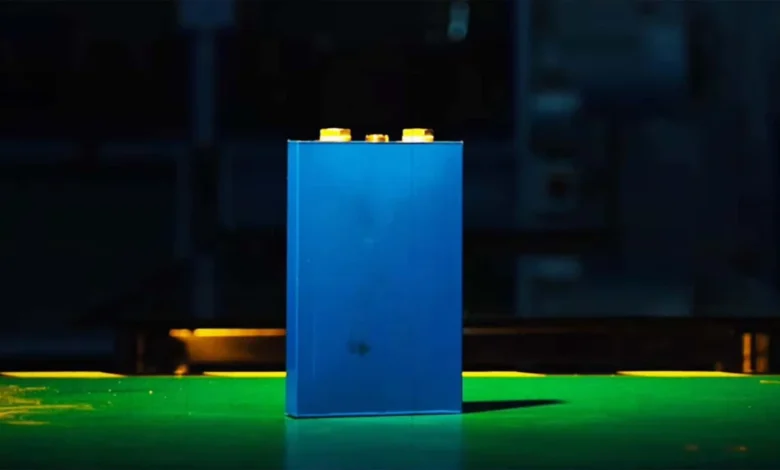
Upon the official decommissioning of the Zhangbei facility in 2025, more than 50 of the original lithium iron phosphate prismatic cells were transported directly to CATL’s advanced research laboratories. The primary objectives were twofold: to inspect the physical components for structural damage and to quantify the exact remaining usable life of cells that had endured nearly a decade and a half of commercial-grade stress.
A multidisciplinary team of engineers and electrochemists subjected the 14-year-old cells to rigorous electrical, thermal, and mechanical evaluations. The results astonished even the creators of the technology. The testing revealed that the aged cells still retained approximately 85% of their original nameplate capacity.
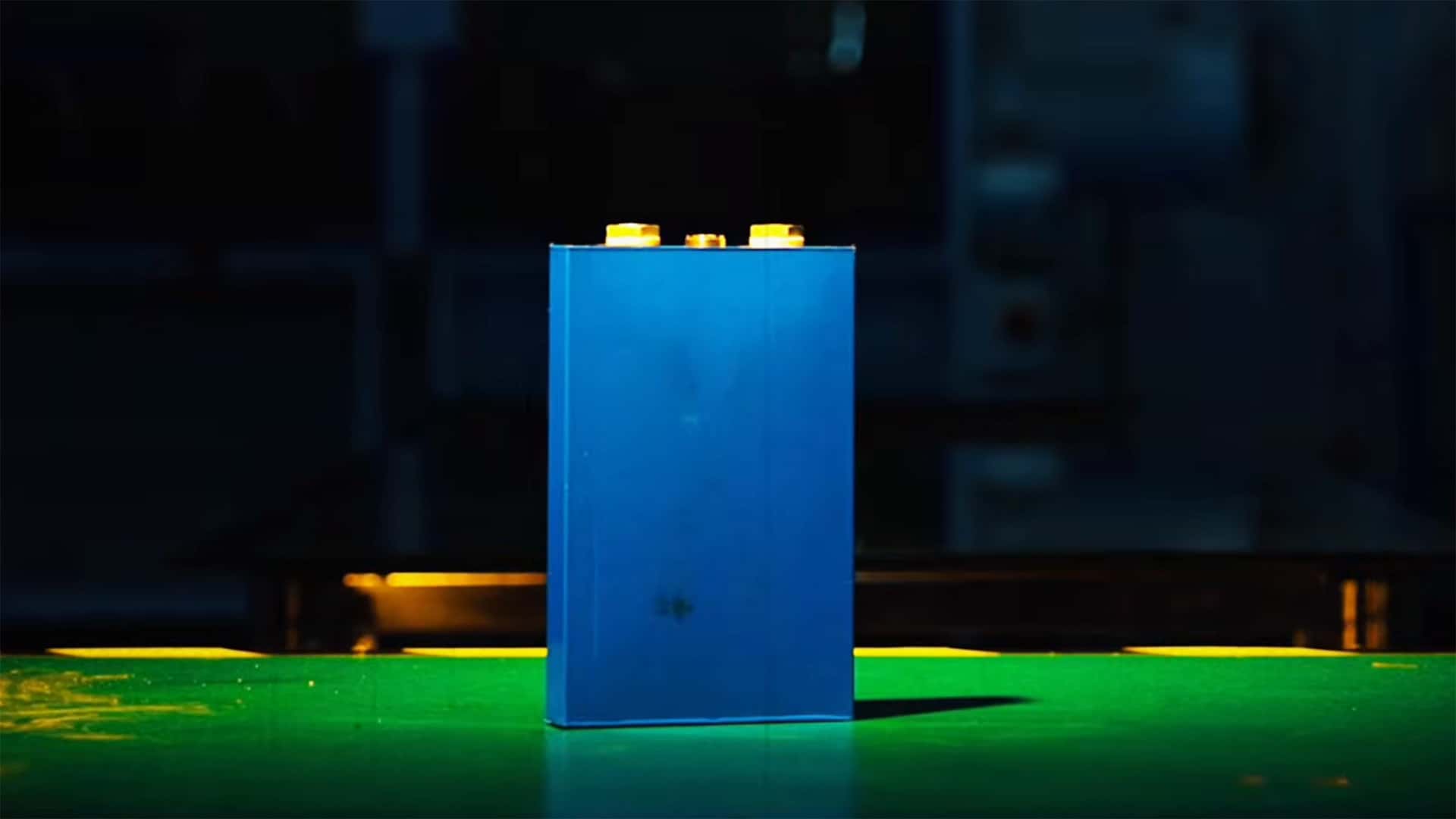
In practical terms, retaining 85% state-of-health (SOH) after 14 years of intensive grid service means these cells are far from spent. CATL’s analysis concluded that the harvested cells could be seamlessly repurposed into smaller, secondary-tier energy storage systems—such as residential solar backup units or commercial microgrids—where they could reliably operate for an additional decade. Engineers estimate that these repurposed cells retain roughly another 1,000 full charge and discharge cycles under less demanding secondary-use scenarios.
Beyond capacity retention, microscopic and structural examinations yielded equally compelling insights. The internal architecture of the cells had withstood the passage of time with minimal degradation. Scanning electron microscopy confirmed that the anodes and cathodes remained neatly aligned, displaying proper lithium intercalation (the reversible inclusion or insertion of lithium ions into hosts) and virtually no obvious structural aging or degradation within the graphite layers. This structural integrity is critical, as it directly prevents internal short circuits and thermal runaway events, cementing the inherent safety advantages of the LFP chemistry.
The Chemistry Behind the Durability: LFP vs. NMC
The extraordinary longevity observed in the Zhangbei cells is not merely a stroke of industrial good fortune; it is deeply rooted in the inherent chemical properties of lithium iron phosphate. While nickel manganese cobalt (NMC) chemistries remain the preferred choice for long-range passenger electric vehicles due to their superior energy density—allowing vehicles to travel further on a single charge—they are notoriously sensitive to thermal stress, high states of charge, and rapid cycling.
Conversely, LFP chemistry possesses a fundamentally more stable crystalline structure. The strong covalent bonding of the iron-phosphate-oxygen backbone ensures that the material remains remarkably stable even when subjected to deep discharges, high ambient temperatures, and rigorous abuse. This chemical stability translates directly into superior cycle life and enhanced safety margins, albeit at the cost of lower volumetric and gravimetric energy density.
Furthermore, CATL’s rigorous manufacturing standards and continuous investment in quality control played a decisive role. The company’s proprietary cell-to-pack technologies and meticulous suppression of micro-impurities during production ensure that localized degradation pathways, such as lithium plating or dendrite formation, are suppressed to the absolute minimum.
Broader Economic and Industrial Implications
The implications of CATL’s Zhangbei findings extend far beyond the realm of stationary energy storage, carrying profound consequences for the global automotive industry. As automakers race to make electric vehicles more affordable and accessible to the mass market, LFP batteries are steadily displacing higher-cost NMC cells in Western markets.
Historically, LFP adoption in North America and Europe lagged behind China due to supply chain concentration and localized manufacturing hurdles. However, cost pressures and consumer demand for lower-priced entry-level EVs are shifting the paradigm. Prominent upcoming Western vehicles, such as the utility-focused Slate EV truck and prototype configurations of the Ford Fathom pickup, are slated to incorporate advanced LFP battery architectures.
The verified 14-year lifespan and 85% capacity retention demonstrated by the Zhangbei cells directly address one of the most persistent consumer anxieties regarding electric vehicles: battery degradation and resale value. If entry-level LFP batteries can endure over a decade of severe grid-level abuse while retaining sufficient capacity for secondary applications, consumer confidence in the longevity of modern EV powertrains will be significantly reinforced.
Additionally, the burgeoning viability of second-life LFP batteries creates a robust circular economy. Instead of immediately entering energy-intensive recycling streams upon retirement from automotive service, used EV battery packs can be systematically harvested, repurposed, and deployed into stationary storage applications for an additional 10 years of service. This secondary utility drastically reduces the lifecycle carbon footprint of electrification and alters the economic calculus for fleet operators and utility providers alike.
As the energy transition accelerates and millions of electric vehicles enter their second decade on the road, empirical data from real-world benchmarks like the Zhangbei Project provides vital reassurance. By proving that high-voltage LFP cells can endure decades of strenuous operation while retaining high structural and energetic integrity, CATL has provided a foundational blueprint for the enduring viability of a fully electrified global economy.