How a Chinese Court Decision on Nikon and Viltrox Threatens Canon’s Closed Ecosystem


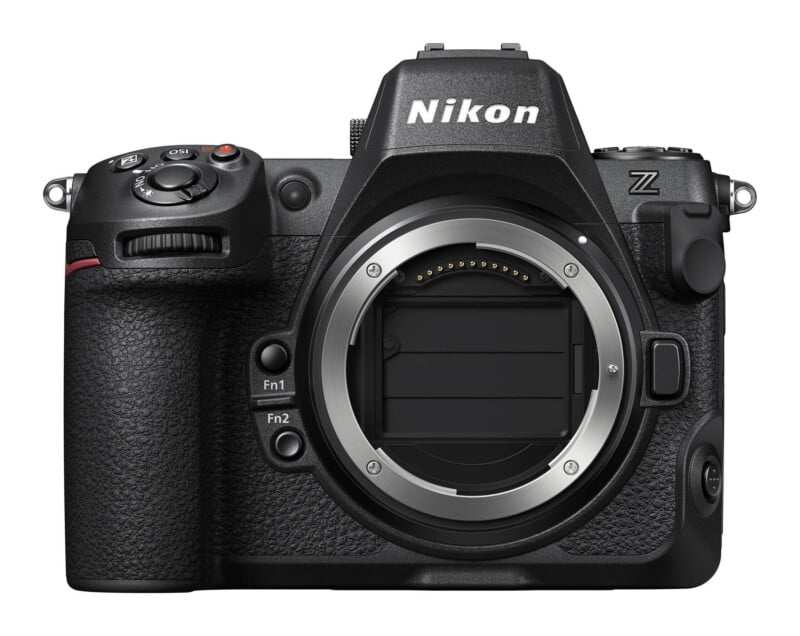
The global camera optics market is facing a profound shift following a landmark intellectual property ruling in China. In January, optical giant Nikon initiated legal action against third-party lens manufacturer Viltrox within the People’s Republic of China, alleging intellectual property infringement concerning its proprietary Z-mount system. Nikon sought substantial financial damages and statutory royalties, aiming to curb the proliferation of unlicensed autofocus lenses. However, in a decisive turn of events this past summer, the China National Intellectual Property Administration (CNIPA) ruled entirely in favor of Viltrox.
The administrative and judicial decision did more than dismiss Nikon’s claims for damages; it systematically invalidated one of Nikon’s core design patents underpinning the physical bayonet tabs, terminal pins, and overarching electronic layout of the Z-mount. This ruling establishes a powerful administrative precedent within the world’s second-largest camera market, fundamentally altering the legal dynamics between legacy camera manufacturers and independent lens developers. As the ramifications of this case ripple through the industry, attention has inevitably turned to Canon, the last major camera manufacturer maintaining a strictly closed-door policy regarding its proprietary mirrorless lens mount.
The Anatomy of Nikon’s Legal Defeat
To understand the vulnerability now facing other optical giants, analysts must examine the specific legal rationale deployed by the CNIPA. Nikon’s infringement claims relied heavily on the premise that the physical dimensions, electronic pin configurations, and bayonet lug arrangements of the Z-mount represented distinct, patentable innovations separate from its legacy F-mount system.
The CNIPA disagreed, ruling that Nikon’s patent lacked the requisite "inventive step"—the Chinese legal equivalent to the concept of non-obviousness under United States patent law. The regulatory body determined that executing minor, iterative adjustments to the length, angle, and physical placement of bayonet tabs or electronic terminal pins relative to historical mount designs constitutes routine engineering rather than a true technological breakthrough. Because camera mounts and lens attachment mechanics have evolved through incremental iterations over the past six decades, minor dimensional expansions fail to clear the high bar required for robust patent protection.
Consequently, the legal foundation for Nikon’s suit dissolved. Without a valid patent upholding the exclusivity of the physical and electronic interface, Nikon lacks the legal mechanism in China to halt Viltrox or other domestic competitors from producing and distributing autofocus-enabled lenses for the Z-mount system.

When approached for comment regarding the outcome, Nikon issued a measured statement: "Out of respect for the judicial system, we will refrain from providing further details at this time." Conversely, Viltrox adopted a restrained posture, declining to publicly gloat over the victory. In an official communication to industry observers, Viltrox stated that it appreciated public support but possessed no further updates regarding potential future implications or broader mount applications, promising to share official announcements should circumstances change.
Global Implications and Jurisdictional Realities
While the CNIPA ruling is technically restricted in its direct legal enforcement to mainland China, its secondary effects pose complex strategic dilemmas for Nikon and its competitors globally. Nikon maintains corresponding Z-mount patents in international jurisdictions, including the United States and the European Union. In theory, Nikon retains the legal standing to initiate infringement proceedings in these foreign markets to block the importation and sale of competing Viltrox products.
However, legal experts suggest that pursuing international litigation carries immense institutional risk. Initiating lawsuits in Western courts could expose Nikon’s core international patents to similar judicial scrutiny regarding non-obviousness and prior art. Should a U.S. or European court invalidate Nikon’s patents based on similar reasoning—identifying the Z-mount as a routine engineering iteration of older F-mount standards—the company could lose its intellectual property protections on a global scale.
Furthermore, even if Nikon successfully secured injunctions in Western markets, enforcement remains practically challenging. Because Viltrox manufactures its hardware within China—where the domestic courts have affirmed the legality of the lenses—blocking direct shipments to official retail channels would merely push distribution toward alternative grey-market importation channels. Parallels can be drawn to other consumer technology products facing regional distribution bans, which continue to find fluid pathways to international consumers. Combined with the reality of writing off the lucrative Chinese domestic market entirely, the risk-reward ratio strongly disincentivizes Nikon from escalating the legal battle abroad.
Canon’s Historical Precedent and Current Vulnerability
The vulnerability laid bare by the CNIPA decision directly impacts Canon, which has historically relied on aggressive legal threats rather than active courtroom litigation to protect its proprietary RF-mount system.

In August 2022, Viltrox publicly disclosed that it had suspended the manufacture and commercial distribution of autofocus-equipped lenses designed for Canon RF mounts after receiving formal warnings of impending legal action. Shortly thereafter, Canon confirmed its enforcement strategy, issuing a public statement asserting that Shenzhen Jueying Technology Co. Ltd. (operating as Viltrox) was infringing upon its patent and design rights regarding the three-tab bayonet mount, physical dimensions, twelve electronic contact pins, and underlying transmission algorithms governing autofocus, image stabilization, and control ring inputs.
At the time of Canon’s 2022 warnings, Viltrox operated with significantly fewer financial resources and a smaller market share, leading the independent manufacturer to comply rather than absorb the immense costs of a protracted legal challenge. Over the intervening four years, however, Viltrox has matured into a wealthy, highly respected global optical brand with the capital and legal sophistication necessary to contest intellectual property assertions.
The CNIPA ruling demonstrates that Chinese manufacturers possess the institutional backing to actively dismantle the patent walls of legacy camera corporations. Had Nikon attempted a cease-and-desist strategy without judicial follow-through, it might have achieved compliance; instead, forcing the issue into court resulted in the total invalidation of its core design patent. This precedent fundamentally alters the power dynamic, rendering passive threats from legacy manufacturers far less intimidating.
Strategic Options for Camera Manufacturers
Camera manufacturers now find themselves evaluating defensive strategies to protect their ecosystems without inviting catastrophic patent invalidation. One potential avenue is the deployment of encrypted software protocols and firmware updates designed to create algorithmic handshakes between authorized lenses and camera bodies, effectively creating software blocks against unlicensed hardware.
However, software-based restrictions carry substantial commercial and public relations risks. Consumer backlash against firmware updates that inadvertently disrupt third-party equipment can be severe, as evidenced by recent market reception surrounding camera launches from competitors like Sony, where minor compatibility anomalies immediately spark public accusations of intentional third-party blocking. Furthermore, independent lens makers have repeatedly demonstrated the technical agility to bypass firmware blocks through rapid reverse-engineering and patch updates, often neutralizing software restrictions within days.
Alternatively, should Canon choose to test its patents in court against a resurgent third-party market, legal analysts speculate the company might adopt a scorched-earth strategy. This would involve simultaneous, multi-jurisdiction litigation across China, Japan, and Western markets designed to overwhelm independent manufacturers with legal expenditures, ideally forcing a negotiated settlement and licensing agreement.
Such an outcome might mirror the collaborative ecosystems established by Sony with its E-mount, where third-party manufacturers operate under official licensing agreements that grant technical access in exchange for nominal performance limitations and licensing fees. Industry observers note that Japanese manufacturers, many of which share leadership positions on trade organizations such as the Camera & Imaging Products Association (CIPA), share a collective interest in protecting the financial viability of domestic optical industries against external disruption.
Industry Response and the Path Forward
When contacted for comment regarding the changing legal landscape, Canon maintained a strict policy of non-disclosure regarding active legal matters or the business models of competitors. "Canon does not comment on legal proceedings or the business activities of other companies," the corporation stated. "We remain focused on delivering innovative solutions to our customers while respecting intellectual property rights in every market where we operate."
Despite this official stance, internal discussions within major imaging headquarters are undoubtedly focused on the existential threat to closed-mount systems. The emergence of a tested, legally viable roadmap for invalidating legacy mount patents in China—the world’s second-largest consumer market—means that camera brands can no longer rely on jurisdictional protection to preserve monopolies over optical ecosystems.
If independent manufacturers choose to resume full-scale production of unlicensed RF-mount and Z-mount lenses, legacy brands may be forced to choose between embracing structured licensing partnerships or watching their market control erode. For the first time in the modern mirrorless era, the balance of power in optical development has shifted firmly into the hands of third-party innovators.