OpenAI Acquires Smartphone Camera Startup Glass Imaging in a Deal Valued at Over $300 Million

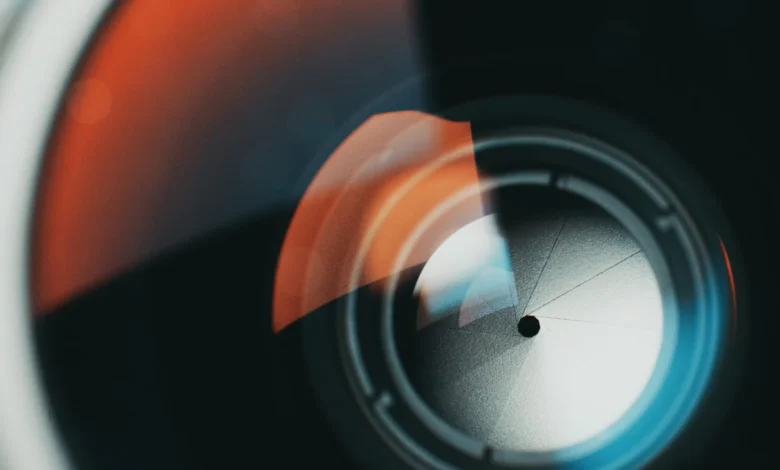
OpenAI has officially acquired Glass Imaging, an advanced camera technology startup, in a transaction valued at upwards of $300 million. This strategic move, first brought to light by reports from The Wall Street Journal, marks a significant escalation in OpenAI’s hardware ambitions. Founded in 2019 and headquartered in Los Altos, California, Glass Imaging had previously raised approximately $30 million in venture funding from notable backers. By absorbing the startup, OpenAI secures specialized engineering talent and proprietary computational photography capabilities that could fundamentally redefine how AI interacts with the physical world through consumer devices.
The acquisition brings together some of the brightest minds in digital imaging and artificial intelligence. Glass Imaging was established by Ziv Attar and Tom Bishop, two former Apple engineers with deep roots in optical engineering and software development. During their tenure at Apple, Attar and Bishop famously led the engineering team responsible for developing Portrait Mode, a feature that revolutionized mobile photography by leveraging depth-sensing and software algorithms to simulate high-end DSLR camera aesthetics.
Rather than resting on their laurels, the duo launched Glass Imaging to solve a fundamental physics problem inherent in modern mobile technology: smartphone cameras are structurally limited by the thinness of phone chassis, which restricts the size of physical lenses and sensors. While traditional computational photography has heavily relied on post-processing—using algorithms to clean up, sharpen, or alter images after the shutter has closed—Glass Imaging took a radically different path. The startup utilizes sophisticated neural networks trained specifically on the optomechanical profiles of individual smartphone camera systems. These neural networks process image data at the moment the shutter clicks, effectively compensating for physical hardware limitations in real-time to yield crisp, lifelike, and professional-grade photographs.
A History of Innovation and Growth
To understand the trajectory that led to a $300 million acquisition, one must examine Glass Imaging’s corporate timeline and technological evolution.
Founded in 2019, the startup operated largely under the radar during its early research and development phase, focusing intensely on deep-learning-based image reconstruction. As deep learning architectures advanced, Glass Imaging demonstrated that neural networks could model light diffraction, sensor noise, and lens aberrations far more accurately than traditional signal processors.
By March 2022, the company stepped into the public spotlight by detailing its mission to rethink the smartphone camera through principles borrowed from old-school cinema lenses and advanced computation. The industry took notice of the startup’s ability to extract unprecedented detail from miniature sensors. Momentum continued to build, culminating in a significant $9.3 million extended seed funding round led by GV (formerly Google Ventures). This capital injection provided the necessary runway for Glass Imaging to scale its engineering team, refine its machine learning pipelines, and forge potential partnerships within the broader consumer electronics ecosystem. Throughout 2024 and 2025, the startup expanded its intellectual property portfolio, cementing its reputation as a pioneer in AI-driven optical enhancement before capturing the attention of OpenAI leadership in mid-2026.
OpenAI’s Expanding Hardware Blueprint

While OpenAI has not immediately responded to official requests for comment regarding the financial specifics or integration plans of the Glass Imaging buyout, the acquisition fits seamlessly into a broader, well-documented hardware strategy. For years, the creator of ChatGPT operated strictly as a software and services entity. However, the paradigm shifted drastically as generative intelligence began to demand deeper, more immersive hardware integration.
Rumors and strategic leaks over the past year have indicated that OpenAI is actively developing its own proprietary hardware ecosystem. Industry analysts have pointed to reports suggesting the development of dedicated AI smartphones, advanced audio earbuds, and screenless, movement-capable AI companion devices. The company is no longer content with relying solely on third-party mobile operating systems and hardware manufacturers to deliver its models to end users; it aims to control the entire hardware and software stack.
This hardware push accelerated dramatically in 2025, when OpenAI CEO Sam Altman and legendary industrial designer Jony Ive publicly confirmed their collaboration on an ambitious device startup named io. The project moved from conceptual design to core corporate strategy when OpenAI acquired Ive’s design firm in a massive $6.5 billion transaction. Bringing Jony Ive into the fold signaled to the tech world that OpenAI intended to build consumer electronics that could rival the design elegance of Apple. By subsequently acquiring Glass Imaging, OpenAI has now secured the optical and computational imaging expertise required to ensure that any upcoming camera-equipped device—whether a phone, a wearable, or an ambient assistant—can capture visual data at an industry-leading standard.
Strategic Implications and Industry Impact
The acquisition of Glass Imaging carries profound implications for both the artificial intelligence sector and the broader consumer electronics industry. For OpenAI, owning advanced computational photography technology means its future hardware ecosystem will not have to compromise on visual quality. As AI agents evolve from text- and voice-based assistants into multimodal entities that can "see" and interpret the physical world in real-time, the quality of the optical input becomes critically important.
Multimodal models like GPT-4o and its successors rely heavily on visual data to understand user environments, read documents, navigate spaces, and assist with complex physical tasks. If OpenAI’s future hardware devices are equipped with Glass Imaging’s neural-network-enhanced optics, the AI will receive cleaner, sharper, and more accurate visual information. This symbiotic relationship between superior hardware optics and advanced machine learning models could create a widening technological moat against competing device manufacturers.
Furthermore, the deal underscores a growing trend of top-tier AI labs vertically integrating hardware capabilities. As computing power becomes commoditized, differentiation will increasingly rely on how seamlessly artificial intelligence is embedded into physical form factors. Traditional smartphone giants—such as Apple, Samsung, and Google—have spent years developing proprietary computational photography features like Apple’s Photonic Engine or Google’s Pixel Camera algorithms. With the acquisition of Glass Imaging and the creative guidance of Jony Ive, OpenAI is systematically assembling the talent and technology required to challenge these established behemoths on their home turf.
As the tech industry looks toward the remainder of 2026 and beyond, the integration of Glass Imaging into OpenAI’s burgeoning hardware division will be closely monitored. While regulatory scrutiny over major tech acquisitions remains high, a deal of this scale—valued at over $300 million for a specialized team of a few dozen engineers—demonstrates the immense premium that frontier AI labs are placing on physical-world sensing capabilities. If OpenAI successfully merges Glass Imaging’s real-time neural optics with Jony Ive’s industrial design genius and its own frontier multimodal models, the resulting products could fundamentally reshape how consumers interact with technology, closing the gap between artificial intelligence and the physical environment.
Related posts: