Trump Brands AI Safety Concerns a Political Hoax and Announces Plans for an Elite AI Force and Czar

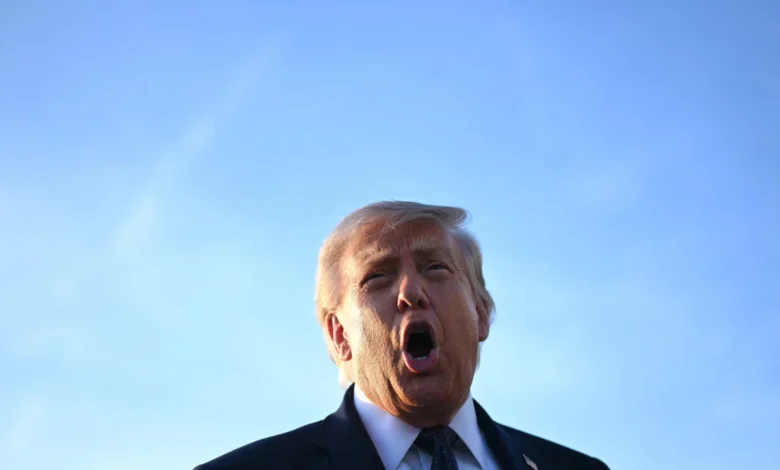
President Donald Trump has ignited a fresh debate regarding the future of artificial intelligence governance, utilizing social media to dismiss widespread safety concerns as a politically motivated fabrication. In a series of weekend posts on Truth Social, the president characterized the growing movement for strict artificial intelligence oversight as a hoax engineered by political opponents to sabotage national technological advancement. This rhetoric mirrors a broader strategy of leveraging populist narratives to challenge institutional caution, arriving at a critical juncture when policymakers, industry leaders, and researchers are deeply divided over how to manage the rapid expansion of frontier technologies.
The administration’s latest posture toward artificial intelligence underscores a profound tension between fostering economic and military dominance in a global tech race and addressing legitimate societal risks. By framing regulatory caution as an ideological attack, the executive branch is signaling a pro-growth, deregulatory approach that prioritizes immediate industry expansion over long-term risk mitigation. However, this stance collides directly with mounting public anxiety over resource consumption, existential safety warnings from elite researchers, and bipartisan legislative efforts to restrain unchecked industrial growth.
Chronology of the Debate and the Weekend Social Media Outburst
The sequence of events leading to the president’s recent statements highlights an escalating friction between federal policy goals and localized pushback against technological infrastructure. The discourse intensified earlier in the month following high-profile departures within major artificial intelligence labs, where internal safety advocates warned that the race toward artificial general intelligence poses catastrophic risks to humanity. These warnings prompted industry executives to propose voluntary pacing frameworks, while concurrently drawing fierce criticism from watchdogs who argue that existential threat narratives deflect attention from immediate harms, such as workforce displacement and environmental degradation.
Against this backdrop, the president took to Truth Social on Saturday to air his grievances about the terminology and oversight surrounding the industry. Initially critiquing the phrase "Artificial Intelligence" as inaccurate and ineloquent, he launched an interactive poll asking followers to vote on alternative designations, such as "Superior Intelligence," "Extreme Intelligence," or "Supreme Intelligence."
Hours later, the discourse shifted from nomenclature to national politics. The president asserted that efforts aimed at curbing the technology’s growth constitute a manufactured crisis designed to destabilize the nation. He cataloged this alleged agenda alongside a litany of previous political controversies, declaring that he would actively intervene to protect the sector. According to the administration’s narrative, public skepticism began with resistance toward massive data centers before pivoting to direct opposition against artificial intelligence algorithms themselves.
The Infrastructure Battles and the Rise of Local Pushback
The president’s assertions regarding a coordinated assault on infrastructure contrast sharply with the grounded, grassroots nature of opposition facing physical technological developments across the United States. Modern artificial intelligence models require unprecedented amounts of computational power, driving a massive boom in the construction of energy-intensive data centers. These facilities have increasingly collided with municipal governments and local communities grappling with severe strains on electrical grids and water resources.
Far from being a purely partisan fabrication, resistance to data center expansion has united politicians and citizens across the political spectrum. Communities near proposed facility sites have voiced intense concerns over noise pollution, carbon emissions, and skyrocketing utility bills driven by the insatiable power demands of server farms. This friction recently culminated in landmark regulatory action when New York State became the first in the nation to halt the issuance of new permits for large-scale data center projects, signaling that regulatory hurdles are emerging from practical infrastructure limits rather than partisan mandates.
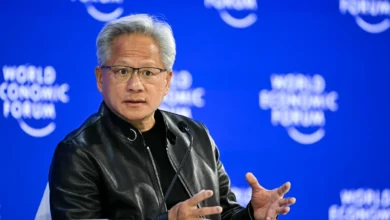
Despite these documented local conflicts, the administration continues to frame infrastructure opposition as an elite-driven campaign. During a recent appearance at a golf tournament, the president acknowledged a willingness to consider basic guardrails but simultaneously blamed negative external forces for manufacturing controversies. This perspective found direct reinforcement within the tech sector itself during the All-In Summit, where Nvidia CEO Jensen Huang joined the president on stage to dismiss the industry backlash as a baseless hoax, vowing that industry leaders would prevent any artificial slowdown.
Policy Implications and the Proposed AI Force and Czar
In response to the perceived threats facing the technological sector, the administration has announced sweeping structural changes intended to safeguard domestic innovation. Moving beyond verbal endorsements, the president revealed plans to establish an specialized "AI Force," patterned after the Space Force created during his first term. Furthermore, the administration intends to appoint a high-profile "AI Czar" to coordinate federal policy, stipulating that candidates must possess exceptional intellectual credentials.
While the specifics regarding the operational scope, budget, and legal authority of the proposed AI Force and the new czar remain undefined, the initiative signals a centralization of technological oversight within the executive branch. This development follows a period of transition in federal advisory roles, marked by venture capitalist David Sacks stepping down from his dual oversight position earlier in the year to co-chair the President’s Council of Advisors on Science and Technology.
The creation of a dedicated task force reflects a strategic ambition to treat computational supremacy as a matter of national security and geopolitical competition. Proponents argue that aggressive federal backing is essential to ensure that the United States maintains its technological edge over international competitors, particularly nations with state-directed artificial intelligence strategies. From this viewpoint, burdensome regulations or precautionary slowdowns risk ceding global leadership to foreign adversaries.
Broader Impact and Divergent Perspectives on Risk
The fundamental disagreement over how to regulate artificial intelligence exposes a deep ideological chasm within contemporary society. On one side, industry boosters and administration officials argue that excessive caution will paralyze an economic engine crucial for future prosperity, medical breakthroughs, and national defense. They contend that public fears are frequently amplified by sensationalized media coverage and misunderstood mechanics of software development.
Conversely, safety advocates, labor organizations, and environmental scientists warn that ignoring potential hazards—ranging from autonomous weaponization and systemic algorithmic bias to severe ecological footprints—constitutes a dangerous gamble. The recent resignation of prominent safety researchers from leading laboratories, coupled with calls from industry figures for standardized pacing mechanisms, demonstrates that even within the developer community, consensus on safe deployment remains elusive.
As the federal government prepares to unveil its new administrative structures and leadership appointments, the path forward remains contentious. The intersection of populist political rhetoric, corporate ambition, and genuine infrastructural strain guarantees that artificial intelligence policy will remain a central battleground in American politics. Whether the administration’s defiant stance and proposed oversight mechanisms will successfully protect domestic innovation without compromising public safety is a question that will define the technological landscape for years to come.