Google Tensor needs a Ryzen moment to secure the future of the Pixel lineup

The trajectory of Google’s proprietary mobile silicon, the Tensor series, has reached a critical juncture. Since the debut of the original Tensor chip in 2021, Google has prioritized machine learning capabilities and unique software experiences over raw computational horsepower. However, as the Pixel ecosystem expands into tablets, foldables, and a long-term software support commitment of seven years, the hardware’s performance limitations have become increasingly difficult to ignore. Industry analysts and enthusiasts alike are now pointing toward a necessity for a fundamental architectural shift—a "Ryzen moment"—to ensure the platform remains competitive against industry leaders like Apple and Qualcomm.
![The Google Pixel is fine and all, but still needs a ‘Ryzen moment’ [Video]](https://9to5google.com/wp-content/uploads/sites/4/2025/08/pixel-10-repair-tensor-g5-1.jpg?quality=82&strip=all&w=1600)
The Historical Precedent: The AMD Lesson
To understand the current state of Google’s silicon, one must look back at the desktop computing landscape of the mid-2010s. AMD, often referred to as "Team Red," found itself in a precarious position following the failure of its "Bulldozer" microarchitecture. Introduced in 2011, the FX-series processors were characterized by high power consumption, significant thermal throttling, and a lack of competitive per-core performance. Intel, during this period, maintained a comfortable monopoly, delivering incremental updates while facing little pressure to innovate.
The pivot occurred in 2017 with the launch of the Zen architecture. By abandoning the failed design philosophy of the previous decade and focusing on high-efficiency, multi-threaded performance, AMD transformed from a budget-tier alternative into a market leader. This shift was not merely an upgrade; it was a total architectural overhaul that forced a complacent industry to accelerate its own development cycles. The parallels to Google’s current situation are striking: like the FX-series, early Tensor chips were often criticized for thermal inefficiencies and lagging behind the competition in standard benchmarking, relying on Google’s software optimization to maintain a premium user experience.
![The Google Pixel is fine and all, but still needs a ‘Ryzen moment’ [Video]](https://9to5google.com/wp-content/client-mu-plugins/9to5-core/includes/obfuscate-images/images/9to5google-default.jpg)
A Chronology of Tensor Development
Google’s foray into custom silicon began with a strategic partnership with Samsung Foundry. The Tensor G1, G2, G3, and G4 chips were built on Samsung’s manufacturing processes. Throughout this period, the chips were frequently subject to criticism regarding heat management and battery drain under heavy load.
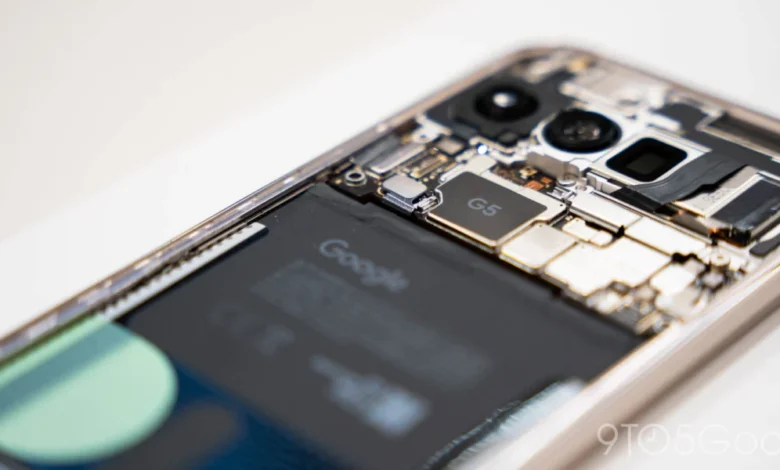
In 2025, Google transitioned to TSMC for the production of the Tensor G5. This move was widely anticipated by the tech community as the turning point that would finally allow Google to achieve parity with Apple’s A-series and Qualcomm’s Snapdragon series. While the move to the TSMC node did resolve several thermal and efficiency issues, the generational performance leap that many expected failed to materialize in the form of raw, top-tier computational power. As of the release of the Pixel 11 and its Tensor G6 processor, the hardware remains capable but falls behind the performance-per-watt metrics established by its primary competitors.
![The Google Pixel is fine and all, but still needs a ‘Ryzen moment’ [Video]](https://9to5google.com/wp-content/uploads/sites/4/2026/08/App-drawer-on-Pixel-11-Pro-XL-and-iPhone-17-Pro-Max.jpg?quality=82&strip=all&w=800)
Data-Driven Performance Disparities
When evaluating the current Tensor performance against modern flagship SoCs, the gap is quantifiable. Qualcomm’s Snapdragon 8 Elite and Apple’s A18 Pro consistently outperform the Tensor G6 in both single-core and multi-core Geekbench metrics, as well as in GPU-intensive tasks. While Google’s NPU (Neural Processing Unit) remains highly optimized for specific AI tasks—such as image processing and speech recognition—the reliance on these specialized cores leaves the CPU and GPU lacking in general-purpose headroom.
For a device marketed at a $1,000 price point, this performance deficit carries significant weight. Modern mobile workflows increasingly demand high-fidelity gaming, extended 4K video encoding, and advanced multitasking—areas where the Tensor line often triggers thermal protection protocols, resulting in throttled performance. Furthermore, the lack of hardware-level support for certain cutting-edge features, such as high-bitrate 8K video capture, further distances the Pixel from its direct competitors.
![The Google Pixel is fine and all, but still needs a ‘Ryzen moment’ [Video]](https://9to5google.com/wp-content/uploads/sites/4/2022/09/tensor-g2.jpeg?quality=82&strip=all&w=800)
Implications for Long-Term Support
Perhaps the most significant challenge facing the Tensor platform is Google’s promise of seven years of OS and security updates. This commitment is unprecedented in the Android ecosystem, but it hinges on the assumption that the underlying hardware will remain relevant throughout the 2030s.
Historical data suggests that as mobile operating systems become more complex and resource-intensive, aging silicon often struggles to keep pace. If the current Tensor architecture does not receive a massive performance boost in upcoming generations, the phones currently being sold as long-term investments may face severe performance degradation by the time they reach the end of their support lifecycle. The challenge is not just "good enough" for today’s Instagram scrolling; it is about ensuring that the device remains a functional, fluid tool for the user in 2032.
![The Google Pixel is fine and all, but still needs a ‘Ryzen moment’ [Video]](https://9to5google.com/wp-content/uploads/sites/4/2025/08/pixel-10-repair-tensor-g5-2.jpg?quality=82&strip=all&w=800)
The Desktop Paradigm: Android as a Productivity OS
Google’s long-term vision for Android appears to be moving toward a desktop-class productivity experience. With the development of advanced windowing systems and external display support, the company is positioning its devices to eventually replace traditional laptops for a significant segment of the user base.
This ambition mirrors Apple’s successful transition with its Silicon-based MacBooks, where mobile-derived architecture seamlessly handles desktop-grade workloads without requiring active cooling. For Google to replicate this success, it must bridge the gap between "mobile chip" and "desktop processor." The current Tensor lineup is optimized for a phone’s form factor, but it lacks the sustained thermal headroom required to act as the heart of a docked workstation. A true "Ryzen moment" would require Google to design a chip that is not only efficient for a 6-inch screen but powerful enough to drive complex professional software on an external 4K monitor.
![The Google Pixel is fine and all, but still needs a ‘Ryzen moment’ [Video]](https://9to5google.com/wp-content/uploads/sites/4/2026/04/macbook-neo-citrus-0002.webp)
Future Outlook and Industry Pressure
While Google’s engineering teams have performed miracles in optimizing software to mask hardware limitations, there is a limit to what code can achieve. The reliance on AI to "paper over the cracks" of hardware inefficiencies is a strategy with diminishing returns. If Google intends to challenge the market leaders in both the mobile and emerging mobile-to-desktop categories, it must stop treating performance as a secondary concern.
The foundation for this transition is already in place. By establishing a manufacturing pipeline with TSMC and moving toward more mature, custom-designed architectures, Google has the infrastructure required to scale. What is missing is the architectural "breakthrough" that prioritizes raw performance, power efficiency, and thermal management in equal measure.
![The Google Pixel is fine and all, but still needs a ‘Ryzen moment’ [Video]](https://9to5google.com/wp-content/uploads/sites/4/2026/08/Tensor-G6.jpg?quality=82&strip=all)
As the smartphone market matures, the differentiation between "flagship" and "premium" is increasingly defined by the capabilities of the silicon beneath the glass. For Google, the next few years will be the defining period for its hardware division. Whether it chooses to continue the current path of iterative, AI-focused updates or shifts toward a high-performance architectural standard will determine if the Pixel line remains a niche enthusiast device or a true, ubiquitous competitor to the world’s most powerful mobile computing platforms. The industry is watching, and the blueprint for a comeback is already written in the history of silicon valley. It remains to be seen if Google has the resolve to execute its own version of the shift that redefined modern computing.