Tesla Secures MEGAPOD Trademark Signaling a Strategic Expansion into Modular AI Infrastructure and Distributed Computing

Tesla, Inc. has officially filed a trademark application for the term MEGAPOD with the United States Patent and Trademark Office (USPTO), a move that underscores the company’s accelerating transition from an automotive manufacturer to a diversified artificial intelligence and high-performance computing entity. The application, filed under serial number 99893717, lists the applicant as Tesla, Inc., headquartered at 1 Tesla Road, Austin, Texas. Currently sitting in a "live pending" status, the filing marks a critical step in Tesla’s effort to secure intellectual property rights for what appears to be a new category of modular, self-contained AI data center hardware.
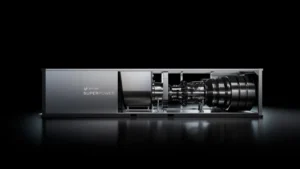
The trademark filing describes MEGAPOD as a comprehensive suite of hardware and software solutions. According to the official goods and services description, the product consists of modular data center hardware systems specifically designed for artificial intelligence computing. These units are comprised of computer servers, specialized AI processing hardware, networking components, electrical power distribution units, and integrated cooling systems, all designed to be sold as a single, cohesive unit. Furthermore, the filing includes downloadable software intended for the monitoring, management, and optimization of these modular AI environments.
This development comes at a time when Tesla is aggressively scaling its compute capacity to support Full Self-Driving (FSD) training, the Optimus humanoid robot program, and broader large-language model (LLM) initiatives. By moving toward a "modular" hardware system, Tesla appears to be applying its successful containerized approach from its energy division to the world of high-density AI computing.
The Evolution of Tesla’s Modular Hardware Strategy
The MEGAPOD naming convention strongly echoes Tesla’s existing Megapack product line. Introduced to revolutionize utility-scale energy storage, the Megapack is a large-scale lithium-ion battery system housed in a shipping-container-style enclosure. It is shipped as a fully integrated unit, including battery modules, bi-directional inverters, a thermal management system, and an AC main breaker. This "plug-and-play" philosophy allowed Tesla to dominate the energy storage market by significantly reducing the time and complexity required to install grid-scale batteries.
The MEGAPOD appears to be the logical evolution of this philosophy, applied to the server room rather than the power grid. Traditional data center construction is a slow, capital-intensive process involving complex site preparation and the assembly of disparate components from various vendors. A modular AI pod would allow Tesla—or its potential customers—to deploy massive amounts of compute power in a fraction of the time. By bundling cooling, power distribution, and AI accelerators into a standardized "pod," Tesla can scale its infrastructure linearly and rapidly.
Integration with Digital Optimus and the Macrohard Project
The timing of the MEGAPOD filing aligns with recent strategic announcements made by Tesla leadership. In March 2026, CEO Elon Musk introduced the "Digital Optimus" initiative, occasionally referred to internally as "Macrohard." This project, a joint venture between Tesla and Musk’s AI startup, xAI, aims to create a massive, distributed network of AI agents capable of performing complex digital tasks and reasoning.
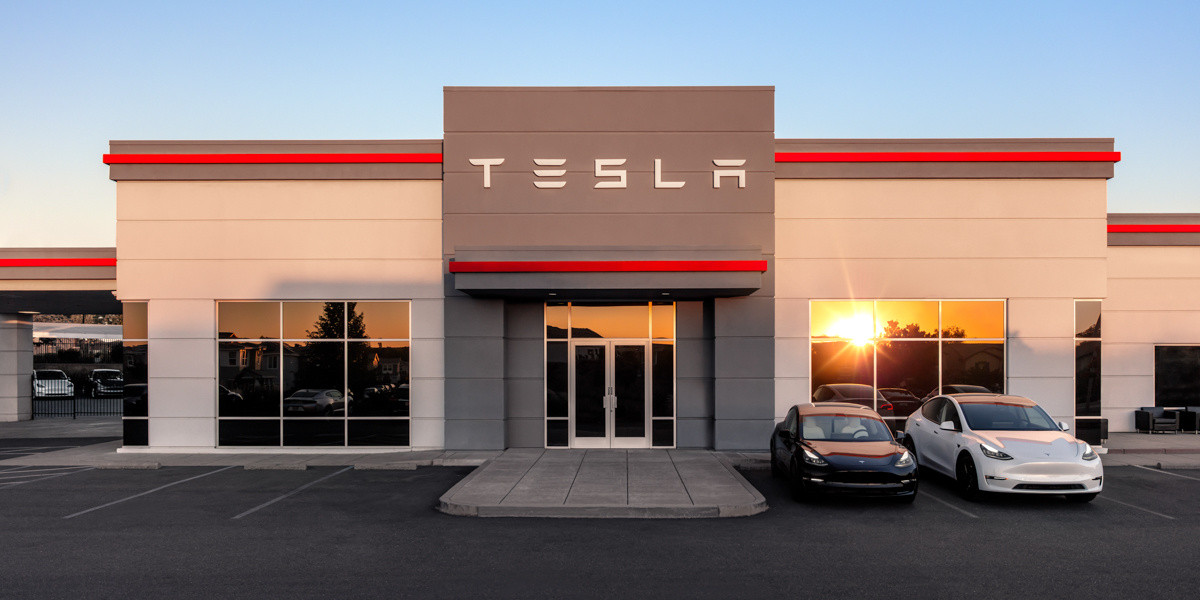
The Digital Optimus vision relies on two primary sources of compute: the onboard AI4 hardware in Tesla’s fleet of millions of vehicles and dedicated compute units stationed at Supercharger locations. Tesla’s Supercharger network is already equipped with high-capacity electrical infrastructure, much of which remains underutilized during off-peak hours. By deploying MEGAPOD units at these sites, Tesla could transform its charging stations into a distributed edge-computing network.
These modular pods would provide the necessary environment—specifically the intensive cooling and power management required for AI accelerators—to run high-inference workloads locally. This decentralized approach reduces latency and lessens the reliance on centralized "hyperscale" data centers owned by competitors like Amazon Web Services (AWS) or Microsoft Azure.
Technical Implications of the MEGAPOD Architecture
The description of MEGAPOD as "self-contained" and including "cooling systems" suggests that Tesla is addressing the primary bottleneck in modern AI: heat. As AI chips, such as Tesla’s custom Dojo D1 or the latest iterations of Nvidia’s Blackwell architecture, push higher thermal design power (TDP) limits, traditional air cooling is often insufficient.
By designing the MEGAPOD "as a unit," Tesla can optimize the thermal management system specifically for the hardware inside. This likely involves liquid cooling or advanced phase-change cooling integrated directly into the pod’s structure. Such integration ensures that the servers can operate at peak performance without throttling, regardless of the external environment. This is particularly crucial if the units are intended for outdoor deployment at Supercharger stations or industrial sites where climate control is not otherwise available.
Furthermore, the inclusion of "power distribution units" indicates that MEGAPOD is designed to handle the volatile power demands of AI training and inference. AI workloads often involve sudden spikes in power consumption; a modular system with integrated power management can buffer these spikes, potentially utilizing Tesla’s own battery technology to stabilize the load.
Chronology of Tesla’s Computing Infrastructure
To understand the significance of MEGAPOD, it is necessary to look at the timeline of Tesla’s hardware development:
- 2019: Tesla unveils its Full Self-Driving (FSD) Computer (Hardware 3), moving away from Nvidia hardware to custom-designed silicon.
- 2021: Tesla introduces the Dojo Supercomputer and the D1 chip, designed specifically for video training.
- 2023: Tesla begins the installation of a massive Nvidia H100 cluster to accelerate FSD v12 development.
- Early 2025: Work on Dojo 3 officially resumes after a period of refinement, focusing on higher efficiency and lower cost per unit of compute.
- March 2026: Musk announces "Digital Optimus," signaling a shift toward distributed inference and edge AI.
- June 2026: Tesla files the MEGAPOD trademark, providing a name and a physical form factor to the distributed compute strategy.
This chronology illustrates a clear trajectory: Tesla is no longer just a consumer of AI hardware; it is becoming a primary architect of the infrastructure that powers AI.

Legal Precedents and Strategic Safeguards
The decision to file for the MEGAPOD trademark early in the development cycle may be a lesson learned from previous branding challenges. Tesla notably lacked the trademark rights to the word "Cybercab" when it began publicly discussing its purpose-built autonomous robotaxi. This led to potential legal friction and branding confusion.
By securing MEGAPOD now, Tesla is protecting its brand identity as it prepares to enter the competitive data center hardware market. The USPTO will now examine the application for distinctiveness and potential conflicts. If successful, the registration will grant Tesla nationwide protection, preventing competitors from using similar names for modular computing products.
Broader Market Impact and Industry Implications
The introduction of MEGAPOD could represent a significant shift in the competitive landscape of the AI industry. Currently, the "Big Tech" firms—Google, Microsoft, and Meta—rely on massive, centralized data centers. Tesla’s move toward modular, distributed pods offers a different paradigm.
- Edge AI Dominance: If Tesla can successfully deploy MEGAPODs at thousands of Supercharger locations, it will possess the world’s most geographically distributed AI inference network. This is vital for applications requiring real-time response, such as autonomous fleet management and local AI agents.
- Infrastructure as a Service: There is speculation among analysts that Tesla could eventually offer MEGAPODs to third-party enterprises. Just as companies buy Megapacks to manage their energy, they could purchase MEGAPODs to manage their local AI needs, effectively making Tesla a hardware competitor to companies like Dell, HPE, and Supermicro.
- Vertical Integration: By controlling the silicon (Dojo/AI4), the cooling, the power distribution (Energy division), and the software (Tesla OS), Tesla achieves a level of vertical integration that is unmatched in the industry. This allows for cost efficiencies that could make MEGAPOD a more attractive financial proposition than traditional cloud computing.
Conclusion
The MEGAPOD trademark filing is more than a mere administrative update; it is a declaration of intent. It signals Tesla’s readiness to productize its internal computing infrastructure and deploy it at scale. As AI workloads continue to grow exponentially, the demand for efficient, rapidly deployable, and thermally optimized hardware will only increase.
While Tesla has not yet released a formal production timeline or pricing for MEGAPOD, the filing suggests that the "Digital Optimus" vision is moving toward physical reality. By bridging the gap between energy storage and high-performance computing, Tesla is positioning itself to be the backbone of the next generation of artificial intelligence infrastructure. Whether these units will remain internal tools for training Tesla’s neural networks or become a new revenue-generating product line for global enterprise remains to be seen, but the groundwork for a modular AI future has clearly been laid.